

STG Logistics names Jack Holmes CEO weeks after bankruptcy exit
The former UPS Freight chief ended a decade of retirement to take the job. He inherits a company with seven distinct business units and says a shared customer experience is the first priority.
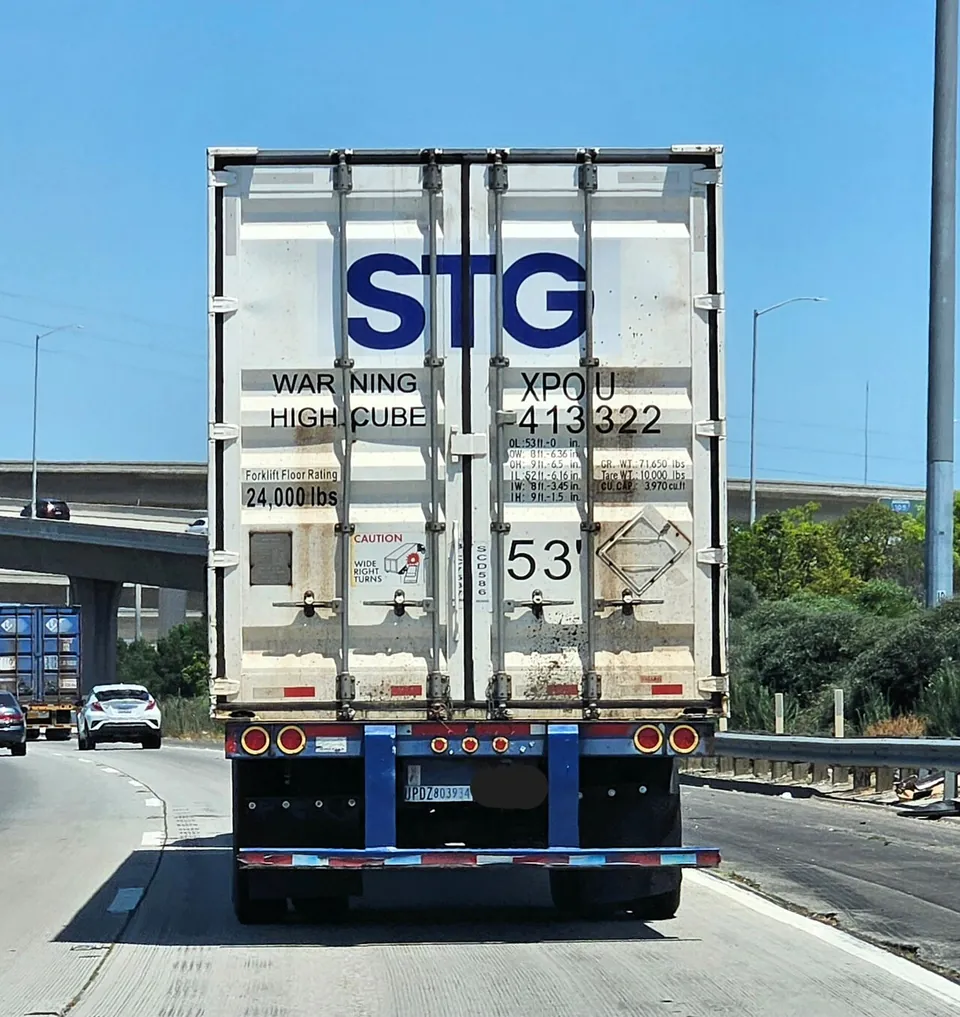
STG Logistics named Jack Holmes, formerly CEO of UPS Freight, as its new chief executive.2
Holmes returned to work after a decade of retirement to take the role.1
STG Logistics comprises seven distinct business units.2
Story
A new chief at a company with seven businessesSTG Logistics appointed Jack Holmes as chief executive on October 5, weeks after the company emerged from bankruptcy.2 Holmes previously led UPS Freight, and his appointment brought him back from a decade of retirement.12 The timing places the leadership change soon after STG’s emergence from bankruptcy, rather than at a more distant point in its recovery.12 The available facts do not give a financial measure of the bankruptcy’s effect or of the company’s size, so the scale of the change here is organizational: a new chief at a business made up of seven units.2 Holmes’s return after ten years away from work gives the appointment a notable personal dimension, while his previous leadership at UPS Freight supplies directly relevant freight-sector experience.12 The facts establish when the leadership transition followed the bankruptcy exit, but they do not say that the two events were causally connected.2
Those seven units span different kinds of freight and logistics work, rather than a single operating line.2 They include the original St. George warehousing and transload operation and a contract logistics business.2 The portfolio also contains a freight brokerage and an intermodal operation whose roots lie in the former Pacer stack train network.2 The other named businesses are a drayage division, a deferred LTL product and Freight Force.2 Together, the list shows why Holmes framed coordination across the businesses as an immediate management task; the facts do not specify the units’ relative revenues, staffing or customer counts.2 The range runs from warehousing and contract logistics to brokerage, intermodal freight, drayage and LTL, so a common approach would have to span several different business lines.2 Because the source identifies all seven as distinct units but gives no information about their comparative size, none can be described from these facts as the largest or most important.2
Holmes said the first task is to make customer interactions feel similar across the businesses.2 That goal applies across seven distinct units, each identified as a separate part of STG’s operations.2 The facts establish the goal, but do not describe a plan, timetable, technology change or measure by which STG will assess whether the experience becomes more consistent.2 The appointment therefore comes with a stated direction for the company, while the available account leaves the steps and pace of implementation unspecified.2 The customers affected by this aim are those dealing with STG’s different businesses; the stated objective is to make their experience similar, not to merge the units into one operation.2 That distinction matters because the portfolio includes separate services such as brokerage, drayage and warehousing, even as Holmes identifies a shared customer experience as the first job.2
Holmes also singled out deferred less-than-truckload freight as an offering with a distinct price-and-service position.2 He characterized its price as far below standard LTL rates and said it serves a widening gap as shippers spend more for lower service levels.2 This description connects the product’s role to a trade-off between cost and service, rather than claiming that the product offers the same service as standard LTL.2 The facts provide no rate, shipment volume or measure of the gap, so the comparison is qualitative and cannot show how much cheaper the offering is or how many shippers use it.2 For shippers willing to accept lower service levels, Holmes’s account presents deferred LTL as a less expensive option; the stated comparison is with standard LTL, not with every freight service.2 The widening gap he described is a market need for a lower-priced choice as shippers pay more for lower service, although the facts do not quantify how many customers face that trade-off.2
Beyond the customer-facing task, Holmes described a change in how the company needs to think internally.2 He contrasted a mode focused on surviving with a longer-range approach based on strategy.2 To convey the earlier mindset, he compared it with a household overwhelmed by credit-card debt before bankruptcy.2 That comparison explains the contrast he drew between the pre-bankruptcy period and the future-oriented approach he wants, but it does not quantify STG’s debt or specify how long a transition would take.2 His description suggests the shift he wants is not only about the company’s external service but also about how its people approach decisions over time.2 The facts do not identify particular employees or decisions affected, but they do make clear that Holmes sees a move away from survival mode as part of the company’s challenge.2
The account also places STG’s prospects in the way industry peers and competitors have described it.2 At recent investor conferences, those groups repeatedly used the phrase “a sleeping giant” for the company.2 That description is an assessment attributed to peers and competitors, not a reported measurement of STG’s capacity or performance.2 It sits alongside the company’s seven-unit structure and the new CEO’s stated emphasis on a common customer experience, without establishing what results the businesses will achieve.2 The phrase conveys an outside view of unrealized potential, but the available facts do not say what specific opportunity those observers had in mind.2 It should therefore be read as a repeated characterization at investor conferences, rather than evidence that growth or improved performance has already occurred.2
Holmes’s appointment thus brings together two stated priorities: a more consistent experience across the units and a shift from survival-oriented thinking toward long-term strategy.2 The seven-business portfolio gives that customer goal a broad scope, while the deferred LTL product illustrates one offering Holmes has highlighted within it.2 The sequence is clear in the reported facts: STG emerged from bankruptcy, appointed Holmes weeks later, and now has a CEO who has named an initial service goal and an internal change in outlook.2 The facts do not establish whether these priorities will produce growth, how the separate units will be coordinated or what operational changes will follow.2 Taken together, the priorities reach both customers using the different services and the organization behind them: Holmes has named a service aim across the units and a longer-term way of thinking internally.2 The reported details describe objectives and context, not completed changes; the account does not say that customer interactions are already uniform or that the strategic shift has been achieved.2
Structure
Who is connected to whom- 1STG Logistics
- operates in →Fact
- invests in →Fact
- operates in →Fact
- operates in →Fact
- operates in →Fact
History
How it came to this- Before the appointmentSTG emerged from bankruptcyThe company’s emergence from bankruptcy preceded the CEO appointment by weeks.
- October 5Holmes became CEOSTG named former UPS Freight CEO Jack Holmes to lead the company.
- At the appointmentHolmes returned from retirementThe new role ended Holmes’s decade of retirement.
- NowOctober 5 Jack Holmes named CEO of STG Logistics
Impact
Spreading outward, level by level- Level 1Customer experience across STG’s businesses
Holmes said his first job is to give STG’s businesses a similar customer experience.2
Fact - Level 2Coordination across business lines
STG’s distinct units span warehousing, contract logistics, brokerage, intermodal, drayage, deferred LTL and Freight Force, so a shared customer aim applies across a varied portfolio.2
Fact - Level 3Internal strategic outlook
Holmes described the challenge as moving from survival mode toward long-term strategic thinking; the facts do not establish whether that shift has been achieved.2
Fact - Level 4Possible support for a uniform experience
Consolidating technology platforms may help support the stated goal of a more uniform customer experience, but this is presented as a hypothesis rather than a reported plan or completed change.
Analysis
Sources
What each source supportsWritten by AI from the sources listed below: every fact was checked word for word against its source, and inference is marked apart. How we write