

ICJ to rule on Myanmar genocide case brought by Gambia after seven years
The International Court of Justice is scheduled to decide whether Myanmar committed genocide against the Rohingya under the 1948 Genocide Convention. The case presents a question the court has never answered by finding a state guilty of genocide.
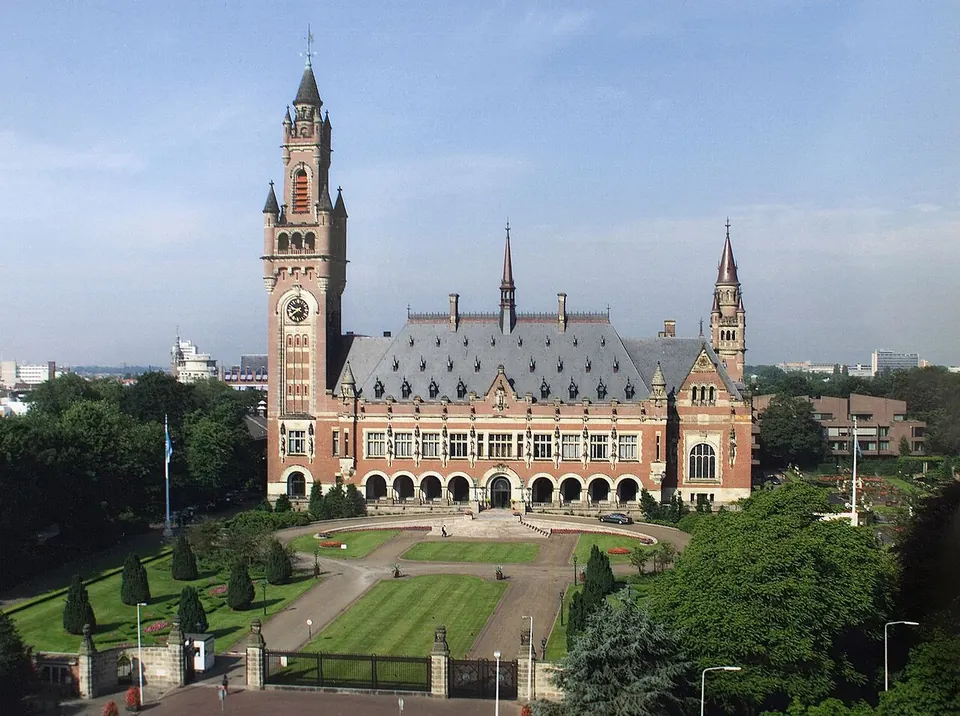
The case brought by Gambia has been before the ICJ for seven years.1
Since it began operating in 1946, the ICJ has never found a state guilty of genocide.1
Story
What the ICJ’s Myanmar ruling will decideThe International Court of Justice is due to rule on whether Myanmar committed genocide against the Rohingya, in a case that has remained before the court for seven years.1 The court has announced that it will issue its decision on 19 November; another report says the ruling is due on Thursday.13 Gambia brought the case under the 1948 Genocide Convention, the agreement at the centre of its accusation that Myanmar’s treatment of the Rohingya breached the convention.12 The question is significant for the court because, since it started operating in 1946, it has not found a state guilty of genocide.1 That record describes what the ICJ has decided in its own proceedings; it does not determine the outcome of the case now before it.1
The dispute is framed around Gambia’s allegation that Myanmar’s repression of the Rohingya violated the UN convention adopted in 1948.2 Gambia is described as a Muslim-majority state, and it is the state that initiated this case against Myanmar.12 The proceedings have lasted seven years, placing the scheduled judgment at the end of a lengthy case rather than at the start of the legal process.13 The reported decision date, 19 November, is the date the court gave for delivering its ruling; the other report identifies the day as Thursday without giving a date.13 Neither description supplies the ruling itself, so the available information establishes that a decision is expected, not what the judges will conclude.13
“cautiously optimistic”Antonia Mulvey, founder of Legal Action Worldwide, The Guardian
A central legal difficulty is whether the evidence establishes intent to destroy a protected group, either entirely or in part.2 The issue is not simply whether repression occurred: the case, as described, turns on whether the required intent can be proved.2 The convention supplies the legal framework invoked by Gambia, while intent is identified as a key question within the case.12 The facts available here do not report the court’s assessment of evidence on intent, or any finding it has made on that issue.12 The scheduled judgment will therefore address an allegation and a contested legal question, rather than a conclusion already established by the reports.12
The people most directly connected to the allegation are the Rohingya, whose treatment by Myanmar is the subject of Gambia’s case.2 Yanghee Lee, a former UN rights investigator to Myanmar, said the decision would be historic for Rohingya survivors and their families.2 Her comment identifies survivors and relatives as people for whom the ruling may carry particular meaning, without specifying a number of people affected.2 The case is counted in years of proceedings in the available reporting: it has been before the ICJ for seven years.1 That duration measures the time the case has been before the court, not the number of people involved or the scale of harm.12
The ICJ’s earlier record offers a comparison, but not a prediction: it has never found a state guilty of genocide since beginning operations in 1946.1 Two earlier cases concerning atrocities in the Balkans did not result in findings that states were directly responsible for genocide.2 In the Srebrenica matter, however, Serbia was held legally responsible for not preventing genocide.2 That distinction separates a finding that a state committed genocide from a finding that it failed to prevent genocide.12 The two Balkan cases therefore illustrate that the court’s treatment of genocide-related responsibility has not been limited to a single kind of legal finding.2
The possible consequences described in the reporting include greater international pressure on Myanmar’s leader, Min Aung Hlaing, if the court finds that Myanmar committed genocide.2 The report links that possible pressure to his leadership of the attacks in 2016-2017 and the coup in 2021.2 This is presented as a consequence that could follow a finding, not as a description of pressure already produced by the judgment.12 The United States already classifies the Rohingya crisis as genocide, on the basis of a decision by the Biden administration.2 That US position is separate from the ICJ proceeding and does not change the fact that the court’s ruling is still awaited.12
Comments from people connected to rights work convey expectations, but they do not establish what the judges will decide.2 Lee, the former UN investigator, described the ruling’s importance for survivors and their families.2 Antonia Mulvey, founder of Legal Action Worldwide, expressed cautious optimism that the court would hold Myanmar fully accountable.2 Her view is an expectation about accountability, while the court’s task is to determine the genocide case brought by Gambia.12 The reports do not supply a ruling in advance or state that either commentator speaks for the court.12
The judgment may also matter beyond the parties: it could provide a legal precedent relevant to other prominent genocide cases, including South Africa’s case against Israel.2 This is a possible influence, rather than a claim that the decision will determine the outcome of another case.2 The Guardian describes the expected decision as potentially among the most significant episodes in international law since the end of the second world war.2 That assessment reflects the importance attributed to the ruling, while the legal question remains whether Myanmar committed genocide against the Rohingya.12 The case’s wider significance will depend on the judgment itself, which is still pending in the reports.123
The court is also undergoing a separate change in its membership: five new judges were elected to serve nine-year terms beginning on 6 February 2027.5 Those appointments concern the ICJ’s future composition, whereas the Myanmar proceeding is the case for which a ruling has been scheduled.15 The reported term length is nine years, and the stated start date is 6 February 2027.5 The available information does not say that the newly elected judges will decide the Myanmar case, so the appointments should not be treated as part of its announced ruling.15 For now, the central change is the imminent decision after seven years of proceedings, with its legal and wider implications dependent on what the ICJ finds.12
Structure
Who is connected to whom- 1International Court of Justice
- requires →Fact
- part of →Fact
- ← member ofFact
- located in →Fact
- serves →Fact
History
How it came to this- 1948Genocide Convention adoptedThe convention later invoked by Gambia was adopted.
- Seven years before the rulingGambia's case comes before the ICJThe case against Myanmar has remained before the court for seven years.
- 19 NovemberICJ ruling scheduledThe court said it would deliver its ruling in the genocide case.
- Now19 November Scheduled ICJ ruling on whether Myanmar committed genocide against the Rohingya
- 19 NovemberThe ICJ is scheduled to deliver its ruling on the case brought by Gambia against Myanmar.
Impact
Spreading outward, level by level- Level 1Rohingya survivors and families
A former UN rights investigator said the ruling would be historic for Rohingya survivors and their families.2
Fact - Level 2Myanmar and its leader
If the court finds that Myanmar committed genocide, the ruling could increase international pressure on Min Aung Hlaing.2
Fact - Level 3Other genocide cases
The ruling could set a legal precedent influencing other high-profile genocide cases, including South Africa's case against Israel.2
Fact
Ahead
Checked automatically when due; the result goes to the track recordThe ICJ is scheduled to deliver its ruling on the case brought by Gambia against Myanmar.
Sources
What each source supportsWritten by AI from the sources listed below: every fact was checked word for word against its source, and inference is marked apart. How we write