

Kuwait and Bahrain report Iranian attacks as Gulf alerts rise
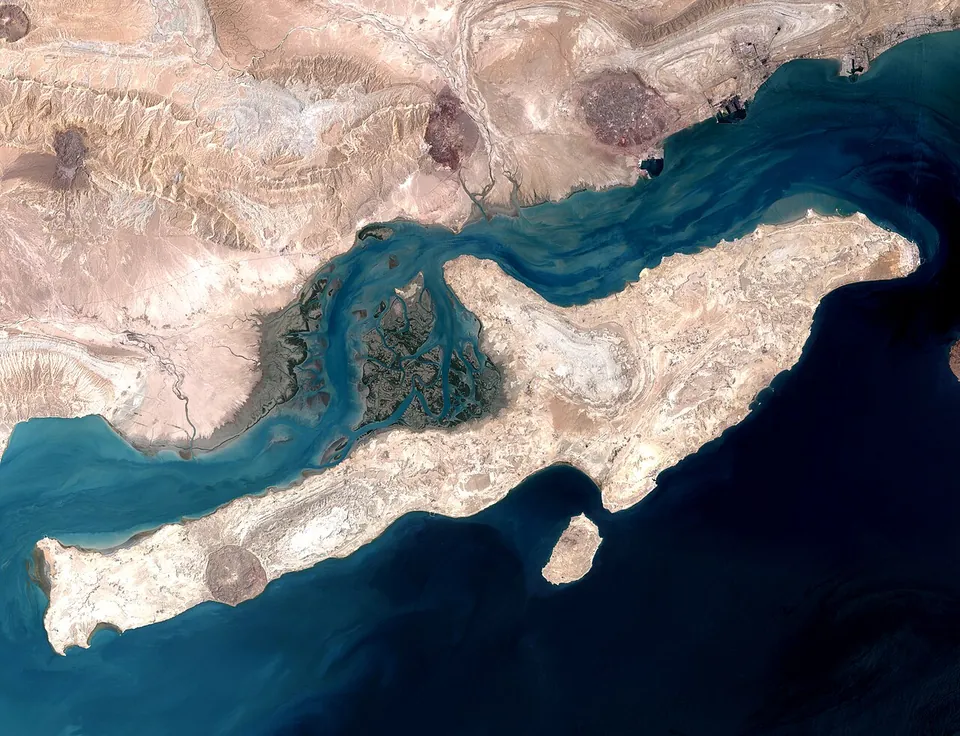
Kuwait said its air defences were activated against drones, while Bahrain reported intercepting an Iranian attack. The statements came amid a U.S.-Iran exchange involving Qeshm Island, a radar installation in Bahrain and the Strait of Hormuz.
Al Jazeera says the broader war began with U.S.-Israeli strikes on Iran.1
The U.S. strike on Qeshm Island preceded Bahrain's reported interception by a day.1
Al Jazeera says the latest attacks ended a weeks-long respite in the war.1
Story
Gulf nations respond to renewed attacksKuwait and Bahrain reported attacks in a period when Iran also struck a U.S.-used airbase in Kuwait and carried out several attacks on Bahrain after the United States bombed Qeshm Island.1 Kuwait said it had activated air defences against drone strikes, describing this as the first such activation since early September.1 Bahrain said its air defences had intercepted an Iranian attack early on Wednesday.1 A separate account likewise reported Bahrain's interception of attacks from Iran early Wednesday, while Kuwait said on Wednesday it was responding to hostile drones.2 Together, the accounts describe defensive responses in both countries, while the reported attacks also involved a U.S.-used base in Kuwait and multiple strikes on Bahrain.12
The reported events form part of a wider sequence of strikes and responses, but the accounts offer different explanations for what immediately prompted the exchanges.1 The United States said its attack on Qeshm Island was a response to an Iranian strike on a U.S. radar installation in Bahrain earlier on Tuesday.1 Iran, by contrast, said its recent attacks were retaliation for U.S. drone surveillance operations and an attack on Iranian communications towers.1 The reporting supports the distinction between those explanations: the U.S. account points to the Bahrain radar site, while Iran's account cites surveillance and damage to communications infrastructure.1 The two accounts therefore identify different immediate triggers, and neither government's stated explanation matches the other's.1
The U.S. strike hit a missile launch site on Qeshm Island, which lies in the Strait of Hormuz, according to Al Jazeera.1 That attack took place a day before Bahrain's reported interception, as stated in the account of the Qeshm strike and the later report from Bahrain.1 The reports do not give a casualty total or an overall count of the drone strikes, so the scale described here is limited to the incidents and patterns they specify.1 For Kuwait, the measure offered is an air-defence activation and a comparison with the period since early September; Bahrain's account instead identifies an interception early Wednesday.1 The available descriptions consequently establish the location and sequence of the reported events but do not quantify their full human or material impact.1
The reported attacks affect two Gulf states in different ways in these accounts: Kuwait faced drone strikes and an attack on an airbase used by the United States, while Bahrain reported an intercepted Iranian attack.1 Bahrain also hosts the U.S. Navy's 5th Fleet, placing a major U.S. naval presence in a country that reported attacks from Iran.12 Al Jazeera reported that Bahrain had experienced four Iranian attacks in six days, a count that describes repeated incidents over that stated span rather than a single event.1 The separate report of several attacks on Bahrain and the account of four attacks in six days both indicate repeated activity, though the reports do not define whether their counting methods are identical.1 These details connect the reported incidents to both Kuwait's air defences and the U.S. naval presence hosted by Bahrain.1
Kuwait's statement described its defensive response to drones, while Bahrain's statement said its air defences had intercepted an attack.1 The accounts report those official statements but do not provide a detailed account of the systems used, the number of drones involved or the results beyond the stated interception.1 The United States gave its reason for striking the Qeshm missile site as an earlier Iranian attack on its radar installation in Bahrain.1 Iran offered a different rationale for its recent actions, citing U.S. surveillance and an attack on Iranian communications towers.1 The accounts thus distinguish between the defensive actions reported by Kuwait and Bahrain and the competing explanations offered for the wider exchange.1
Saudi Arabia's Ministry of Foreign Affairs condemned the attacks on Kuwait and Bahrain in strong terms.1 The Saudi Foreign Ministry also objected to Iran's disruption of shipping routes and advocated a solution reached through negotiation.1 Qatar's Foreign Ministry characterized the attacks as a dangerous escalation and said they could weaken diplomatic efforts.1 Its spokesman, Majed al-Ansari, warned that continued escalation by the United States and Iran would make negotiations or ongoing dialogue more difficult.1 Saudi and Qatari officials therefore linked the security developments not only to attacks and shipping, but also to the prospects for diplomacy.1
Arab League chief Nabil Fahmy said recurring attacks against Arab countries risked broadening the confrontation.1 The secretary-general of the Gulf Cooperation Council assigned Iran responsibility for the escalation and its effects on regional security.1 These statements differ in emphasis: Saudi Arabia and Qatar addressed shipping, negotiation and diplomacy, while the Arab League chief and Gulf Cooperation Council secretary-general focused on the danger to the wider region.1 Together, the official responses show concern both about the immediate attacks on Kuwait and Bahrain and about the risk that the confrontation could spread or make dialogue harder.1 The reactions span national foreign ministries and regional bodies, with statements addressing security, shipping and the difficulty of sustaining dialogue.1
Iranian army chief Major-General Amir Hatami said the armed forces were watching the movements of what he called the enemy after a third U.S. aircraft carrier arrived in the Middle East.1 Hatami also warned that Iran's response to any misstep by the United States and its supporters would be more severe.1 Those remarks add a military warning to the diplomatic concerns voiced by Saudi Arabia, Qatar, the Arab League and the Gulf Cooperation Council.1 The account provides Hatami's statements and the carrier's arrival but does not describe further military movements or a change in the forces' readiness.1 Hatami's comments pair a stated monitoring posture with a warning of a forceful response, while the account gives no further details about military activity.1
The broader conflict began with U.S.-Israeli strikes on Iran on February 28, according to Al Jazeera.1 Al Jazeera said the latest attacks ended a respite in the war that had lasted weeks.1 The Japan Times described the United States and Iran as remaining in a standoff over the Strait of Hormuz, a key channel for global energy shipments.2 The reports therefore place the attacks on Kuwait and Bahrain against a background of a broader war, renewed activity after a pause, and an unresolved confrontation around a route important to energy shipments.12 The reports describe the end of a weeks-long respite and a continuing standoff over a waterway important for global energy shipments.12
Structure
Who is connected to whom- 1海湾地区
- ← depends onFact
- ← geographic exposureFact
- part of →Fact
- ← imports fromFact
- ← supply constraintFact
Disagreements
Where the sources do not matchWhat immediately prompted the recent exchanges
Al Jazeera1
Al Jazeera1
Possibly: The governments gave different accounts of the immediate triggers; the available facts do not establish why their explanations differ.
History
How it came to this- February 28The broader war beginsAl Jazeera dates the beginning of the war to U.S.-Israeli strikes on Iran.
- Earlier on TuesdayU.S. cites an attack on its Bahrain radar installationThe United States said this Iranian attack prompted its response.
- A day before Bahrain's reported interceptionU.S. strikes Qeshm IslandThe strike targeted a missile launch site, according to Al Jazeera.
- Early WednesdayBahrain reports an interceptionBahrain said its air defences intercepted an Iranian attack.
- After the Qeshm strikeKuwait and Bahrain report attacksIran launched attacks on a U.S.-used airbase in Kuwait and carried out several attacks on Bahrain; Kuwait also reported countering hostile drones.
- Nowfirst such activation since earl Kuwait activates air defences against drone strikes
Impact
Spreading outward, level by level- Level 1Kuwait and Bahrain
Kuwait reported activating air defences against drones, while Bahrain said its air defences intercepted an Iranian attack. The reports also describe attacks on a U.S.-used airbase in Kuwait and several attacks on Bahrain.1
Fact - Level 2U.S. presence in Bahrain
Bahrain hosts the U.S. Navy’s 5th Fleet, linking the reported attacks there to a country hosting a major U.S. naval presence.1
Fact - Level 3Regional security and diplomacy
Saudi Arabia condemned the attacks and called for negotiation; Qatar warned of risks to diplomatic efforts. Arab League chief Nabil Fahmy said repeated attacks threatened to widen the confrontation, and the GCC secretary-general held Iran responsible for the escalation and its security consequences.1
Fact - Level 4Wider conflict and energy route
The reports place the incidents within a continuing U.S.-Iran standoff over the Strait of Hormuz, an important route for global energy shipments. The attacks also ended a weeks-long respite, indicating renewed activity without resolving that standoff.12
Fact
Sources
What each source supportsWritten by AI from the sources listed below: every fact was checked word for word against its source, and inference is marked apart. How we write