

FAA nationwide ground stop disrupts thousands of flights after communications failure
The FAA halted departures across the United States on Nov. 13, citing safety concerns linked to communications problems at regional control centers. The stoppage was followed by widespread delays and cancellations, while officials described an overloaded legacy system and a costly modernization effort. (facts: ["f1", "f2", "f7", "f14", "f15", "f17", "f19"])
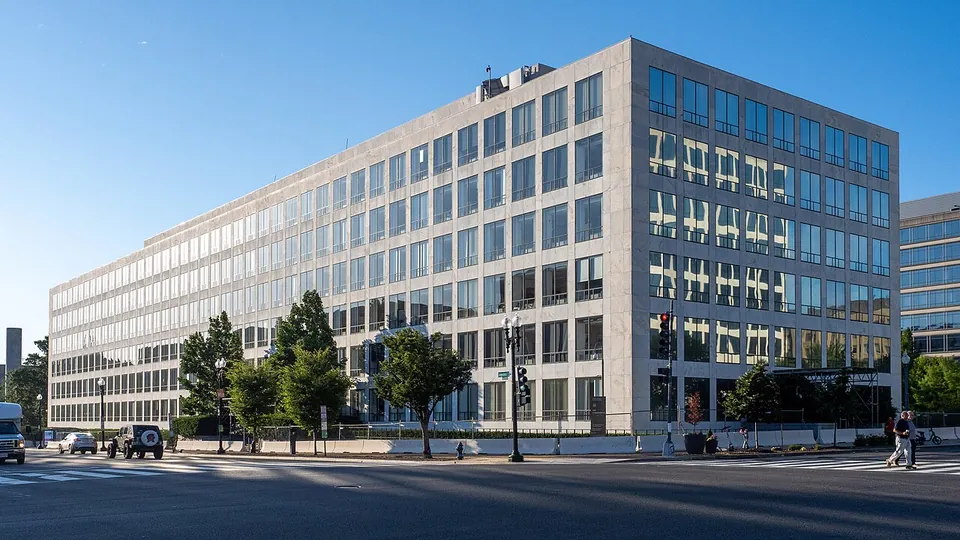
Communications problems affected 22 regional air traffic control centers, according to Transportation Secretary Sean Duffy.1
FlightAware reported more than 8,500 delayed flights on Friday.3
FlightAware reported nearly 8,000 cancellations on Friday.3
Story
A nationwide halt exposes strain in air traffic communicationsOn the afternoon of Nov. 13, the Federal Aviation Administration stopped flights departing across the country after communications problems emerged at regional air traffic control centers.13 The FAA said safety concerns and exceptional circumstances prompted the decision, describing the stoppage as a response to both communications and safety issues.13 The scale of the resulting disruption was substantial: FlightAware recorded more than 8,500 delayed flights and nearly 8,000 cancellations on Friday.3 Those totals describe two different outcomes: delayed flights did not depart on schedule, while cancelled flights did not operate, according to the figures reported by FlightAware.3
The FAA first announced at 15:54 EST (20:54 GMT) that departures within the United States would remain grounded until the agency gave further notice.3 The restriction did not begin with every affected aircraft on the ground: more than 3,500 planes were airborne when it started.3 Some of those aircraft diverted, while others continued to their intended destinations, the BBC World report said.3 The agency reopened the skies at 20:15 EST, allowing flights to take off again after the nationwide stoppage.3
The communications trouble reached 22 regional air traffic control centers, according to Transportation Secretary Sean Duffy.1 These centers direct aircraft moving between airports around the country, so the reported problem involved facilities with a role beyond any single airport.1 The number of centers identifies where communications were affected; it is not a count of flights, airports, or passengers.1 The FAA said technicians were examining the communications failure, but the reported facts do not identify a completed repair or a final technical finding from that investigation.1
Duffy attributed the outage to an older air traffic communications system that became overloaded, including analogue telephone switches and routers overwhelmed by data.3 He said the failure affected radar as well as communications, and put the cost of a complete system overhaul at $50 billion.3 The FAA’s account emphasized the safety and communications reasons for stopping departures, while Duffy’s description supplied a proposed explanation involving overloaded equipment.13 These statements describe the agency’s rationale and the secretary’s account of the technical problem; the available facts do not report the technicians’ eventual conclusion.13
The operational consequences continued after departures resumed: Duffy said disruption would persist for a few days as the system worked through the effects.3 That warning distinguishes reopening airspace from restoring normal schedules, since Duffy said clearing the accumulated consequences would take time.3 The delay and cancellation figures therefore measure the disruption reported for Friday, while the secretary’s remarks describe effects expected to continue beyond the reopening.3 The figures supplied do not give a passenger total or a separate count of people affected, so they quantify flights rather than individual travelers.3
The effects were not confined to U.S. carriers: Sydney airport halted flights bound for the United States, and Air Canada cancelled services between the United States and Canada.3 Those actions show how the U.S. restriction was reflected in decisions by an overseas airport and an international airline, without establishing a total for all affected international services.3 Eurocontrol, by comparison, has 42 member states, including states in Europe as well as Israel and Morocco.3 That membership figure describes Eurocontrol’s reach, not the number of countries, flights, or airports affected by the FAA decision.3
The Nov. 13 event was the first nationwide ground stop since January 2023, when a malfunction in an FAA computer system led to another national halt.1 Before that January disruption, the previous nationwide stoppage had come after the Sept. 11, 2001, attacks.1 The November halt lasted longer than the January 2023 nationwide stop, a comparison supported by the BBC World account.13 These earlier episodes establish that the Nov. 13 action was unusual in the history of nationwide stops, but they involved different reported causes: communications problems in November and a computer malfunction in January 2023.1
Modernization of air traffic control technology began after Congress approved $12.5 billion for the work last year.1 The effort has replaced copper cabling with fiber-optic lines and is also gradually updating older airport radio systems.1 L3Harris said it and technology partners had completed more than 70% of the planned move from legacy copper wiring to fiber-optic communications.2 That percentage measures the planned conversion of communications lines, not completion of the entire modernization program or replacement of every older system.12
Duffy said finishing the overhaul would require another $30 billion, and the White House had started seeking congressional support for that funding.1 The additional amount is distinct from the $12.5 billion Congress approved for modernization, while Duffy’s separate estimate for a complete system overhaul was $50 billion.13 Bedford said replacing 2,000 Cisco 600 routers with Juniper equipment was routine business and separate from the $12.5 billion modernization effort.2 The router replacement and the broader communications conversion are therefore described as distinct activities, rather than as the same funded project.2
Structure
Who is connected to whom- 1Federal Aviation Administration
- ← servesFact
- regulated by →Fact
- ← enablesFact
- requires →Fact
- uses →Fact
History
How it came to this- Sept. 11, 2001Earlier nationwide stopA nationwide stop followed the attacks.
- January 2023Computer-system malfunctionA malfunction led to the previous nationwide ground stop.
- 2026-11-09Modernization plans signaledAn earlier signal noted plans to upgrade air traffic control systems.
- 2026-11-13Nationwide ground stopThe FAA stopped flights departing across the country because of communications problems at regional control centers.
- 2026-11-14Router infrastructure issue signaledAn earlier signal described the infrastructure issue as an unknown router problem.
- Now22 Regional air traffic control centers affected by communications problems
- After the stopWatch for the outcome of the FAA technicians’ investigation into the communications problem; the facts do not report a completed repair or final technical finding.
Impact
Spreading outward, level by level- Level 1Air traffic control operations
The communications problems affected centers that direct planes between airports nationwide; the FAA said the stop was imposed for safety reasons.1
Fact - Level 2Departures and airborne aircraft
The FAA initially grounded departing flights until further notice. More than 3,500 airplanes were airborne when the stop began; some diverted while others continued to their destinations.3
Fact - Level 3Flight schedules
FlightAware reported more than 8,500 delays and nearly 8,000 cancellations on Friday.3
Fact - Level 4International services
Sydney airport grounded US-bound flights and Air Canada cancelled services between the US and Canada, showing that the disruption extended to some international services.3
Fact - Level 5Recovery
Duffy said disruption would continue for a few days as the effects were unwound, so reopening the skies did not itself mean schedules had returned to normal.3
Fact
Ahead
Checked automatically when due; the result goes to the track recordWatch for the outcome of the FAA technicians’ investigation into the communications problem; the facts do not report a completed repair or final technical finding.
Watch whether the disruption Duffy said would last a few days subsides as the effects are unwound.
Watch whether Congress provides the additional funding Duffy said was needed to finish the overhaul; the White House had begun lobbying for it.
Sources
What each source supportsWritten by AI from the sources listed below: every fact was checked word for word against its source, and inference is marked apart. How we write