

Coalition strikes Hodeidah as Houthis threaten Saudi ports and airspace
The Saudi-led coalition said it attacked Hodeidah, while Houthi warnings named Saudi Red Sea ports, airlines and a power station. The accounts describe threats and military operations, but give no figures for damage or the scale of any interruption.
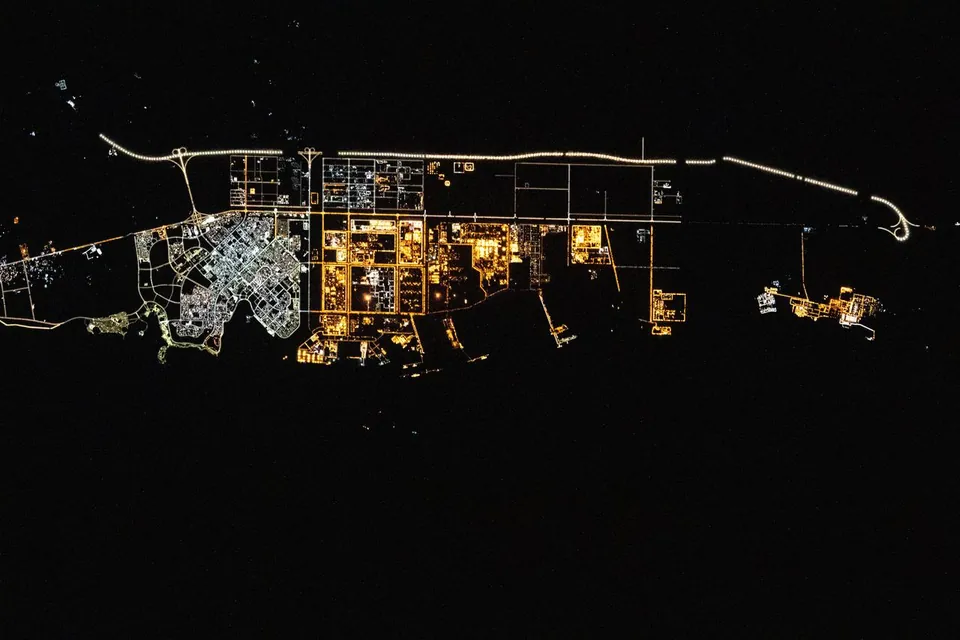
The coalition said it struck Hodeidah after the Houthis had threatened Saudi Red Sea ports if the coalition attacked the Yemeni port.12
Story
Strikes and warnings around HodeidahThe Saudi-led coalition said it struck Yemen’s Red Sea port of Hodeidah on Friday, saying the operation was intended to destroy Houthi military capabilities there.1 It said the capabilities it targeted had been used to move weapons and ballistic missiles through smuggling.1 The available accounts give no count of targets, weapons, casualties, or damage, so the scale of the strike cannot be measured from them.1 The stated purpose and the claimed result are the coalition’s account of the operation, rather than an independently quantified assessment in these reports.1
The strike followed a Houthi warning on Friday that Saudi Red Sea ports would be attacked if the coalition hit Hodeidah.2 The warning thus described a threatened response to a possible coalition action; the coalition’s account says that it later carried out a strike at the port.12 The reporting characterizes the sequence as a rapid move from reciprocal threats to strikes by both sides.1 That description establishes an escalation in events, but it does not supply a numerical measure of how extensive the fighting was.1
A day before the Hodeidah strike, the Houthis had attacked Riyadh’s tallest skyscraper, according to the report.1 Before the coalition’s operation at Hodeidah, it had also called on civilians in the area to leave.12 The coalition said the evacuation advice was for residents’ safety, while its strike statement focused on alleged weapons-smuggling capabilities.12 The reports do not say how many civilians were asked to leave or how many did so.12
Houthi military spokesperson Yahya Saree told airlines to avoid Saudi airspace, warning that it would be used for Houthi operations in the coming hours.1 A separate account likewise reports that the Houthis warned airlines away while saying new strikes were planned within hours.2 Saree also named a power station at Shuqaiq in southern Saudi Arabia as a target.1 These statements identify intended targets and warned parties, but the reports do not establish that either the threatened airspace operations or the attack on the power station occurred.12
Saree separately urged shipping companies to remove their vessels from Saudi ports on the Red Sea without delay.1 That warning broadened the threatened impact beyond airlines to commercial shipping, while the earlier warning had been directed at ports if Hodeidah were struck.12 The reports do not specify how many vessels or companies were involved, whether any ships left, or whether shipping was interrupted.1 The stated reach of the warning is therefore clear, but its practical effect cannot be counted from the information given.1
The coalition also said it had conducted an operation in Sanaa aimed at ballistic-missile and drone capabilities.1 It reported continuing operations in Saada and Taiz, and spokesman Turki al-Malki described activity across Sanaa, Saada and Taiz.12 The accounts therefore place coalition operations in three named governorates, while distinguishing the Sanaa operation’s stated missile and drone focus from the broader report of ongoing activity.12 They provide no totals for operations, targets, or effects in those locations.12
The Houthi warning over Hodeidah was conditional: it threatened attacks on Saudi Red Sea ports if the coalition struck the Yemeni port.2 The coalition had already urged civilians to leave areas around Hodeidah, and it later said it struck the port to destroy capabilities it linked to weapons and missile smuggling.12 The two sides’ statements thus addressed different groups and risks: the coalition spoke to civilians near the port, while the Houthis warned Saudi ports and airlines.12 No figures are supplied for the populations, businesses, or transport services exposed to these warnings.12
Yemen’s information minister said Hodeidah remained fully operational and that goods would continue to pass through it.1 That statement differs in emphasis from the coalition’s claim that it had destroyed operational capabilities at the port, although the reports do not quantify the capabilities or describe any change in port activity.1 The minister’s account concerns the port’s overall operation and the flow of goods, while the coalition’s claim concerns the specific capabilities it said it targeted.1 The information provided does not include cargo volumes, operating measures, or an independent assessment that would reconcile the two claims.1
The events connect a strike at Hodeidah with threats directed at Saudi ports, airlines, and a power station, alongside coalition operations reported in several Yemeni locations.12 The reports also place the exchange after a Houthi strike on a prominent Riyadh building and a coalition evacuation warning for Hodeidah residents.1 Taken together, the accounts show how the sides’ statements and operations widened across civilian, transport, and military concerns, without establishing the number of people or facilities affected.1 The clearest limits are evidentiary: threats are not proof of completed attacks, and claims about destroyed capabilities are not accompanied by independent measurements in these reports.12
Disagreements
Where the sources do not matchWhether Hodeidah port remained operational
gCaptain1
gCaptain1
Reason: The claims address different things: the coalition described specific capabilities it said it targeted, while the minister described the overall operation of the port and goods flow. The reports provide no measurements to reconcile them.
History
How it came to this- A day before FridayHouthi strike on a Riyadh skyscraperThe report says the Houthis had struck Riyadh’s tallest skyscraper.
- Before the Hodeidah strikeCoalition evacuation warningThe coalition urged civilians to leave areas around Hodeidah for their safety.
- FridayHouthi warning over Saudi portsThe Houthis threatened Saudi Red Sea ports if the coalition struck Hodeidah.
- FridayCoalition reports strike at HodeidahThe coalition said it struck the port and targeted capabilities it linked to smuggling weapons and missiles.
- NowFriday Coalition strike at Hodeidah port
Impact
Spreading outward, level by level- Level 1Hodeidah port and goods movement
The coalition said it destroyed operational capabilities at the port, while Yemen’s information minister said the port remained fully operational and goods would continue to pass through it.1
Fact - Level 2Air travel and commercial shipping
The Houthi spokesperson warned airlines to avoid Saudi airspace and urged shipping companies to evacuate vessels from Saudi Red Sea ports. The reports do not establish whether these warnings caused changes to travel or shipping.12
Fact - Level 3Potential wider exposure
If the threats were acted on, the risks could extend beyond the port strike to transport and infrastructure named by the Houthi spokesperson; the reports do not confirm those threatened attacks occurred.
Analysis
Sources
What each source supportsWritten by AI from the sources listed below: every fact was checked word for word against its source, and inference is marked apart. How we write