

EU College approves tourism strategy for a sector near 10% of EU GDP
The European Commission says the plan sets shared priorities and deliverables for tourism across the Union. It presents the strategy as a more coherent approach, while allowing territories to adapt voluntary tools to local needs.
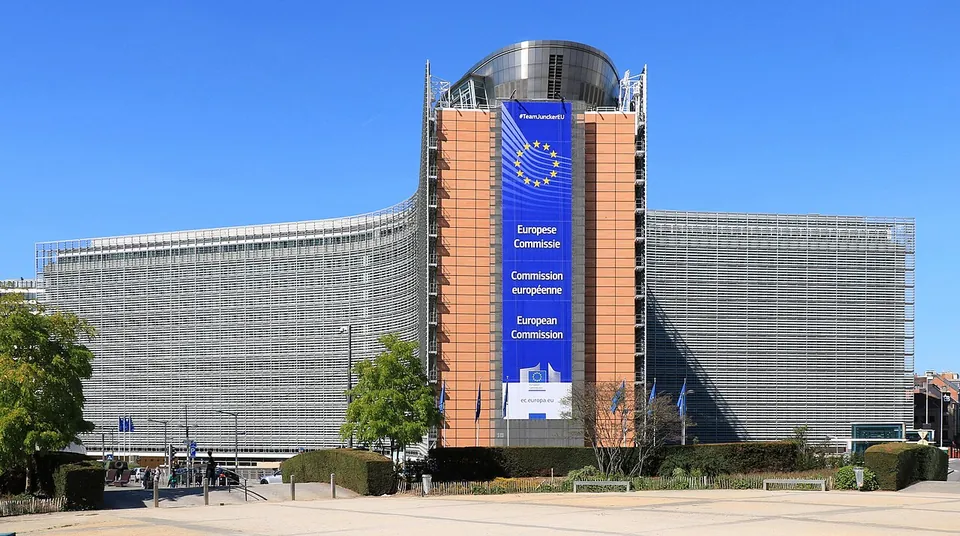
Tourism accounts for nearly 10% of EU GDP.1
The sector supports more than 20 million jobs.1
Tourism sustains 5 million businesses, almost all SMEs or micro-enterprises.1
Story
A shared EU approach to tourismThe European Commission’s College has approved a Sustainable Tourism Strategy for a sector that accounts for nearly 10% of EU GDP.1 Tourism is linked to over 20 million jobs and 5 million businesses, with SMEs and micro-enterprises making up almost all of those firms.1 Those figures describe the scale of tourism across the EU economy, employment and business landscape; the Commission announcement does not give a single measure of the strategy’s expected effects.1 The strategy aims to help territories make use of tourism’s potential to foster sustainable growth, improve jobs and services, and build stronger businesses.1
The approval marks a change in how the EU frames its work on tourism: the Commission describes a move beyond acknowledging the sector’s importance toward a European strategy with defined priorities and deliverables.1 The strategy is also presented as a transition from separate initiatives to a more joined-up European approach.1 In the Commission’s account, that approach is meant to tighten the connection between tourism, competitiveness and cohesion.1 The announcement establishes the strategy’s direction, but the facts provided do not specify individual deliverables, deadlines or a timetable for implementation.1
The strategy responds to a sector the Commission describes as one of the EU’s most competitive, with a substantial role in employment and economic growth.1 That position comes with pressures, including shortages of workers and heavier demands on some destinations.1 The Commission also points to economic and geopolitical instability as challenges facing tourism.1 These pressures appear alongside tourism’s broad economic footprint; the announcement identifies them as challenges but does not quantify their scale or attribute them to particular places.1
The people and organisations touched by the sector include workers and businesses, reflected in the figures of more than 20 million jobs and 5 million enterprises across the EU.1 Almost all of those businesses are SMEs or micro-enterprises, making them a central part of the business count cited by the Commission.1 The strategy’s stated aims include better employment and stronger businesses, linking its intended outcomes to two groups represented in those figures.1 The figures supplied are sector-wide totals and do not break jobs or businesses down by region, size beyond the SME and micro-enterprise description, or type of tourism activity.1
The Commission says tourism contributes directly to economic, social and territorial cohesion.1 It also says cohesion policy already backs tourism-related work involving infrastructure, local businesses, cultural heritage, innovation and skills.1 That existing support gives the new strategy a context in which tourism is connected not only to businesses and jobs but also to local assets and capabilities.1 The announcement does not state how much cohesion-policy funding goes to tourism or how the strategy will change the current investments.1
The Commission’s proposed coordination is intended to bring policies together while preserving the distinct character of different territories.1 It plans to offer European tools, benchmarks and guidance on a voluntary basis to Member States, regions and local authorities.1 Those public authorities would be able to adjust the resources to their particular requirements, rather than being described as bound to use them uniformly.1 The Commission therefore presents common coordination and local adaptation as parts of the same approach, not as alternatives.1
The announcement’s geographical framing is broad: Europe is identified as the world’s leading tourism destination.1 Within the EU, tourism’s contribution varies by country in the figures provided; in Greece, its direct and indirect contribution reaches 25% of GDP.1 That Greek figure is stated as a combined direct and indirect contribution, while the nearly 10% figure refers to tourism’s share of EU GDP.1 Because the measures refer to different geographic scopes and describe the Greek contribution as direct and indirect, they should not be treated as identical measurements.1
The Commission’s rationale connects the strategy to both tourism’s economic importance and the pressures affecting the sector.1 Its stated aims extend beyond economic growth to include improved jobs and services, alongside stronger businesses.1 The emphasis on cohesion is also explicit: the Commission links tourism to economic, social and territorial cohesion and describes a closer relationship between cohesion and competitiveness.1 Taken together, these elements define the strategy’s stated scope, while the supplied facts do not establish outcomes that have already resulted from its approval.1
The approval provides a common European framework for tourism policy, while the Commission’s account leaves room for Member States, regions and local authorities to respond to local conditions.1 Its stated ambition is to make tourism’s economic potential support sustainable growth, better employment, stronger firms and improved services in territories.1 The strategy’s significance, as described by the Commission, lies in joining existing and future efforts under shared priorities rather than treating tourism as a collection of disconnected initiatives.1 The scale of the sector is clear in the Commission’s figures, but the announcement provides no quantified forecast of what the new framework will change.1
Structure
Who is connected to whom- 1European Commission
- ← partners withFact
- invests in →Fact
- serves →Fact
- regulated by →Fact
- agreement with →Fact
Impact
Spreading outward, level by level- Level 1Tourism workers and businesses
The strategy’s stated aims include better jobs and stronger businesses; the Commission’s sector-wide figures are more than 20 million jobs and 5 million businesses.1
Fact - Level 2Territories and local authorities
The strategy aims to help territories turn tourism potential into sustainable growth, and the Commission says voluntary tools, benchmarks and guidelines will be available for local adaptation.1
Fact - Level 3EU tourism policy
The Commission presents the strategy as a shift from separate initiatives to a coherent European approach linking tourism, competitiveness and cohesion.1
Fact
Sources
What each source supportsWritten by AI from the sources listed below: every fact was checked word for word against its source, and inference is marked apart. How we write