

Trump order requires contractors to coordinate with the White House on congressional requests
The order sets rules for federal contractors and subcontractors handling congressional requests involving their executive-branch work or communications. It also directs agencies to coordinate responses and consider penalties for noncompliance.
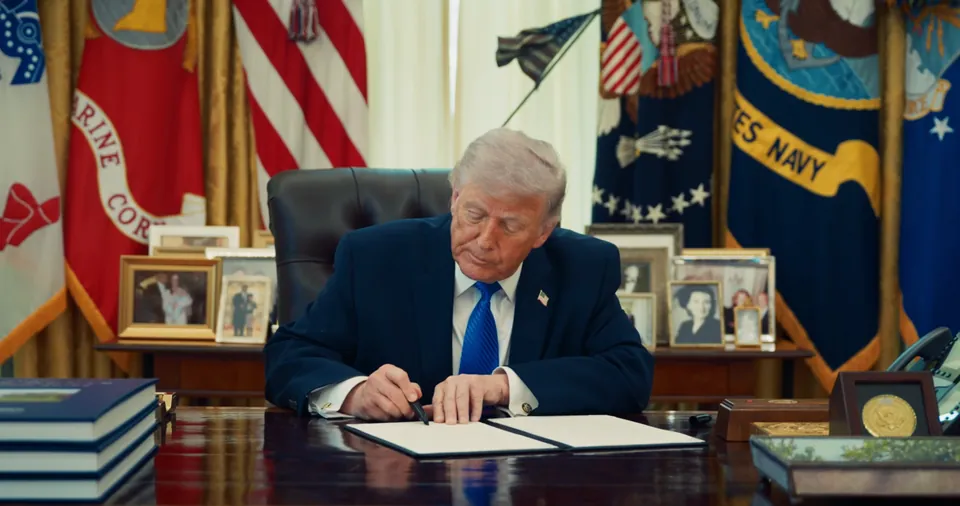
Contractors must notify the White House and contracting agencies about congressional requests concerning their executive-branch work or communications, whether pending or future.1
The requirements cover subcontractors working on federal contracts, and agencies must inform both contractors and subcontractors and require compliance.1
Agencies are to consider enforcement for noncompliance, including contract cancellation or termination and debarment or suspension.1
Story
How the order changes the handling of congressional requestsPresident Donald J. Trump signed an executive order that the White House presents as protecting executive-branch interests while promoting economical and efficient federal contracting.1 Its central requirements concern requests from Congress for information connected to contractors’ work for the executive branch or their communications with it.1 Contractors must alert the White House and the agencies responsible for their contracts when such a request is pending or may arise in the future.1 The order also requires contractors to follow instructions from the White House or an agency to withhold communications those bodies have judged protected by executive privilege.1 The result is a prescribed role for contractors in a process that also involves federal agencies and the White House.1
The order’s process begins with notice: contractors are to alert both the White House and the relevant contracting agencies about congressional requests connected to their executive-branch work or communications.1 That duty covers requests already pending as well as ones that may come later, rather than only requests received after the order is communicated.1 Agencies are then to work with the White House and contractors on how to respond.1 That coordination includes considering whether a privilege applies to the information sought and whether the executive branch should assert it.1 The order therefore describes notice and intergovernmental coordination as part of handling the request, while directing contractors to observe any withholding instructions issued by the White House or an agency.1
The requirements reach beyond firms holding federal contracts directly: subcontractors working for a federal contractor on a federal contract are also covered.1 Agencies must take steps to make contractors responsible for subcontractor compliance, and must separately tell both contractors and subcontractors about the order.1 Those communications are to happen promptly, and agencies must require both groups to meet the order’s requirements.1 This places the obligations on two levels of work connected to a federal contract, while giving agencies duties both to convey the rules and to address compliance.1 The order assigns the Office of Management and Budget the task of preparing guidance for agencies on compliance and coordination with the White House.1
The order frames executive privilege as a protection for confidential information within the executive branch.1 It says Congress needs a valid legislative purpose to seek that information and that the purpose cannot intrude on core executive functions.1 It also argues that Congress should not receive privileged material, including communications involving federal employees and contractors, until the executive branch has had a chance to assert relevant privileges.1 That argument connects the contractor rules to the order’s wider account of how privilege should operate when Congress seeks information from the executive branch.1 The order’s instructions specifically require contractors to withhold communications when the White House or an agency has determined that executive privilege protects them.1
Federal agencies are also responsible for considering what to do if a contractor or subcontractor does not comply.1 The possible measures identified in the order include ending or canceling a contract, as well as suspending or barring a contractor from federal work.1 The order presents these as actions for agencies to consider, not as automatic outcomes for every failure to comply.1 The potential consequences apply to noncompliance by contractors and subcontractors, while agencies are separately directed to communicate the order’s requirements to both.1 The White House says the order relies on the Constitution, federal statutes, the Federal Property and Administrative Services Act, and common law.1
The White House’s stated efficiency case is that early notice and coordination may avoid repeated work, litigation, and unnecessary public expense.1 The order also says agencies may hesitate to share sensitive material if they cannot trust that contractor communications will stay confidential.1 In the order’s account, that reluctance could obstruct government programs that depend on sharing such information.1 These are the order’s stated reasons for the requirements, alongside its assertion that executive-branch confidentiality needs protection.1 The document thus links its contracting rationale to its position on privilege, while placing agencies in charge of guidance, coordination, and consideration of enforcement.1
Separate reporting described Trump’s September Nvidia trades as part of hundreds of securities transactions.2 That report said the disclosure was signed on November 1 and later made public by the U.S. Office of Government Ethics on Thursday.2 It also recounted a White House spokesperson’s October statement that an outside financial institution managed Trump’s portfolio independently and that there was no conflict of interest.2 These details concern financial disclosures and portfolio management, not the contractor-notification and privilege rules in the executive order.12
Another report said Trump told Xi that he hoped the United States and China could help end the war in Ukraine.2 Patricia Kim of the Brookings Institution argued that China would not want to be viewed as mediating an agreement while Ukraine and European leaders were absent from the discussions.2 Those reported comments and Kim’s assessment concern diplomacy over Ukraine, rather than the order’s treatment of federal contracting or congressional requests.12 Taken together, the separate reports describe other matters involving Trump, but they do not alter the order’s stated rules for agencies, contractors, and subcontractors.12
Structure
Who is connected to whom- 1President Trump
- drives demand for →Fact
- enables →Fact
- requires →Fact
- agreement with →Fact
- ← partners withFact
Impact
Spreading outward, level by level- Level 1Contractor response to congressional requests
Contractors must alert the White House and contracting agencies about relevant requests and follow instructions to withhold communications determined to be protected by executive privilege.1
Fact - Level 2Agency and White House coordination
Agencies are to coordinate with the White House and contractors on responses, including whether privileges apply or should be asserted.1
Fact - Level 3Subcontractor compliance and agency guidance
Agencies must communicate the requirements to contractors and subcontractors, while the Office of Management and Budget is tasked with developing agency guidance.1
Fact - Level 4Contracting and program continuity
The order argues that notice and coordination could reduce duplicated work, litigation, and waste, and that confidentiality concerns could otherwise deter information-sharing and hinder government programs.1
Fact
Sources
What each source supportsWritten by AI from the sources listed below: every fact was checked word for word against its source, and inference is marked apart. How we write