

UK bodies awarded settlement-linked firms £10.7m in new contracts after sanctions announcement
The contracts totalled $14.4m, with Heidelberg Materials subsidiaries accounting for 14 contracts worth £10.4m. The disclosures followed the government’s announcement of powers to sanction companies profiting from settlement-related business, but the available facts do not show those powers had been applied to these firms.
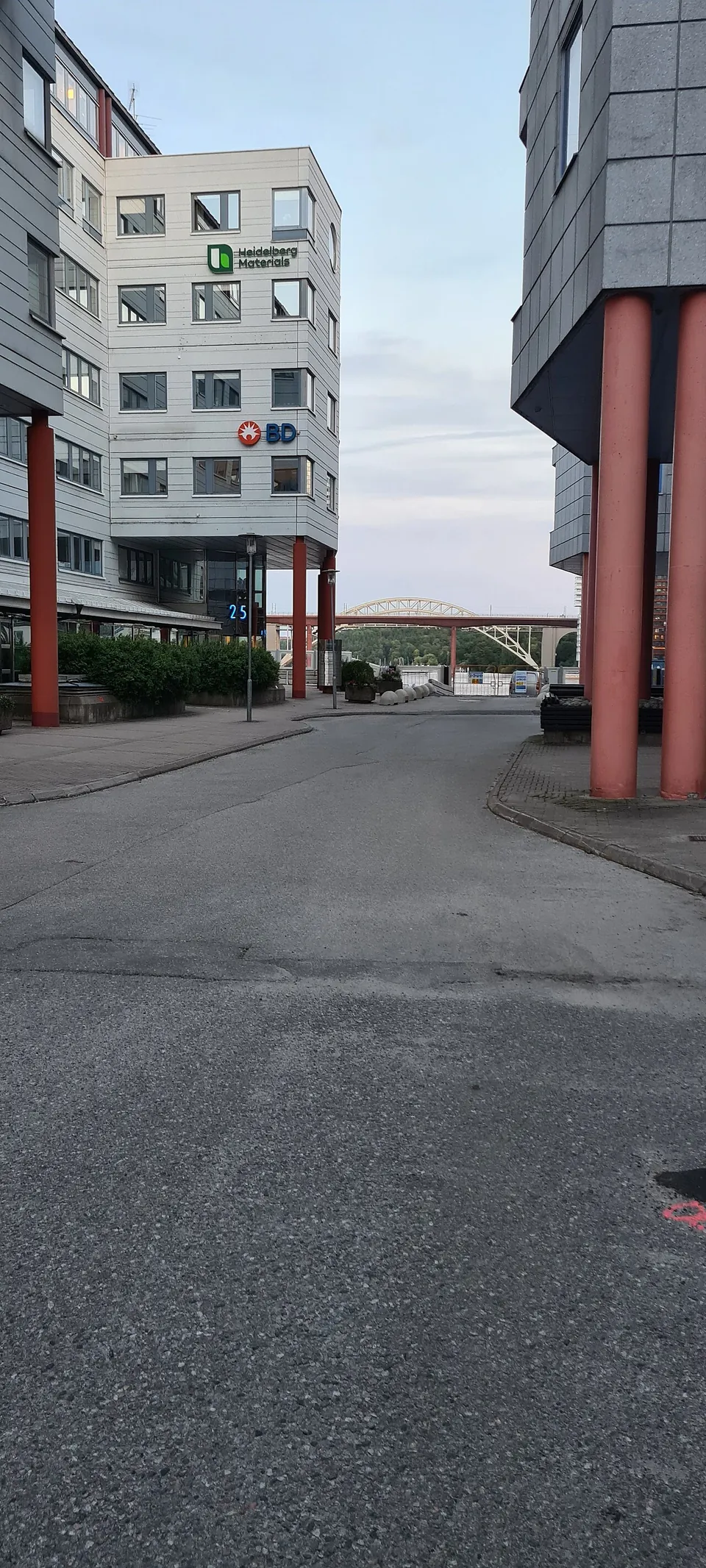
Public bodies published details of 18 additional contracts with settlement-linked companies after the announcement.2
Three Heidelberg subsidiaries accounted for 14 contracts, mostly for roadworks and resurfacing in England.2
An earlier investigation found at least 17 linked companies with public-sector contracts worth more than £2.1bn.2
Story
New public contracts and the gap between sanctions powers and procurementUK public bodies awarded companies linked to illegal Israeli settlements new contracts worth £10.7m, equivalent to $14.4m, according to the investigation.2 The contracts were disclosed after the government announced powers to sanction firms that profit from business with settlements, but that sequence alone does not establish that sanctions had taken effect.2 The investigation identified 18 additional contracts published by public bodies since the announcement, while the reported £10.7m gives their combined value.2 Heidelberg Materials accounts for most of that new-contract total: three of its subsidiaries appeared in 14 contracts worth £10.4m, or $14.5m, mainly involving English roadworks and resurfacing.2
The investigation assembled its findings from procurement records, company filings, corporate disclosures and contract information provided by Tussell, rather than relying on a single record source.2 Its account concerns contracts published after the government’s announcement, which is a timing measure; the evidence does not say that each contract was newly awarded after that announcement.2 An earlier Al Jazeera investigation, published in August, had found at least 17 linked companies holding UK public-sector contracts valued above £2.1bn, or $2.85bn.2 That earlier figure describes the value of the wider group’s existing public-sector contracts, not the £10.7m value reported for the new disclosures.2
For Heidelberg, the 14 newly identified contracts sit within a much larger group-wide count: five subsidiaries had at least 35 UK contracts worth about £194.7m, or $261m.2 The 14 contracts concern three subsidiaries and total £10.4m, whereas the 35-or-more figure covers five subsidiaries and the group’s reported UK contracts more broadly.2 The figures therefore describe different scopes, and the larger total should not be read as the value of the new contracts alone.2 In a September 2026 update to its settlement index, the UN listed Heidelberg Materials in connection with commercial use of natural resources in the occupied Palestinian territory.2
The investigation reports that Hanson Israel, Heidelberg’s Israeli subsidiary, owns the Nahal Raba quarry in the West Bank, south of Qalqilya.2 Who Profits says the quarry occupies land belonging to the Palestinian villages of az-Zawiya and Rafat, identifying the local land connection behind the reporting.2 A planning notice reviewed by Al Jazeera showed that a proposal to enlarge the quarry had been approved.2 Who Profits dated that approval to May 28, 2025, and Heidelberg did not challenge that point in its response.2 Heidelberg had previously told Al Jazeera that Hanson Israel ceased operating the quarry and related plants in 2023, before the reported approval date.2
The reported quarry inactivity and the later approval refer to different events: one concerns operations, while the other concerns permission for an expansion.2 The available information does not explain whether the approval changed quarry operations, and Heidelberg’s earlier account refers to its subsidiary’s activity through 2023.2 The distinction matters when reading the evidence because an approval does not, on its own, establish that extraction resumed.2 The reporting presents the UN listing, ownership, land claim, planning approval and company statement as separate pieces of context around Heidelberg’s public contracts.2
Other named companies show that the contract disclosures span different kinds of business and different scales of public procurement.2 Motorola Solutions and its subsidiaries received two police communications contracts worth about £87,900, or $118,000.2 Across its identified contracts, however, Motorola had the largest reported value, about £1.7bn, or $2.28bn, mostly through Airwave Solutions.2 The Home Office gave Airwave a £1.562bn extension, valued at $2.13bn, for a secure communications network serving emergency services in England, Scotland and Wales.2 The UN lists Motorola Solutions for settlement-related activities that include supplying security equipment and services.2
Fosun International is identified by the UN in connection with commercial use of natural resources, especially water and land, and its West Bank link centres on Israeli cosmetics maker Ahava Dead Sea Laboratories.2 Fosun-owned Breas Medical won a £98,000 contract, or $131,000, with Hull hospitals.2 That award brought the group’s reported public-contract value to at least £1.3m, or $1.74m, a broader group total rather than the value of the Breas contract alone.2 The UN links Egis to services and utilities, including transport, that support the maintenance and continued presence of settlements.2 Egis said it formally disagreed with its inclusion in the UN database, a stated objection that the investigation’s account records alongside the listing.2
The government’s position took public form on September 8, when Ed Miliband told the House of Commons that action would be taken against people and companies providing services for settlement expansion.2 Miliband also warned that those financing or enabling illegal settlements would face the full force of UK sanctions.2 The reported publication of additional contracts after the announcement does not, on the evidence available, show that the announced powers were formally used against the companies named.2 Neve Gordon said the companies appeared to be violating duties under international humanitarian law, and said UK firms involved in the occupation were likely to breach the sanctions regime Miliband was establishing.2
Jeremy Corbyn argued that continuing contracts undermined the credibility of the government’s sanctions position and called the situation outrageous and insulting to the public.2 The Cabinet Office did not answer Al Jazeera’s request for comment on the investigation.2 In an earlier statement, the department said that public authorities decide individually whether suppliers should be excluded from contracts.2 The department also said UK procurement should not serve as a means of boycotting suppliers associated with other countries, except where formal UK sanctions, embargoes or restrictions are in effect.2 That stated approach places the contracting decision with public authorities while connecting procurement exclusions to formal restrictions; the reported contracts and the announced sanctioning powers remain distinct matters in the evidence.2
Structure
Who is connected to whom- 1Heidelberg Materials
- operates in →Fact
History
How it came to this- AugustEarlier investigation reported existing contractsAl Jazeera found at least 17 linked companies had UK public-sector contracts worth more than £2.1bn.
- September 8Miliband announced intended actionHe told the House of Commons that the government would act against people and companies providing services for settlement expansion.
- After the announcementAdditional contracts were disclosedPublic bodies published details of 18 additional contracts with settlement-linked companies, with a reported combined value of £10.7m.
- Now£10.7m Value of new public contracts disclosed for firms linked to settlements
Impact
Spreading outward, level by level- Level 1Public procurement
The investigation reports contracts worth £10.7m and 18 additional contract disclosures; the evidence does not establish that the sanctioning powers had already been formally applied to the firms.2
Fact - Level 2Heidelberg contracts
Three subsidiaries accounted for 14 contracts worth £10.4m, while five subsidiaries had at least 35 UK contracts worth about £194.7m; these figures describe different scopes.2
Fact - Level 3Company and settlement context
The UN listed Heidelberg in connection with commercial use of natural resources in the occupied Palestinian territory. Heidelberg had said its subsidiary stopped operating the quarry in 2023, while Who Profits dated approval of the expansion to May 28, 2025; the reported inactivity and approval concern different events.2
Fact - Level 4Government credibility
Corbyn argued that continuing contracts undermined the credibility of the government's sanctions position. The Cabinet Office's stated approach leaves supplier exclusion to public authorities case by case and says procurement should not be used to boycott suppliers unless formal restrictions apply.2
Fact
Sources
What each source supportsWritten by AI from the sources listed below: every fact was checked word for word against its source, and inference is marked apart. How we write