

CFTC staff advisory allows certain crypto assets toward a 12-month financial-resources test
The guidance applies to three types of derivatives venues and clearing organizations, but excludes crypto assets from a separate liquidity test. It is staff guidance, not necessarily the view of the Commission.
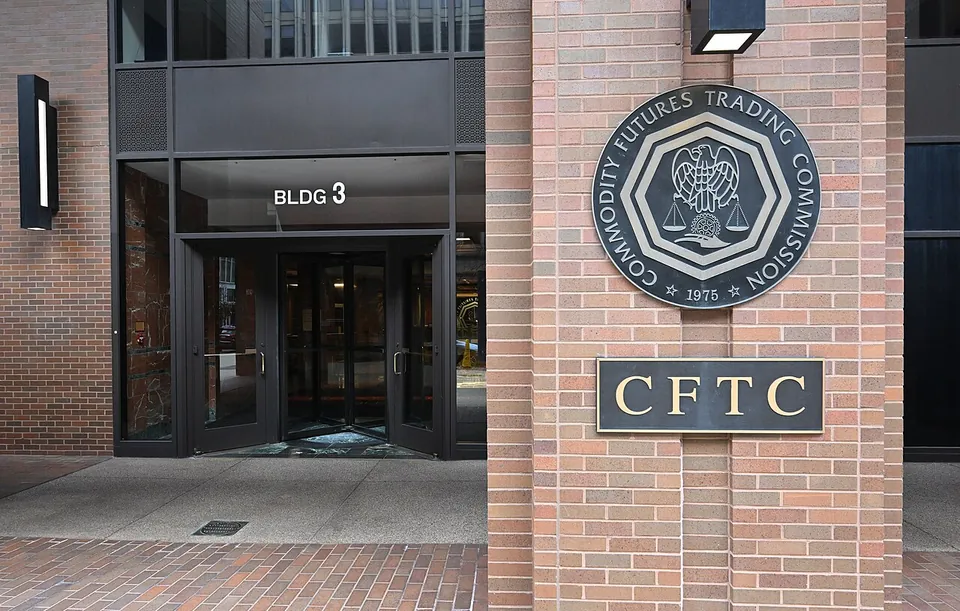
The rules require financial resources covering at least twelve months of operating costs.2
These named crypto assets may be counted toward the financial-resources requirement, subject to appropriate haircuts.2
Crypto assets cannot count toward the separate liquidity requirement because they are not cash or highly liquid securities under GAAP.2
Story
What the CFTC’s crypto financial-resources advisory changesOn November 23, 2026, staff in two CFTC divisions issued guidance on how crypto assets may be treated under financial-resources rules for derivatives-market organizations. (The date and issuing offices identify the action; the guidance concerns how specified requirements apply to covered entities.)2 The rules require covered organizations to hold resources sufficient for at least 12 months of operating costs, setting the central measure addressed by the advisory.2 Certain crypto holdings, including bitcoin, ether and payment stablecoins, may be included in meeting that financial-resources threshold, subject to appropriate reductions in their counted value.2 That permission is limited: crypto assets do not qualify for the separate liquidity requirement, because the advisory says they are neither cash nor highly liquid securities under Generally Accepted Accounting Principles.2
The advisory addresses swap execution facilities, designated contract markets and derivatives clearing organizations, each within the scope of the rules identified by staff.2 The relevant provisions are CFTC Regulations 37.1301, 38.1101(a) and 39.11(a)(2), which together establish the financial-resources obligations discussed in the guidance.2 The distinction between financial resources and liquidity matters because eligibility for one test does not establish eligibility for the other: crypto may count toward the former but not the latter.2 Staff guidance describes the practical result as a venue being able to use bitcoin for its capital buffer while remaining unable to apply it to liquidity obligations.1
Counting an eligible crypto asset does not mean counting its full stated value, since the advisory makes appropriate haircuts part of the calculation.2 The advisory does not give haircut percentages, leaving compliance teams to derive the applicable reductions from the text rather than from a published numerical schedule.1 The guidance also does not identify a complete set of qualifying assets beyond bitcoin, ether and payment stablecoins, so it leaves the status of other assets unspecified.12 These limits mean that the advisory supplies a framework for considering crypto in the financial-resources calculation without resolving every valuation or eligibility question in advance.12
The entities potentially affected are the three categories named in the advisory, rather than every business that holds or trades crypto assets.2 For those entities, the financial-resources measure is tied to a minimum period of operating costs, not simply to the amount of crypto held.2 Any eligible crypto contribution is therefore assessed within the existing resources requirement and adjusted by a haircut, while the separate liquidity test remains unavailable to crypto assets.2 The advisory gives no percentages for those adjustments and no broader list of qualifying assets, two omissions that leave important implementation details to be determined from its wording.1
The CFTC described the document as staff views, and it cautioned that those views need not be the Commission’s own position.2 That status is relevant when reading the advisory: it records how staff interpret the specified requirements, but the source does not present it as necessarily speaking for the Commission.2 The staff action followed other steps that included clearing a path for the first blockchain-based derivatives exchanges to operate in the United States.1 An earlier staff step also relieved providers of passive crypto-trading software from broker-registration requirements, according to the reported account of those actions.1
The advisory arrived amid other CFTC work on crypto-market rules: in October 2026, the agency proposed measures aimed at preventing abuse and setting transaction rules within a federal rulebook.3 On Oct. 5, the CFTC had published an advance notice asking for comment on a framework for retail transactions in crypto commodities.3 The sequence followed the Senate’s failure to advance the Clarity Act on Sept. 15; afterward, the CFTC and SEC moved to build federal approaches under authorities they already held.3 The advisory can be read as part of that larger federal effort, while its specific subject remains financial-resources treatment for the covered derivatives organizations.2
CFTC Chairman Michael Selig said major crypto exchanges and newer firms had shown interest in the agency’s federal oversight framework.3 He also said many large crypto exchanges already had CFTC registrations because they provide financial derivatives, including perpetual futures.3 Selig said newer firms were interested in obtaining a single CFTC license rather than registering under 50 separate state systems.3 His comments describe stated interest in federal oversight and licensing; they do not establish that every firm would choose the same regulatory route.3
Selig said he wanted the United States to avoid software developers relocating offshore and favored cooperation across party lines to protect developers who act properly.3 He also said he would respond to questions from Congress as lawmakers investigate, placing congressional scrutiny alongside the agency’s work.3 Selig said the CFTC would contest state actions against event-contract markets, maintaining that the agency has exclusive authority over those markets.3 Those remarks concern broader disputes about oversight and jurisdiction; they are distinct from the advisory’s treatment of crypto assets in financial-resources and liquidity calculations.23
The political setting may bring additional scrutiny: Democrats were expected to take control of both chambers of Congress after the midterms, with closer attention to crypto regulation in 2027.3 That expected scrutiny forms part of the context for the agency’s federal-rulemaking efforts, alongside the stalled legislation and the CFTC’s use of existing statutory authority.23 The advisory itself is narrower than those wider policy questions: it addresses specified derivatives entities, operating-cost resources, eligible crypto assets and the separate limits on liquidity treatment.2 Its practical boundaries are therefore clear in some respects and open in others: the resources period and liquidity exclusion are stated, while haircut percentages and the full qualifying-asset set are not supplied.12
Structure
Who is connected to whom- 1Commodity Futures Trading Commission
- ← regulated byFact
- ← agreement withFact
- sanctions →Fact
- ← regulatory exposureFact
- ← enablesFact
History
How it came to this- Sept. 15, 2026Senate fails to advance the Clarity ActAfter the bill stalled, the CFTC and SEC moved to establish federal frameworks using their existing statutory authorities.
- Oct. 5, 2026CFTC seeks comment on retail crypto commodity frameworkThe agency published an advance notice seeking comment on a framework for retail crypto commodity transactions.
- October 2026CFTC proposes crypto-market rulesThe proposal aimed to prevent abuse in crypto markets and set transaction rules under a federal rulebook.
- November 23, 2026CFTC staff issue crypto financial-resources advisoryStaff from the Division of Market Oversight and Division of Clearing and Risk issued the advisory.
- Now12 months Minimum operating-cost coverage required by the rules
- 2027Watch for the expected greater congressional scrutiny of crypto regulation after Democrats were expected to take control of the House and Senate following the midterms.
Impact
Spreading outward, level by level- Level 1Covered derivatives-market organizations
The advisory addresses swap execution facilities, designated contract markets and derivatives clearing organizations, under the specified CFTC regulations.2
Fact - Level 2Financial-resources calculation
Certain crypto assets may count toward the required operating-cost resources, but appropriate haircuts apply.2
Fact - Level 3Separate liquidity test
Crypto assets cannot satisfy the separate liquidity requirement because they are not cash or highly liquid securities under GAAP.12
Fact - Level 4Implementation questions
Without published haircut percentages or a complete list of qualifying assets, compliance teams may need to assess the advisory text to determine reductions and asset eligibility.
Analysis - Level 5Federal crypto-policy context
The advisory sits within a broader federal effort to establish approaches to crypto markets after the Clarity Act stalled; it remains a staff view and need not reflect the Commission’s views.23
Fact
Ahead
Checked automatically when due; the result goes to the track recordWatch for the expected greater congressional scrutiny of crypto regulation after Democrats were expected to take control of the House and Senate following the midterms.
Watch how compliance teams interpret appropriate haircuts and which assets qualify beyond bitcoin, ether and payment stablecoins; the advisory supplies neither haircut percentages nor a full qualifying-asset list.
Sources
What each source supportsWritten by AI from the sources listed below: every fact was checked word for word against its source, and inference is marked apart. How we write