

USDA and FBI suffer cyber breaches affecting farmer payments and criminal database
Hackers accessed the USDA's farmer‑payment system and the FBI's National Crime Information Center. The incidents were reported by NBC News and CNN, prompting official warnings and a renewed cyber‑security initiative.
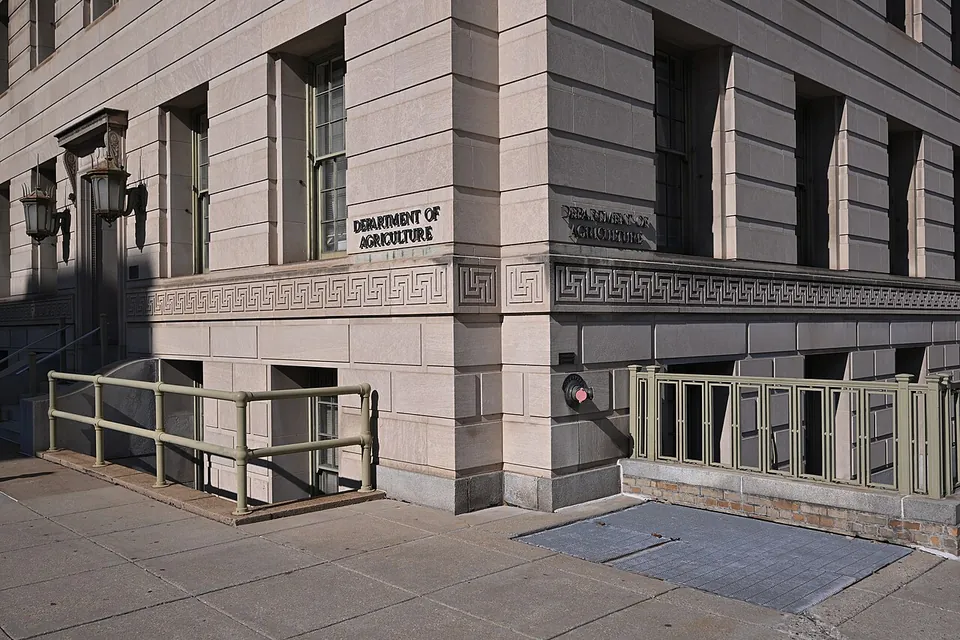
The USDA system targeted in the breach facilitates payments to farmers.1
The FBI intrusion involved a nationwide database connecting federal, state and local law enforcement.1
CNN reported that the FBI had been hacked for a second time since September.1
Story
Details of the USDA and FBI cyber intrusionsThe U.S. Department of Agriculture and the Federal Bureau of Investigation were both penetrated by unauthorized actors.1 The USDA breach targeted a system that processes payments to farmers, while the FBI intrusion involved its nationwide criminal information database.1 These two incidents were disclosed by separate media outlets, with NBC News covering the USDA breach and CNN reporting on the FBI compromise.1 The FBI intrusion marks the second successful hack of the agency since September.1 Both breaches illustrate how federal agencies with critical public‑service functions are attractive targets for sophisticated threat actors.1 The simultaneous nature of the attacks raises concerns about coordinated campaigns aimed at exploiting multiple government systems.1 Because the USDA system handles financial transfers, any disruption could delay payments that farmers depend on for planting and harvesting cycles.1 Similarly, the FBI’s NCIC database underpins daily law‑enforcement operations, so its compromise could affect routine investigative work across the country.1 The public disclosure by major news outlets underscores the importance of transparency in cyber‑incident reporting.1 Analysts note that the dual breaches may prompt a review of inter‑agency information sharing protocols to prevent cascading security failures.1
The USDA's farmer‑payment platform is a critical conduit for distributing federal funds to agricultural producers.1 Former USDA officials cautioned that the system could serve as a back door for attackers seeking deeper access to the agency's sensitive research.1 One former official highlighted the department's involvement with biologic research, warning that adversaries might exploit that work against national interests.1 If malicious actors gain entry through the payment portal, they could potentially navigate to databases containing pathogen studies or vaccine development data.1 Such a scenario would amplify the threat beyond financial loss, posing biosecurity risks that could affect public health preparedness.1 The warning reflects broader concerns that cyber‑intrusions into seemingly administrative systems can serve as stepping stones to more classified information.1 Farmers relying on timely payments may experience cash‑flow challenges if the system is taken offline for remediation.1 State agriculture departments, which often coordinate with USDA disbursements, could also feel downstream effects of any prolonged outage.1
The FBI's compromised database is the National Crime Information Center, which links federal, state and local law‑enforcement agencies.1 A former FBI official warned that tampering could undermine the reliability of information relied upon by officers nationwide.2 Because NCIC data is used for everything from locating missing persons to verifying firearm ownership, any alteration could have immediate safety implications.1 Law‑enforcement officers depend on the accuracy of warrant and background‑check data to make split‑second decisions in the field.1 If attackers inject false entries or erase records, it could lead to wrongful arrests or allow dangerous individuals to evade detection.2 The former official’s caution highlights the broader risk that a compromised NCIC undermines public trust in policing tools.2 State and local agencies that lack robust cyber‑defenses may be especially vulnerable to secondary attacks stemming from the NCIC breach.1 The incident therefore prompts a reassessment of how critical law‑enforcement data is protected across jurisdictional boundaries.1
In response, FBI Director Kash Patel announced continued monitoring of hostile actors through Operation Winter Shield, an anti‑cyber‑attack initiative.1 Patel discussed these measures on a televised program hosted by Sean Hannity, emphasizing the agency's proactive stance.1 Operation Winter Shield is designed to detect intrusion attempts early and to coordinate defensive actions across federal networks.1 The public briefing signals an effort to reassure both lawmakers and the public that the FBI is actively countering the threat landscape.1 By highlighting the initiative on a high‑visibility platform, Patel aims to demonstrate accountability and deter future attackers.1 The operation also involves sharing threat intelligence with partner agencies, which could help protect the NCIC and other critical systems.1 Analysts note that such inter‑agency collaboration is essential to mitigate the ripple effects of a breach in a central database.1
Cybersecurity chief Sean Cairncross was dismissed following criticism over multiple high‑profile outages.1 Earlier in September, the hacking group ShinyHunters accessed personal data from an FBI jobs portal, indicating a pattern of targeting federal personnel information.1 The firing reflects mounting pressure on leadership to improve defensive postures after repeated compromises.1 Critics argued that the outages exposed systemic weaknesses in the government's ability to safeguard sensitive networks.1 The ShinyHunters breach demonstrated that attackers are also interested in harvesting employee credentials, which can be leveraged for further infiltration.1 Together, these events underscore a broader trend of adversaries probing both operational and personnel systems within federal agencies.1 The cumulative effect of leadership turnover and repeated intrusions may erode confidence among agency staff tasked with protecting critical infrastructure.1
The USDA breach potentially affects all farmers receiving federal payments, a demographic that relies on timely disbursements for operational stability.1 If attackers exploit the system as a conduit, downstream effects could reach research labs and policy units handling biologic materials.1 Similarly, the FBI's NCIC breach could impact any law‑enforcement agency that queries the database for background checks or warrant verification.1 The breadth of these impacts illustrates how a single vulnerability can cascade across sectors that depend on federal data services.1 Farmers in remote regions may face greater hardship if payment delays force them to postpone planting, potentially reducing crop yields.1 Law‑enforcement agencies in smaller jurisdictions might lack the resources to quickly detect and remediate NCIC data anomalies.1
Monitoring efforts under Operation Winter Shield will track attempted accesses and any anomalous data modifications.1 The initiative includes automated alerts that flag irregular query patterns, enabling rapid response to potential tampering.1 By continuously auditing logs, the FBI hopes to identify subtle intrusion techniques that might otherwise go unnoticed.1
The removal of the cybersecurity chief and the repeated targeting of the FBI illustrate systemic pressures on federal cyber‑defenses.1 These pressures are compounded by the fact that the FBI has already suffered a second breach since September, indicating persistent adversary interest.1 Continued leadership instability may hinder the development of long‑term strategies needed to harden critical infrastructure.1 Stakeholders across government are calling for clearer accountability and increased investment in cyber‑resilience to prevent future incidents.1
History
How it came to this- SeptemberShinyHunters targeted an FBI jobs websiteThe group targeted sensitive personal data belonging to FBI employees.
- UndatedThe USDA and FBI breaches were reportedNBC News first reported the USDA breach, while CNN first reported the FBI intrusion.
- UndatedFBI director described continued monitoringKash Patel said the agency would continue monitoring hostile actors through Operation Winter Shield.
- NowBreached USDA and FBI systems breached
Impact
Spreading outward, level by level- Level 1USDA payment system
Former officials said attackers may use the farmer-payment system as a route to more sensitive material.1
Fact - Level 2USDA research
A former USDA official warned that adversaries could use the department’s biologic research against the United States.1
Fact - Level 3Law-enforcement information
The NCIC links law-enforcement agencies and is used for warrants and background checks; a former FBI official warned that hackers could compromise the accuracy of information officers rely on.12
Fact - Level 4Potential wider consequences
If the payment system or NCIC is disrupted or its information becomes unreliable, organizations and people relying on those services could face downstream effects. The facts do not establish that such effects have occurred.
Analysis
Sources
What each source supportsWritten by AI from the sources listed below: every fact was checked word for word against its source, and inference is marked apart. How we write