

Citizens’ panel delivers 23 recommendations on democratic resilience
The European Citizens’ Panel on Democratic Resilience completed its final session on 21 November 2026, after three months of discussion. Its proposals set out four priority areas and are intended to inform the European Commission’s work.
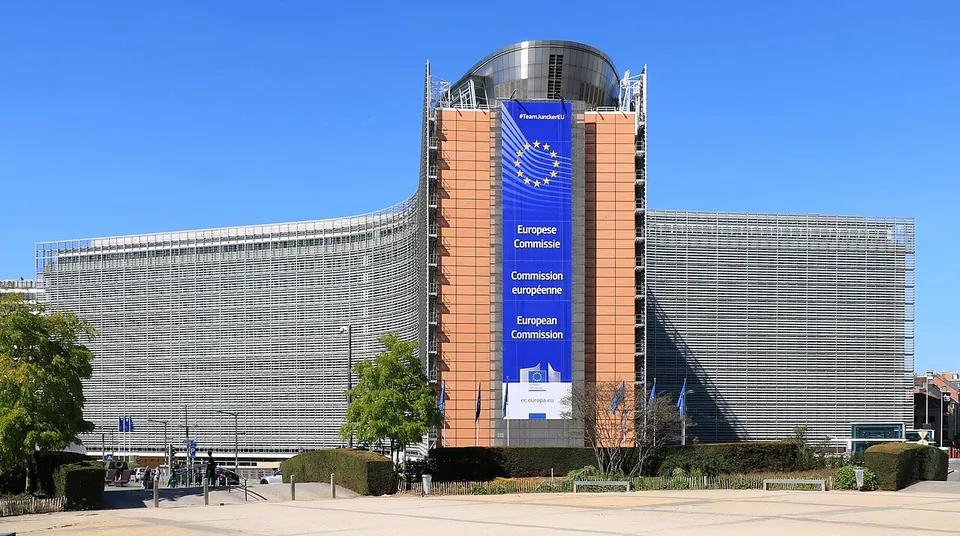
The panel formulated 23 recommendations on democratic life and citizen participation.1
Around 150 EU citizens took part in the panel’s final weekend.1
The recommendations followed three months of deliberation.1
Story
What the panel proposed, and how its work was assembledThe European Citizens’ Panel on Democratic Resilience finished its work on 21 November 2026, delivering 23 proposals focused on democratic life and public participation.1 The proposals were prepared by around 150 people who met during the panel’s final weekend, following three months of deliberation.1 They were passed to Executive Vice-President Virkkunen, and the Commission says they will feed directly into its work on democratic resilience.1 The recommendations are arranged around four priorities, giving the Commission a set of broad areas to consider rather than a single subject.1 That structure reflects discussions ranging from political accountability and technology to education, social cohesion and preparation for crises.1
The panel brought together participants chosen at random from each of the European Union’s 27 Member States.1 The selection was designed to reflect the Union’s diversity, according to the Commission’s account of how the group was formed.1 Around 150 participants took part in the closing weekend; that figure describes attendance at the final session period, not a separate count of recommendations.1 The Commission also reports that more than 500 local events and contributions through its Citizens’ Engagement Platform helped bring additional perspectives into the wider process.1 Those events and online contributions complemented the panel’s work, while the panel itself completed the three-month deliberative process that produced the 23 proposals.1
The subjects addressed were not limited to formal political institutions: participants considered political transparency and accountability alongside technological sovereignty and artificial intelligence.1 Their agenda also included the safety of social media services and the reliability of information, placing online conditions among the topics for democratic resilience.1 Other discussions covered media literacy, education in citizenship, opportunities for public participation and social cohesion.1 Participants also considered confidence in democratic systems, inequalities and readiness for crises, extending the discussion to social conditions and collective response.1 These subjects provide context for the four priorities: the Commission’s summary connects participation, institutional relations, information and technology, and social solidarity.1
The first priority, called “Citizen who can take part,” is about enabling people to participate with confidence, including younger people.1 It links that participation to opportunities for learning throughout life and to the ability to assess information critically.1 The wording makes participation the central concern, while lifelong learning and critical thinking are identified as ways to support it.1 The stated ambition applies to citizens generally and names young people among those whose involvement should be supported.1
A second priority addresses distance between people and public institutions by calling for political decisions to be more transparent and accountable.1 That proposal aligns with the panel’s broader discussion of political transparency and accountability, subjects explicitly included in its agenda.1 The recommendation concerns the way political decisions are made and the responsibility attached to that process.1 It sits beside the participation priority: one focuses on citizens’ capacity to take part, while the other addresses how institutions conduct decision-making.1
The “Information and technology” priority combines access to dependable information and safer online spaces with stronger media literacy.1 The panel’s account describes media literacy as helping people identify manipulation, a concern also reflected in its discussions of information integrity.1 The priority does not treat technology only as a risk: it also calls for making use of new technologies while dealing with their dangers.1 This combination follows the panel’s consideration of technological sovereignty, artificial intelligence and safe social media services.1
The fourth priority, “A society that holds together,” calls for stronger ties across generations and social groups.1 It includes dialogue and mutual understanding, alongside adequate living conditions and policies that include people.1 The proposals therefore address social relations as well as material circumstances, both of which appear in the Commission’s description of this priority.1 This area connects with the panel’s discussions of social cohesion, trust in democracy and inequalities, without reducing those topics to a single recommendation.1
The Commission says the 23 recommendations will directly inform its democratic-resilience work, making them an input to the institution’s activity.1 That work is set to build on the European Democracy Shield, which the Commission presented in November 2025.1 The panel’s proposals thus follow that earlier Commission presentation in the sequence described by the institution.1 The stated relationship is one of informing and building on existing work; the Commission’s account identifies no further action or outcome here.1
The panel’s contribution is presented alongside more than 500 local events and citizen contributions submitted through the Citizens’ Engagement Platform.1 The Commission says those additional channels were intended to broaden the range of perspectives represented in the work.1 The figure for local events is distinct from the count of panel participants and from the 23 recommendations the group completed.1 Together, the account describes a selected panel that deliberated over three months, alongside wider public contributions, before presenting proposals for Commission work.1
History
How it came to this- November 2025The Commission presents the European Democracy ShieldThe Commission later described its democratic-resilience work as building on the Shield.
- Three months before the final sessionThe panel deliberatesParticipants completed three months of discussion before formulating their recommendations.
- 21 November 2026The panel concludes and submits its recommendationsAt its final session, the panel completed its work and handed the recommendations to Executive Vice-President Virkkunen.
- Now23 Recommendations submitted by the European Citizens’ Panel on Democratic Resilience
Impact
Spreading outward, level by level- Level 1Recommendations for democratic resilience
The recommendations call for action across citizen participation, institutional transparency, information and technology, and social solidarity.1
Fact - Level 2Commission work
The Commission says the recommendations will directly inform its work on democratic resilience, which will build on the European Democracy Shield.1
Fact - Level 3What the submission establishes
The recommendations are input to future Commission work; the facts do not establish that the proposals have been adopted as measures.
Analysis
Sources
What each source supportsWritten by AI from the sources listed below: every fact was checked word for word against its source, and inference is marked apart. How we write