

OpenAI Acquires Four-Year-Old Biopharma Startup Orchestra Bio Following $20 Million in Venture Backing
The purchase brings automated operational and clinical trial scheduling agents into OpenAI's expanding life sciences portfolio without disclosed financial terms. The transaction follows earlier healthcare initiatives, including biological foundation models and a $100 million medical records acquisition.
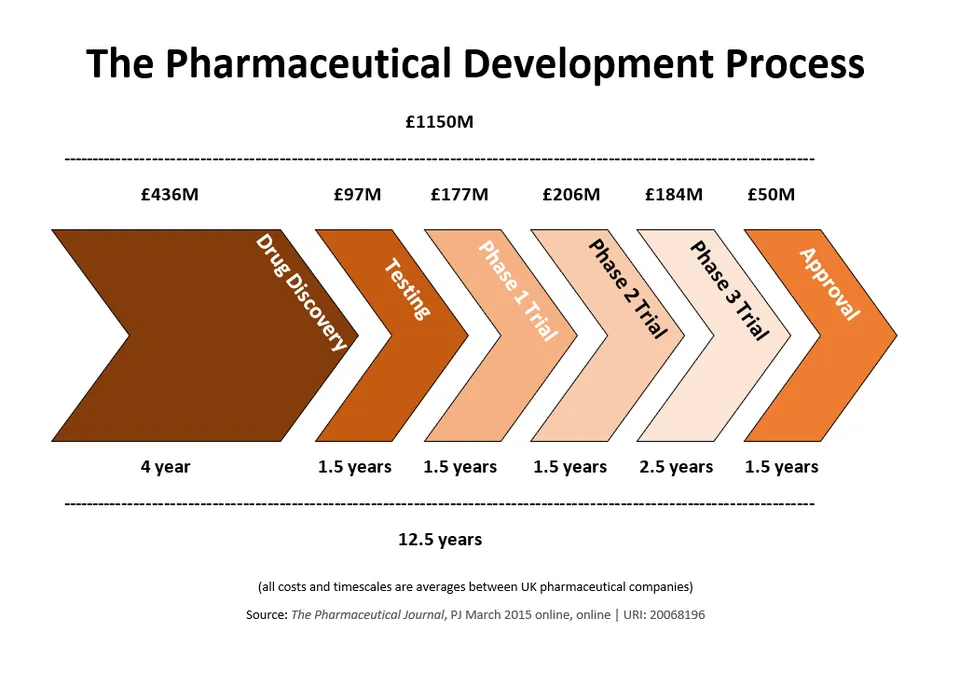
Developing and gaining approval for a single therapeutic drug can cost more than $2.6 billion.3
The typical timeline to bring a medicine from target identification to regulatory clearance in the United States spans a decade to a decade and a half.1
Competing AI developer Anthropic purchased biotechnology startup Coefficient Bio for around $400 million in April.3
Story
OpenAI Expands Life Science Footprint with Orchestra Bio PurchaseOn October 20, artificial intelligence developer OpenAI formally announced the acquisition of Orchestra Bio, an enterprise software platform designed to manage the operational complexities of biopharmaceutical development.1 In disclosing the corporate agreement, neither OpenAI nor the startup released the specific financial terms, overall purchase valuation, or transaction structure governing the deal.1 The acquisition brought an established operational framework into OpenAI's expanding corporate portfolio, as Orchestra Bio had spent four full years building and refining its systems prior to the transaction.4 Over its four years of independent operations leading up to 2025, the venture had raised approximately $20 million in outside financing from prominent investment firms including 8VC, Atria, and Andreessen Horowitz.2 That capital had supported the development of specialized workflow infrastructure intended to solve chronic management bottlenecks within modern life sciences companies.2
Records clarify that the acquired firm has no connection to Orchestra BioMed, an unrelated maker of medical devices that trades on the Nasdaq exchange using the ticker OBIO.3 While the publicly traded device manufacturer produces physical medical hardware, the startup acquired by OpenAI focuses exclusively on creating automated artificial intelligence agents to streamline biotechnology administration.23 Orchestra Bio's autonomous software agents are specifically designed to help life science enterprises navigate complex logistical tasks, including continuous capital tracking and the resolution of scheduling conflicts that arise during clinical trials.2 Whenever biotechnology projects suffer unexpected setbacks, such as the total failure of a manufacturing batch, Orchestra Bio's digital agents automatically compile the relevant operational records and isolate every milestone impacted by the disruption.5 By synthesizing this critical logistical data during active disruptions, the software helps biotechnology leaders evaluate practical recovery strategies, compare operational alternatives, and keep development programs moving forward.5
The operational obstacles that Orchestra Bio targets represent a massive financial and temporal burden across the broader life sciences industry.13 According to biopharmaceutical industry metrics, advancing a single approved therapeutic medicine all the way to commercial rollout can ultimately exceed $2.6 billion in total spending.3 Alongside these multi-billion-dollar expenses, the standard timeline required to bring a candidate medicine through the regulatory system within the United States generally spans between 10 and 15 years from the initial discovery of a biological target to final clearance.1 This prolonged timeline is characterized by extraordinarily steep clinical attrition rates once experimental therapies enter testing on human subjects.3 Documented outcomes indicate that fewer than one in ten therapeutic compounds evaluated in clinical trials involving patients ever make their way to consumer pharmacy shelves.3 Because more than ninety percent of trial compounds fail, managing financial burn and maintaining trial schedules are essential to surviving the lengthy developmental pipeline.23
Despite the high stakes of modern drug manufacturing, OpenAI has not published any explicit numerical targets or time-reduction estimates regarding how significantly it plans to compress drug development cycles through the Orchestra Bio transaction.5 The purchase nevertheless builds directly on specialized life science tools that the artificial intelligence firm introduced earlier in the year.3 In April, OpenAI formally launched GPT-Rosalind, an artificial intelligence system tailored specifically to assist researchers with biological discovery and experimental drug research.3 Access to this specialized biological platform was initially restricted to a vetted roster of American corporate clients, including prominent biotechnology manufacturers such as Moderna and Amgen.3 Corporate researchers operating within this infrastructure interact with the Rosalind Workbench, a computing environment designed to interface scientific investigators directly with biological datasets and computational research instruments.5
In the period immediately leading up to the Orchestra Bio acquisition, OpenAI also took deliberate steps to broaden the user base for its scientific tools within academic institutions.3 Exactly five days prior to closing the purchase of Orchestra Bio, the artificial intelligence company introduced the Rosalind Academic Plan.3 This academic initiative was created to distribute up to 30 complimentary user seats to qualifying university laboratories located throughout the United States.3 Under the terms established by the company, participating academic laboratories receive no-cost access to the specialized research system for terms lasting up to one year.3 Through this university outreach, the developer made its computational bioscience tools available to academic investigators alongside the commercial life science firms already testing the software.3
The autumn acquisitions and academic expansions followed a series of significant strategic healthcare maneuvers that OpenAI executed at the start of the year.3 In January, the artificial intelligence lab officially unveiled ChatGPT Health, marking a formal entry into consumer and professional health technology.3 Concurrently with that healthcare rollout, OpenAI completed the takeover of Torch, an emerging software startup specializing in electronic medical records, for an estimated valuation of $100 million.3 OpenAI accompanied these health investments by upgrading its computational and writing toolsets for laboratory scientists during that same month.3 Specifically, the firm transformed Crixet, an earlier corporate acquisition designed for scientific writing, into its dedicated Prism research platform in January.3
Corporate statements from senior leadership have illuminated the underlying commercial framework guiding OpenAI's aggressive expansion across the biopharmaceutical landscape.3 In January, Sarah Friar stated publicly that OpenAI intends to actively participate in the financial value generated by successful drug discovery pipelines.3 Friar clarified that this commercial participation would be structured through licensing agreements, outcome-based pricing frameworks, and partnerships tied to underlying intellectual property.3 Supported industry analysis indicates that OpenAI's deeper push into drug development operations is intentionally designed to position the artificial intelligence company to capture a substantial share of the vast financial upside produced by winning commercial drugs.1 Rather than relying strictly on standard software subscription fees, the organization is aligning its commercial model with the multi-billion-dollar therapeutic outcomes of its enterprise partners.13
In operationalizing its biopharmaceutical ambitions, OpenAI has secured working relationships with major multinational pharmaceutical manufacturers.5 Among these enterprise engagements, OpenAI has partnered with Danish pharmaceutical producer Novo Nordisk to optimize scientific research and commercial operations under rigorous regulatory and governance protocols.5 Meanwhile, other major pharmaceutical clients, such as Moderna, have integrated advanced computational intelligence directly into their core research facilities.35 Moderna relies on artificial intelligence software to convert intricate biological data into practical instructions and executable laboratory steps for its research personnel.5 The operational software from Orchestra Bio is positioned to coordinate the very administrative and scheduling burdens that emerge when these laboratory procedures run up against clinical milestones.25
OpenAI's move to acquire Orchestra Bio comes amid an intensifying arms race between the world's most prominent artificial intelligence developers.34 Leading artificial intelligence labs, most notably OpenAI and its rival Anthropic, are dedicating growing resources to the production of specialized software architectures engineered exclusively for the pharmaceutical industry.4 That competitive pressure was underscored in April when Anthropic purchased Coefficient Bio, a biotechnology software startup, in an acquisition valued at approximately $400 million.3 Industry evidence supports the observation that premier AI companies are deploying hundreds of millions of dollars to acquire early-stage biotech software startups in an effort to monopolize pharmaceutical workflows.1 This substantial capital deployment highlights how biopharmaceutical operations have become a primary commercial battleground for frontier model builders.134
The absorption of Orchestra Bio serves as the latest piece in an extensive, year-long corporate expansion across the medical and scientific landscape.1 Supported reporting affirms that OpenAI has executed a consistent, programmatic acquisition strategy throughout 2026 to construct a comprehensive ecosystem spanning healthcare and scientific investigation.1 This unified software environment combines the medical record systems gained through Torch, the documentation power of Prism, the biological computing of Rosalind Workbench, and the logistical coordination agents built by Orchestra Bio.235 By assembling automated agents capable of tracking project budgets and resolving trial scheduling conflicts alongside generative discovery models, OpenAI is building software that spans every phase of drug development.123 While drug development across the United States continues to face ten to fifteen years of timeline delays and billions in expenses, artificial intelligence developers are betting that integrating operational coordination with computational biology can reshape how the industry functions.13
Structure
Who is connected to whom- 1Orchestra Bio
- ← acquiresFact
- ← invests inFact
- uses →Fact
- serves →Fact
- ← invests inFact
History
How it came to this- By 2025Orchestra Bio raises venture capitalOrchestra Bio secured around $20 million in venture funding from investors including Andreessen Horowitz, Atria, and 8VC.
- JanuaryOpenAI launches health push and acquires TorchOpenAI introduced ChatGPT Health, acquired medical records firm Torch for an estimated $100 million, and converted Crixet into Prism.
- AprilGPT-Rosalind launches as Anthropic buys Coefficient BioOpenAI released GPT-Rosalind to corporate clients such as Amgen and Moderna, while Anthropic bought Coefficient Bio for around $400 million.
- OctoberRosalind Academic Plan unveiledFive days prior to buying Orchestra Bio, OpenAI introduced a plan granting up to 30 free seats for a year to qualifying university laboratories.
- October 20OpenAI acquires Orchestra BioOpenAI formally announced its purchase of biopharmaceutical operational platform Orchestra Bio without disclosing deal terms.
- Nowapproximately $20 million Orchestra Bio venture capital funding prior to acquisition
Impact
Spreading outward, level by level- Level 1Biotechnology operational workflows
Orchestra Bio's automated AI agents will assist biotech companies in monitoring capital, resolving clinical trial schedules, and managing disruptions like manufacturing batch failures.25
Fact - Level 2OpenAI research ecosystem integration
The operational platform joins OpenAI's life science toolset, linking with GPT-Rosalind and Rosalind Workbench as existing partners like Moderna and Novo Nordisk expand AI workflows.35
Fact - Level 3Drug discovery monetization
OpenAI is structuring its pharmaceutical expansion to capture commercial upside through licensing, intellectual property agreements, and outcome-based pricing rather than relying solely on software fees.
Analysis - Level 4AI lab pharmaceutical rivalry
Frontier AI developers are investing hundreds of millions of dollars to acquire specialized biotech startups and control end-to-end drug development workflows.
Analysis
Sources
What each source supportsWritten by AI from the sources listed below: every fact was checked word for word against its source, and inference is marked apart. How we write