

Taisei backs a $150 million AI and robotics fund
The Japanese construction company is directing capital toward startups as it seeks to apply automation to building work and respond to a shrinking workforce. The fund will be managed by Pegasus Tech Ventures, while Taisei is also looking at infrastructure for AI data centers.
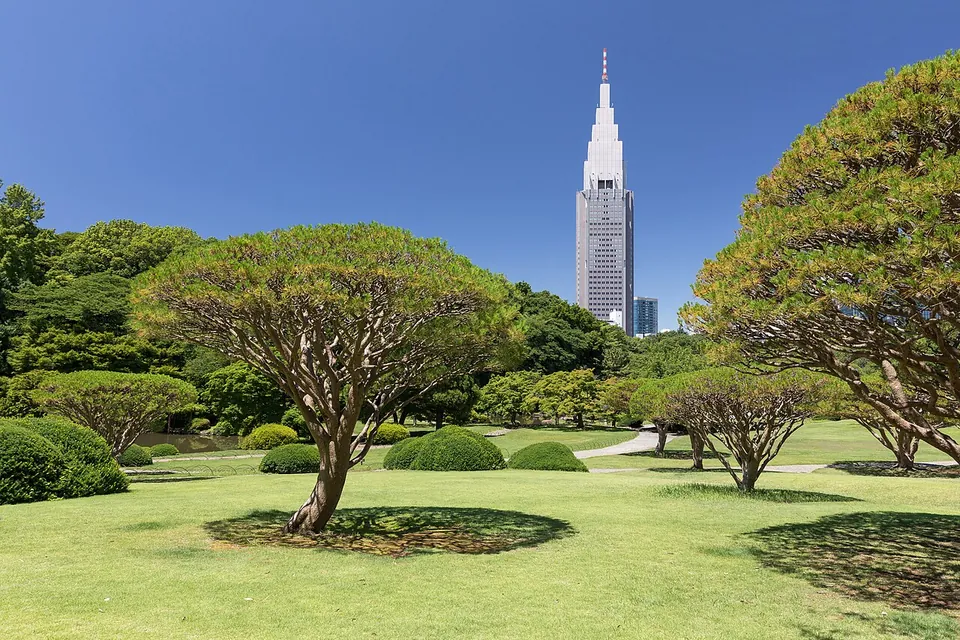
Taisei is backing a fund for AI and robotics startups.1
Taisei is a 153-year-old Japanese construction company.1
Pegasus manages over $2 billion in assets, separate from the size of Taisei’s fund.1
Story
Taisei’s investment in AI and roboticsTaisei, a Japanese construction company with a 153-year history, is financing a $150 million fund focused on artificial-intelligence and robotics startups.1 The fund is intended to help the company develop into a construction leader that makes extensive use of those technologies, while addressing Japan’s shrinking workforce.1 Silicon Valley-based Pegasus Tech Ventures is to serve as the fund’s general partner, the organization responsible for managing it.1 The $150 million commitment sets the fund’s stated scale; the available facts do not specify how many startups it will back or how the money will be allocated.1
The investment links Taisei’s construction ambitions with companies developing AI and robotics, rather than limiting its stated focus to construction firms themselves.1 The company’s objective is not only to invest in those technologies, but to use them in pursuit of a more automated construction business.1 A separate report says the fund is meant to identify technological ways to work around a workforce that is getting smaller.2 That report describes the same $150 million fund and the same investment areas, adding a workforce rationale rather than a different fund size or purpose.12
Taisei’s plans extend beyond the fund’s AI and robotics startup focus to businesses working on power and cooling systems for data centers.1 The company is interested in high-density power and liquid-cooling infrastructure startups, technologies it connects to the construction of AI data centers.1 This additional investment area places data-center infrastructure alongside construction automation in Taisei’s stated technology plans.1 The facts do not give a separate dollar amount for these infrastructure investments, so they cannot be treated as a specified portion of the $150 million fund.1
The company has already made an investment in another fund: last year it backed a vehicle operated by Met Fund Advisors.1 That earlier fund concentrates on startups emerging from MIT, making its stated focus distinct from the new fund’s AI and robotics remit.1 The earlier commitment shows that Taisei has used fund investment before, although the facts provide neither its size nor the amount invested.1 It is therefore evidence of prior investment activity, not a basis for adding an unstated sum to the new fund’s $150 million size.1
Pegasus has established venture-capital funds with other Japanese companies, including Aisin, which is affiliated with Toyota, and Japanet Holdings, a home-shopping network.1 That record provides examples of Pegasus working with Japanese corporate partners, while Taisei’s fund is another such arrangement.1 Pegasus oversees assets worth more than $2 billion and has invested in Blue Origin, Figure AI, and Agility Robotics.1 The assets figure describes the scale of Pegasus’s management, not the size of Taisei’s fund, which is reported separately as $150 million.1
The labor backdrop described for Japanese companies includes persistent worker shortages and increasing wages, alongside opposition to foreign workers and declining domestic spending.1 The account says these pressures are speeding the adoption of robots, placing Taisei’s interest in robotics within a wider business response.1 The fund’s stated aim of confronting a shrinking workforce is consistent with that reported context, though the facts do not quantify the workforce change.1 No figures are supplied for wage growth, worker shortages, robot adoption, or changes in domestic spending, so their relative sizes cannot be compared here.1
Taisei has also demonstrated an AI-operated tunnel-boring machine that worked autonomously, according to a report by Nikkei Asia.3 The machine’s precision was reported to exceed that of experienced human operators, giving a concrete example of automation in the company’s construction work.3 The account does not provide a numerical measure of the precision difference or say how the demonstration compares with routine operations.3 A supported interpretation is that the new fund and this tunnel-boring test both indicate a turn toward AI-based automation to ease Japan’s labor shortage.1
Together, the fund and the machine demonstration connect investment in outside startups with a tested application of AI in Taisei’s own construction activity.13 The fund’s reach is defined by its investment focus, while the tunnel-boring report concerns a specific autonomous operation and its precision.13 These are different measures of the company’s shift: one is a stated pool of capital, and the other is a reported performance comparison.13 Neither fact establishes how much the demonstration will affect productivity or how quickly startup investments may change construction practices.13
Taisei’s stated priorities bring together construction leadership, workforce pressures, startup investment, and infrastructure needed for AI data-center building.1 The reported Japanese labor conditions help explain why robotics is attracting attention, while the company’s own tunnel-boring test shows one application it has demonstrated.13 Pegasus’s role and its history with Japanese firms provide the fund’s management arrangement and partnership context, rather than evidence of outcomes for Taisei.1 The available facts establish the fund’s amount, focus, and intended purpose, but do not report startup selections, investment results, or measured workforce effects.1
Structure
Who is connected to whom- 1大成建设
- ← partners withFact
- uses →Fact
- produces →Fact
- invests in →Fact
- ← sanctionsFact
History
How it came to this- Last yearTaisei backed a separate fundThe Met Fund Advisors vehicle focuses on startups emerging from MIT.
- Now$150 million Taisei AI and robotics startup fund
Impact
Spreading outward, level by level- Level 1Fund management
Silicon Valley-based Pegasus Tech Ventures will be the fund’s general partner.1
Fact - Level 2Taisei’s construction strategy
The fund aims to help Taisei become an AI- and robotics-enabled construction leader while addressing Japan’s shrinking workforce.1
Fact - Level 3AI data-center infrastructure
Taisei also plans to invest in startups focused on high-density power and liquid cooling to support AI data-center construction.1
Fact - Level 4Labor context
The reported combination of worker shortages, rising wages, backlash toward foreign workers, and falling domestic spending is accelerating robot adoption in Japan; this context may reinforce the fund’s workforce rationale.1
Fact - Level 5Automation direction
The fund and Taisei’s autonomous tunnel-boring test together indicate a strategic shift toward AI-driven automation to mitigate labor shortages.
Analysis
Sources
What each source supportsWritten by AI from the sources listed below: every fact was checked word for word against its source, and inference is marked apart. How we write