

Uber adds Zoox robotaxis to Las Vegas platform, with rides at no extra cost
Uber users in Las Vegas can now be matched with Zoox vehicles, while Zoox continues to take bookings through its own app. Separately, reports describe unauthorized access to Uber data held by a service provider, with disclosures naming affected drivers and differing in the number of people counted.
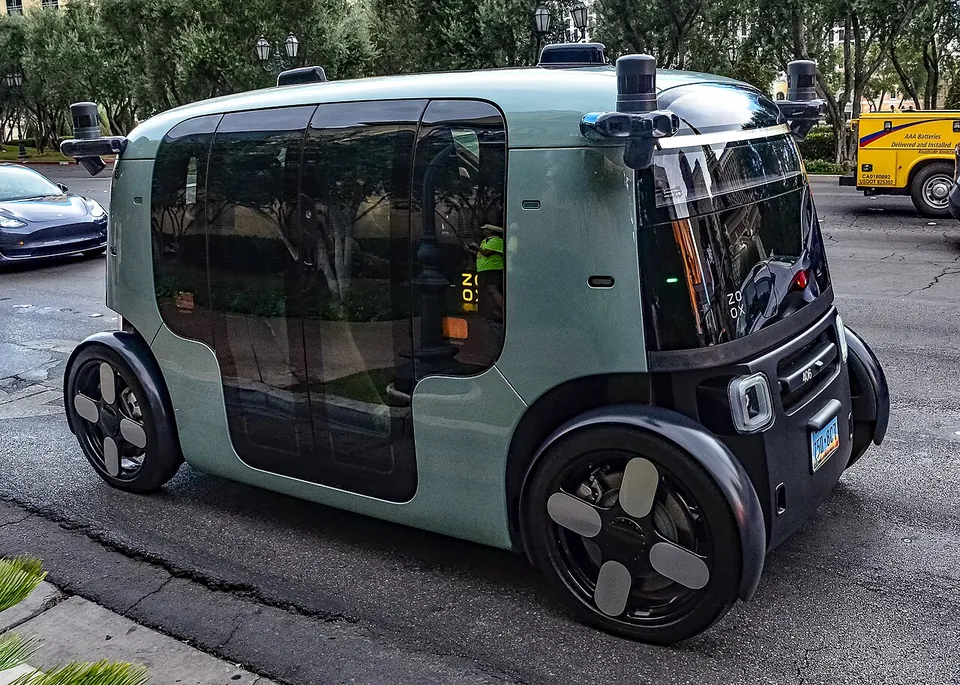
Uber began making Zoox robotaxis available through its Las Vegas platform on this date.1
A regular Uber ride request may be matched with a Zoox vehicle without an additional charge.1
Los Angeles is the next market the companies have planned for their Uber-Zoox arrangement.1
Story
Two developments for Uber: robotaxis in Las Vegas and a data incidentUber began offering Zoox robotaxis through its Las Vegas platform on Nov. 16, adding a way for users to encounter an autonomous vehicle while requesting a regular ride.1 A standard Uber request can be matched to a Zoox vehicle without an added charge, and users can change their app settings to raise the likelihood of that match.1 Zoox has not stopped taking ride requests through its own application, so the Uber option operates alongside the company’s direct booking channel.1 Las Vegas is the first location in the multiyear arrangement Uber and Zoox announced in March.1 The change is therefore an addition to Uber’s ride platform, not a stated replacement for Zoox’s own service or for the regular ride-request process.1
The companies have identified Los Angeles as the next market planned under their partnership, with service there through Uber expected in 2027.1 Zoox is separately scheduled to begin rides in Los Angeles booked through its own app before the end of the year.1 Those two plans describe distinct booking routes and timelines: the own-app service is scheduled first, while the companies’ next Uber market is Los Angeles in 2027.1 The partnership also includes MGM Resorts International, with the companies saying they will work on improving passenger pickups and drop-offs at MGM’s Las Vegas locations.1 The MGM arrangement concerns movement at the company’s properties, while the Zoox addition makes vehicles available through Uber’s city platform; the reports do not provide a measure of rides or locations covered.1
Zoox entered a Las Vegas market where Waymo had also recently started operating, adding another autonomous-vehicle provider to the local competitive landscape.1 Uber had already offered Las Vegas rides using Motional vehicles since March, but those cars still included a safety driver.1 Uber chief executive Dara Khosrowshahi said earlier this month that he expected Motional’s vehicles to operate without drivers soon after Zoox’s launch.1 That expectation was a statement about a possible change to Motional’s service, not a report that the safety drivers had already been removed.1 The reports provide no fleet count for Zoox or Motional in Las Vegas, so their presence cannot be compared there by vehicle totals from these facts.1
Khosrowshahi has also said Uber intends to add a specific autonomous-ride choice in its app as more robotaxis become available over the coming months.1 That planned app feature would differ from the current Zoox arrangement, in which a user requesting an ordinary Uber ride may be matched with a Zoox vehicle and can adjust settings to improve the chance of that outcome.1 Uber has said it will put more than $10 billion toward partnerships with other technology developers instead of creating its own autonomous vehicle.1 The company has also said it hopes to make more than 2,000 driverless taxis available to customers in 2027.1 For comparison, Waymo had 4,000 vehicles across the U.S. when the report was published, a broader geographic count than Uber’s stated target for taxis available to customers.1
Uber’s platform expansion is occurring alongside a separate data-security disclosure: the company said an unauthorized person used compromised login credentials at an unnamed service provider to reach Uber data.2 The provider notified Uber on October 9 that credentials had been compromised, after which Uber cut its data connections to that provider and opened an investigation.2 Uber said its investigation established on October 13 that the credentials had been used to access company data, including personal information belonging to recipients.2 A Taiwanese report said Uber confirmed to PC Magazine that it received the third party’s warning on October 9 and confirmed the access on October 13, describing Fireworks AI as the hacked provider.3 The reports therefore describe the provider’s initial warning, Uber’s response, and the later determination that the credentials had been used, rather than a single moment when all those steps occurred.23
Uber’s notice did not identify the provider or specify which categories of data were involved, while TechCrunch reporting cited by Insurance Journal named Fireworks AI and said driver-license information was included.2 A separate Taiwanese account also attributed the Fireworks AI identification and the description of the stolen material as mainly driver-license information to TechCrunch.4 IT之家 described the incident as involving drivers’ personal and license information, and reported that an attacker first obtained a third-party provider employee’s credentials before using them to reach Uber systems and data.4 That account said Uber had begun notifying affected drivers, but also said the company had not identified the provider or announced a possible number of affected passengers at the time of publication.4 The notice’s silence about the provider and data categories should be distinguished from details attributed to media reports; the notice itself, as described by Insurance Journal, did not supply either detail.24
Insurance Journal reported that Uber’s notice counted about 1,873 Rhode Island residents as affected and gave information for residents of five other jurisdictions.2 A Taiwanese report listed 2,567 people in Massachusetts, 1,071 in Vermont, 3,430 in South Carolina, and 1,873 in Rhode Island.3 The same report said Uber had notified state governments in the U.S. the previous week about a leak involving at least 8,000 drivers, while noting that disclosure rules differ among states and that some do not publish an exact affected-person count.3 The four state totals listed in that report do not, by themselves, account for its stated minimum of 8,000 drivers, and the report’s explanation is that available state disclosures do not all provide exact counts.3 The reports establish that drivers were among those affected, but they do not establish that riders’ information was involved; one account also said Uber had not disclosed a possible passenger count.24
Uber offered affected people complimentary credit monitoring and fraud support through Cyberscout, with enrollment available for 90 days from the date of their letter.2 The company said it had not found evidence that the accessed data had been misused as of the notice.2 That statement describes what Uber had identified by the notice, rather than a claim that no misuse could occur later.2 IT之家 reported that the incident involved several states, naming Massachusetts, South Carolina, Rhode Island, and Illinois, while a separate list of precise counts supplied Massachusetts, Vermont, South Carolina, and Rhode Island figures.34 Those accounts differ in the jurisdictions they list, and the reports do not provide a single complete state-by-state total that resolves the difference.34
Uber’s stated autonomous-vehicle approach relies on partnerships, including the Zoox deal, and the company has described a future app option as additional vehicles become available.1 Its earlier arrangement with Waymo was exclusive in Austin and Atlanta, but Uber’s tie-up with Waymo in those cities is scheduled to conclude in January 2028.1 Waymo’s reported 4,000-vehicle U.S. fleet offers a scale comparison, while Uber’s stated ambition is more than 2,000 driverless taxis available to its customers in 2027.1 IT之家 also reported an earlier Uber security event in 2026, when the Helix extortion group used social engineering to take information from Uber Freight.4 The reports thus place the Zoox launch within Uber’s efforts to offer partner-operated autonomous rides, while the separate provider incident concerns unauthorized access to Uber data and the company’s notices to affected people.124
Structure
Who is connected to whom- 1Uber
- acquires →Fact
- uses →Fact
- ← sanctionsFact
- regulated by →Fact
- ← part ofFact
History
How it came to this- MarchUber and Zoox announce multiyear dealThe Las Vegas launch is the first market under their agreement.
- Nov. 16Zoox vehicles become available through Uber in Las VegasZoox continues to accept ride requests through its own app as well.
- NowNov. 16 Uber adds Zoox robotaxis to its Las Vegas platform
- Before the end of the yearZoox is scheduled to begin offering rides in Los Angeles through its own app.
Impact
Spreading outward, level by level- Level 1Rider booking
A regular Uber request can result in a Zoox vehicle at no additional cost, and users can change app settings to increase their chance of being matched with an autonomous vehicle.1
Fact - Level 2Las Vegas service mix
The Zoox option joins Uber's existing Las Vegas rides with Motional vehicles, which still have a safety driver, and an autonomous service from Waymo that had recently begun operating there.1
Fact - Level 3Partnership expansion
The launch is the first market in the multiyear Uber-Zoox deal; Los Angeles is the next planned market, while Zoox also continues its own-app service.
Analysis
Ahead
Checked automatically when due; the result goes to the track recordZoox is scheduled to begin offering rides in Los Angeles through its own app.
Sources
What each source supportsWritten by AI from the sources listed below: every fact was checked word for word against its source, and inference is marked apart. How we write