

Tesla leads South Korea's imported-car market for 9 straight months, with 98,313 new registrations from January to October
The value of South Korea's car imports from China rose sharply over the same period, and its automotive trade deficit with China hit a record. Tesla's strong performance in South Korea coincided with the increase in imports, but available data do not quantify Tesla's specific contribution to the deficit.
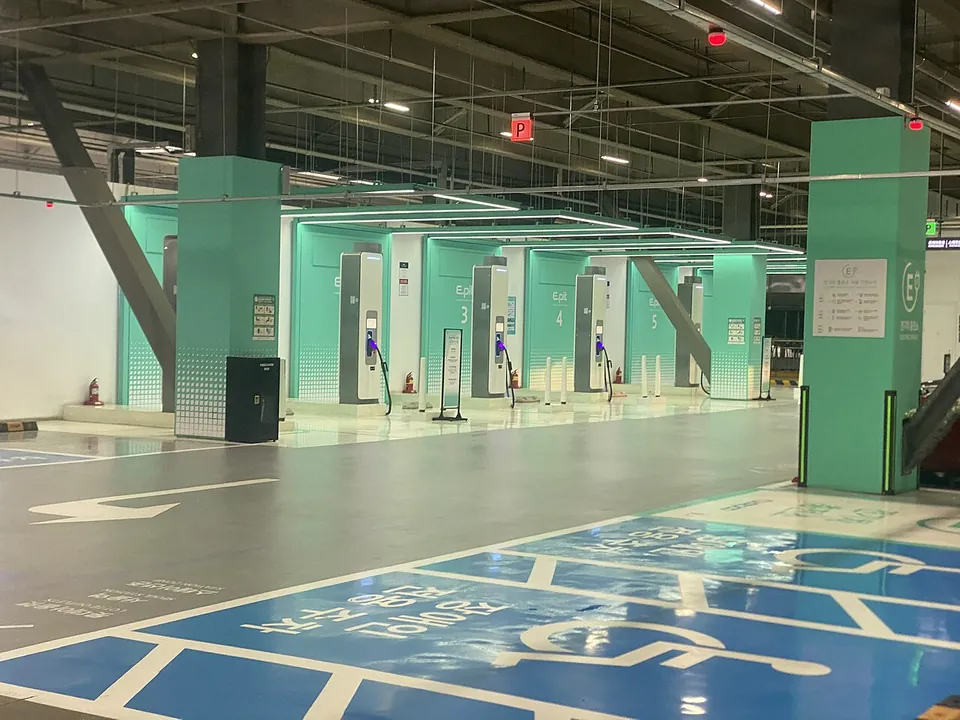
From January to October this year, 98,313 Teslas were newly registered in South Korea, up 105.0% year over year.2
During the same period, 78,631 Model Ys were registered in South Korea, making it the best-selling imported car model.2
South Korea's automotive trade deficit with China from January to October this year hit a record, up 92.7% year over year.2
Story
Tesla's growth in South Korea's imported-car market and the trade deficit with ChinaFrom January to October this year, 98,313 Teslas were newly registered in South Korea, up 105.0% year over year, giving the company more than 30% of the imported-car market.2 Tesla has ranked first in monthly sales of imported cars in South Korea for 9 consecutive months, while the Model Y was the best-selling imported model with 78,631 registrations.2 A separate account from the Korea Automobile Importers & Distributors Association said Tesla sold about 99,000 vehicles over the same period, also reporting year-over-year growth of 105% and a market share of more than 30%.1 Both sales figures point to significant growth for Tesla in South Korea's imported-car market, but the precise registration count and the approximate figure should be kept distinct.12
Meanwhile, the value of South Korea's car imports from China was $4.39033 billion, up 79.2% year over year.2 RFI's Chinese-language report rounded the figure to $4.39 billion and gave the same year-over-year increase.1 The two figures differ in precision but describe South Korea's car imports from China over the same period.12 The increase in import value coincided with rising Tesla sales, but the overlap in timing does not mean the former can be attributed to the latter.12
South Korea's automotive trade deficit with China over the same period reached a record high: RFI's Chinese-language report put it at $4.23 billion, while IT Home reported $4.236 billion.12 The two reports differ slightly in the precision of the deficit figures, but both said the result set a record.12 IT Home also said the deficit widened 92.7% year over year and had already surpassed the full-year deficit for 2025.2 The record deficit therefore describes the balance of automotive trade with China, not Tesla's sales or market share in South Korea.2
Trade figures show an imbalance in the scale of imports and exports: South Korea's car exports to China were worth $168.77 million, down 34.9% year over year.2 Imports over the same period were worth $4.39033 billion, 26 times the value of exports.2 These figures compare the value of automotive trade between South Korea and China and cannot be treated as a direct comparison of vehicle numbers.2 Available reports do not provide a breakdown sufficient to calculate Tesla's contribution to the deficit; the fact that its performance in South Korea coincided with growth in car imports from China is an observation supported by the sources, and nothing more.1
South Korea has run an automotive trade deficit with China continuously since 2017, with IT Home saying the deficit has continued for 10 consecutive years.12 RFI's Chinese-language report listed annual amounts rising from $466 million in 2022 to $943 million in 2023 and then $1.73 billion in 2024.1 IT Home listed the amounts for 2022 and 2024 as $46.605 million and $172.98 million, respectively, using different levels of precision and units.2 Both sets of figures show that the deficit widened during this period, but figures reported at different levels of precision should not be treated as directly comparable on the same basis.12
On the industrial implications of import growth, Yonhap reported that industry insiders fear Chinese-made electric vehicles could affect South Korea's vehicle manufacturing base and parts supply chain.1 They also worry that the impact could extend to the entire industrial production system and cause it to contract.1 These are industry concerns, not consequences that the available information has established as fact.1 The reports cited a surge in sales of electric vehicles made at Tesla's Shanghai factory as a key factor behind the widening of South Korea's automotive trade deficit with China.1
Available information does not list specific measures the government has taken in response to these trade changes, nor does it provide direct comments from officials on the matter.12 Reports on trade values drew on data from trade associations and the Ministry of Trade, Industry and Energy, while data on Tesla registrations and market share came from the Korea Automobile Importers & Distributors Association.2 This means trade balances and model registrations are based on value statistics and new-vehicle registration statistics, respectively, and should be distinguished when interpreting them.2 The reports also do not provide a specific breakdown of how many Tesla sales involved vehicles made in China.12
Other reports say Tesla is seeking tax incentives in Texas for a planned polysilicon manufacturing facility, which is slated for a $3.1 billion investment.4 Tesla plans to employ 515 people once the facility is fully operational in 2032, at an average annual salary of $130,000.4 Another report says Tesla plans to launch an autonomous Model Y with no steering wheel or pedals that can seat six to seven people.5 These plans concern other projects and do not explain South Korean registration sales or the automotive trade deficit with China.245
U.S. housing-start data also appeared in separate industry reports over the same period: total construction starts in October rose 22.8% from the previous month at a seasonally adjusted annual rate, reaching $1.63 trillion.3 That figure describes construction activity in the United States, not South Korean automotive trade.23 In the South Korean market, Tesla ranked first in monthly imported-car sales for 9 straight months, at the same time that the value of car imports from China increased and the trade deficit hit a record.12 Available data confirm the scale of these changes and their temporal overlap, but are insufficient to quantify the separate impact of Tesla sales on the deficit.1
Structure
Who is connected to whom- 1Tesla
- partners with →Fact
- produces →Fact
- manufactures →Fact
- ← ownsFact
- located in →Fact
Disagreements
Where the sources do not matchHow Tesla's sales in South Korea from January to October this year are described
IT Home2
RFI Chinese1
Reason: The figures differ in precision: one source gives the exact number of new registrations, while the other gives an approximation. Both reports indicate year-over-year sales growth of 105% over the same period.
Value of South Korea's automotive trade deficit with China from January to October this year
Reason: The two reports give figures with different levels of precision for the deficit over the same period: $4.236 billion and $4.23 billion, respectively.
Value of South Korea's automotive imports from China from January to October this year
Reason: The two reports give figures with different levels of precision for South Korea's automotive imports from China over the same period, and both report year-over-year growth of 79.2%.
History
How it came to this- Since 2017South Korea has consistently run an automotive trade deficit with ChinaSouth Korea has run an automotive trade deficit with China every year since 2017; IT Home says the deficit has continued for 10 consecutive years.
- 2022Deficit baselineOne report put South Korea's automotive trade deficit with China at $466 million; another gave the figure as $46.605 million.
- 2023Deficit widensSouth Korea's automotive trade deficit with China rose to $943 million.
- 2024Deficit widens furtherOne report put the deficit at $1.73 billion; another gave the figure as $172.98 million.
- January to October this yearTesla takes top spot as trade deficit hits a recordTesla ranked first in South Korea's monthly imported-car sales for 9 consecutive months; during the same period, South Korea's automotive trade deficit with China hit a record.
- Now9 months Tesla ranks first in South Korea's monthly imported-car sales for consecutive months
Impact
Spreading outward, level by level- Level 1South Korea's imported-car market
During the same period, 98,313 Teslas were newly registered, up 105.0% year over year. Tesla's share of the imported-car market exceeded 30%, and it ranked first in monthly sales for 9 consecutive months.2
Fact - Level 2South Korea's automotive trade with China
During the same period, the value of South Korea's automotive imports from China rose 79.2% year over year, and its automotive trade deficit with China reached a record. Reports cited a surge in sales of electric vehicles made at Tesla's Shanghai Gigafactory as a key factor behind the widening deficit, but did not provide a quantified breakdown of Tesla's contribution to it.12
Fact - Level 3South Korea's automotive supply chain
Industry insiders are concerned that Chinese-made electric vehicles entering the South Korean market could threaten the country's vehicle manufacturing base and parts supply chain, and cause the entire industrial production system to shrink. This is an industry concern, not a confirmed outcome.1
Fact - Level 4Causal relationship between trade changes and Tesla sales
Tesla's strong performance in South Korea coincided with growth in automotive imports from China, but the available information is insufficient to quantify Tesla's individual impact on the trade deficit. Its contribution therefore cannot be inferred solely from the timing.
Analysis
Sources
What each source supportsWritten by AI from the sources listed below: every fact was checked word for word against its source, and inference is marked apart. How we write