

EU holds second regional security and connectivity ministerial meeting in Brussels
The meeting brought together EU representatives and partners from 11 countries, with cooperation on transport, digital links, energy and Black Sea security on the agenda. It also took stock of the EU’s connectivity programme and its planned Middle Corridor.
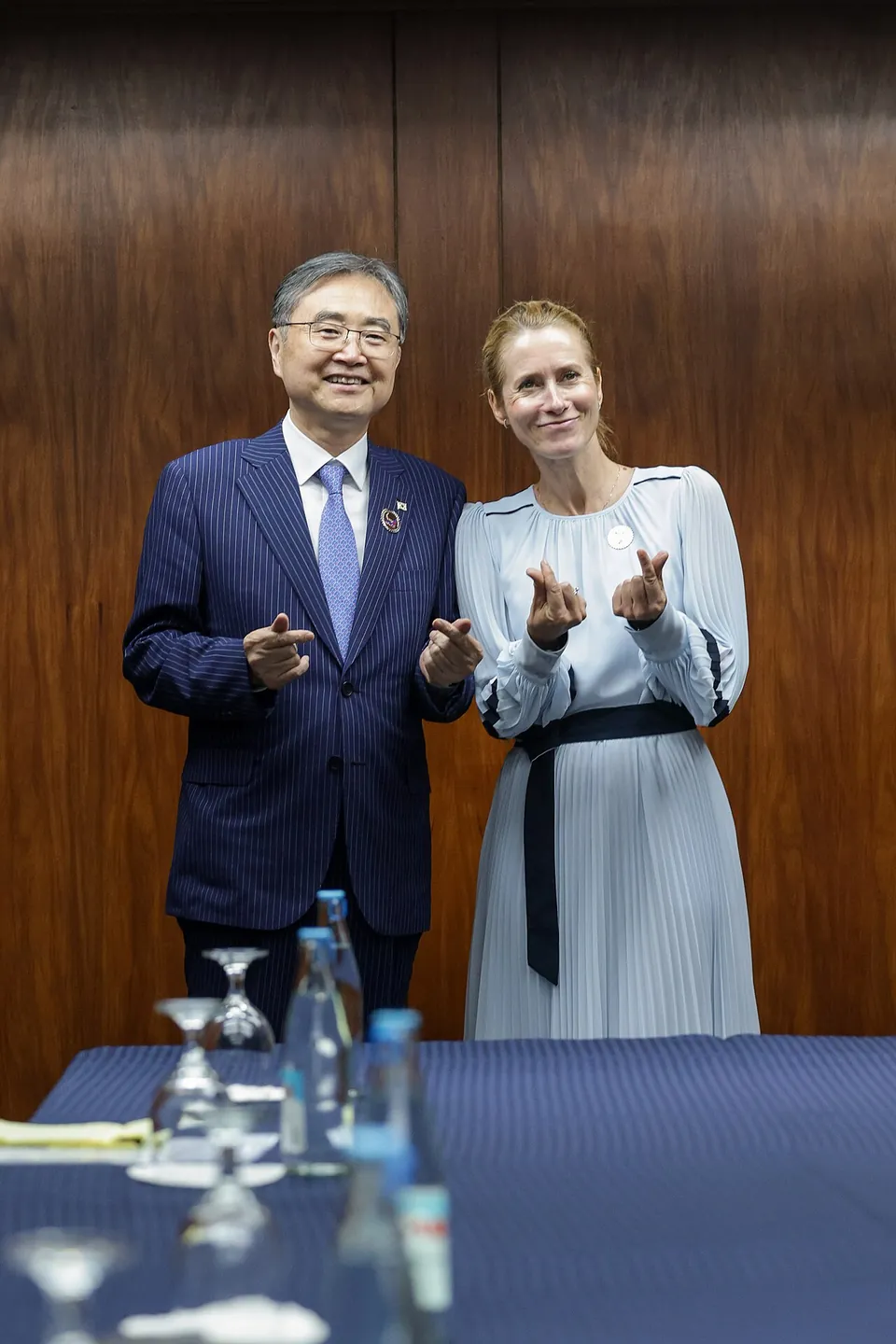
Representatives from 11 partner countries attended alongside EU Member State officials.1
The EU announced €50 million to establish the Black Sea Maritime Security Hub.1
The Middle Corridor’s stated aims include tripling trade flows and cutting freight transit times by 2030.1
Story
Security cooperation and transport links share the agendaThe European Union convened its second Ministerial Meeting on Cross-Regional Security and Connectivity in Brussels, bringing the process into a new round of talks among the EU and regional partners.1 Foreign ministers and senior officials from EU Member States took part alongside representatives of 11 partner countries, giving the gathering a cross-regional membership rather than an exclusively EU format.1 Those present renewed their support for closer work across transport, digital connectivity and energy, the three fields identified in the meeting’s cooperation agenda.1 They also presented joint security efforts and stronger connections between regions as relevant to peace, stability, resilience and sustainable economic growth.1 The meeting therefore joined two strands of policy in one forum: practical cooperation on links and infrastructure, and shared attention to security conditions.1
Kaja Kallas, Marta Kos and Jozef Síkela hosted the meeting in the European Commission roles specified for them.1 The gathering followed the first ministerial meeting, which took place in Luxembourg, and the release of an implementation report on the EU Black Sea Strategy.1 The Commission said the discussion occurred while security in the Black Sea was worsening, citing drone attacks on civilian vessels and drone incursions on land as examples.1 Participants considered ways to improve maritime capabilities, including identifying risks earlier, safeguarding infrastructure, responding to hybrid threats and conducting demining.1 These subjects place maritime security alongside transport and energy in the meeting’s stated areas of cooperation, rather than treating connectivity as infrastructure alone.1
A proposed Black Sea Maritime Security Hub is to be jointly hosted by Bulgaria and Romania, with the stated purpose of helping make the maritime environment safer and more predictable.1 The EU announced €50 million for establishing the Hub, while two further allocations of €10 million each are intended to support maritime search and rescue in Bulgaria and Romania.1 The announcement thus identifies one amount for setting up the regional Hub and separate support for rescue operations in the two host countries.1 Participants also addressed joint action against Russia’s shadow fleet and hybrid activities, along with ways to bolster Ukraine’s resilience through alternative export routes.1 Their discussion included ending deadly attacks in the Black Sea so that food can reach markets around the world.1
The EU’s flagship Middle Corridor plan was announced by President von der Leyen during the 2026 State of the Union address.1 Its proposed route would carry connections from Central Asia over the Caspian Sea through the South Caucasus and onward to the European market by way of Türkiye and the Black Sea.1 The stated targets are to diversify routes, triple trade flows and reduce freight transit times by 2030.1 Those are aims for the corridor, not reported outcomes: the Commission describes it as a planned route and sets the objectives for a future year.1 The Commission says the initiative could also enable trade and employment, speed logistics, improve digital links, encourage innovation, contribute to energy security and make supply chains more secure and varied.1
Since the first ministerial meeting in Luxembourg in October 2025, the Commission says connectivity work has moved beyond political aspiration and into implementation.1 The broader agenda is intended to strengthen transport, digital and energy connections joining the EU with the Black Sea region, the South Caucasus and Central Asia.1 The Connectivity Agenda Platform, launched on 23 June 2026, supplies a structure for coordinating that work.1 The Cross-regional Connectivity Agenda was first presented at the ministerial gathering in Luxembourg in October 2025 and forms part of the EU’s Global Gateway strategy.1 Its stated approach is to connect the EU and Central Asia by way of the South Caucasus and Black Sea, coordinating strategic investment with regulatory cooperation.1
A leading priority is development of the Middle Corridor, also called the Trans-Caspian Transport Corridor, as a multimodal route designed to be resilient, efficient, climate-proof and competitive.1 The work is also meant to address border processes, customs, trade facilitation and the availability of services that can operate commercially.1 These elements sit alongside the corridor’s stated goals for trade flows and freight times, while the Commission’s account presents them as priorities for developing the route.1 The EU and its partner countries are pursuing strategic infrastructure investment in transport, energy and digital systems through blended finance and guarantees intended to draw in further public and private capital.1 The account describes these financing tools as a means of mobilising additional investment, without giving a total value for the infrastructure programme.1
Transport priorities include railways, roads, border facilities and the modernisation of ports.1 For digital infrastructure, the agenda identifies fibre connections, satellite access, data centres and investment related to artificial intelligence.1 Energy work is directed toward interconnections, markets and grids, as well as renewable power and storage.1 Taken together, these categories show that the agenda covers both routes for moving goods and a wider set of digital and energy systems.1 The stated programme links these investment areas to cooperation among the EU, the Black Sea region, the South Caucasus and Central Asia.1
The Commission plans to bring EU Member State and partner-country leaders together next year at a Regional Connectivity Summit in Sofia, Bulgaria.1 The summit is intended to establish the strategic direction for regional connectivity priorities at the highest political level.1 Earlier, at the Trans-Caspian Transport Corridor and Connectivity Investors Forum in Tashkent in November 2025, participants drew attention to the corridor’s increasing strategic significance as a link between Europe and Central Asia.1 The Tashkent forum and the planned Sofia summit mark separate points in the agenda: one recorded a discussion of the route’s significance, while the other is intended to set political direction.1 The ministerial meeting in Brussels sits within this sequence of coordination, investment planning and regional discussion described by the Commission.1
Structure
Who is connected to whom- 1European Union
- ← partners withFact
- finances →Fact
- sanctions →Fact
- ← exports toFact
- uses →Fact
History
How it came to this- October 2025Connectivity agenda presented in LuxembourgThe Cross-regional Connectivity Agenda was presented at the first ministerial meeting and made part of the Global Gateway strategy.
- November 2025Corridor discussed in TashkentParticipants at the investors forum highlighted the corridor’s strategic importance as a Europe–Central Asia route.
- 23 June 2026Connectivity Agenda Platform launchedThe platform established a framework for coordinating connectivity work.
- 2026Middle Corridor announcedPresident von der Leyen announced the EU’s flagship initiative at the State of the Union address.
- Second ministerial meetingBrussels meeting heldThe meeting followed the first ministerial gathering and publication of the EU Black Sea Strategy implementation report.
- NowSecond EU ministerial meeting on cross-regional security and connectivity
- Next yearThe Commission plans a Regional Connectivity Summit in Sofia to set strategic direction for regional connectivity priorities. [f22, f23]
Impact
Spreading outward, level by level- Level 1Maritime security
Participants discussed early risk detection, infrastructure protection, countering hybrid threats and demining. The Hub is intended to support a safer, more predictable maritime environment.1
Fact - Level 2Regional connectivity
The agenda aims to strengthen transport, digital and energy links among the EU, the Black Sea region, the South Caucasus and Central Asia.1
Fact - Level 3Trade, jobs and supply chains
The Commission says the corridor could support trade and jobs, faster logistics, improved digital connections, innovation, energy security and more secure, diversified supply chains.1
Fact - Level 4Delivery of corridor targets
Achieving the stated trade-flow and freight-time aims may depend on progress in border procedures, customs, trade facilitation and commercially viable services, not only on transport infrastructure.
Analysis
Ahead
Checked automatically when due; the result goes to the track recordThe Commission plans a Regional Connectivity Summit in Sofia to set strategic direction for regional connectivity priorities. [f22, f23]
Sources
What each source supportsWritten by AI from the sources listed below: every fact was checked word for word against its source, and inference is marked apart. How we write