

European Commission Allocates €3.4 Billion to 77 Clean Technology Initiatives
The European Commission has committed billions from carbon market revenues to deploy next-generation green industries across the continent. The latest round spans twenty-three nations and marks inaugural backing for novel nuclear and carbon extraction installations.
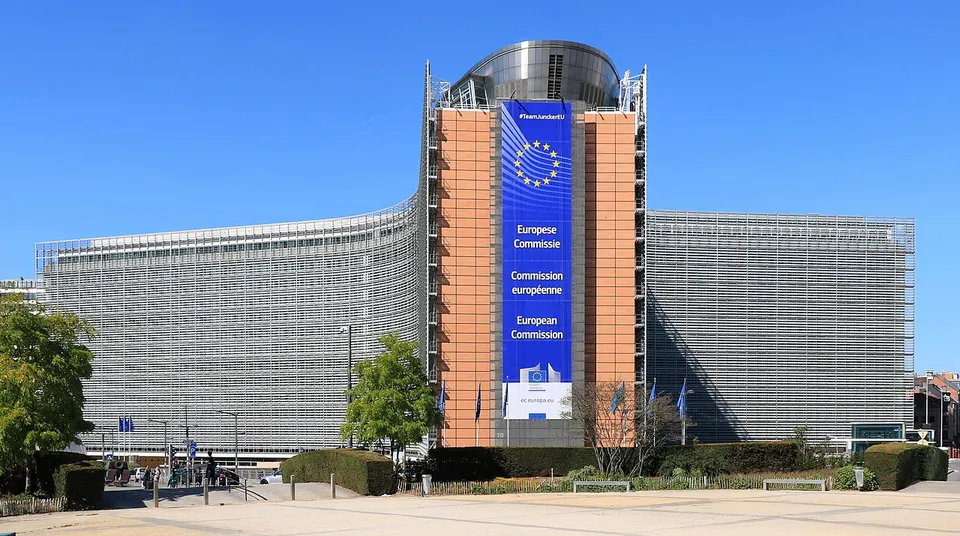
The chosen initiatives are estimated to avert roughly 290 million tonnes of greenhouse gas emissions over their opening decade of operation.1
The selected clean technology ventures are distributed across 23 territories within the European Economic Area.1
An additional 84 qualifying proposals satisfied evaluation criteria but missed out on awards due to budget constraints.1
Story
Decarbonisation Capital Flows into European Industry as Innovation Support ExpandsThe European Commission has formally awarded 3.4 billion euros from the Innovation Fund to support 77 clean technology ventures across the continent.1 These supported ventures are geographically dispersed across 23 separate nations belonging to the European Economic Area.1 Over the course of their initial decade in service, the chosen enterprises are expected to prevent roughly 290 million tonnes of greenhouse gas emissions from entering the atmosphere.1 Financing for this portfolio relies on the European Union Emissions Trading System, which is slated to generate approximately 40 billion euros for clean industry investments between 2020 and 2030.1
Capital distribution across the selected ventures reflects several distinct industrial sizes and developmental milestones.1 Twelve large-scale developments secured positions within the portfolio, accounting for roughly 1.58 billion euros in requested support.1 Alongside those flagship facilities, seventeen medium-scale industrial efforts were chosen, requesting an aggregate total of approximately 458 million euros.1 A smaller operational bracket saw twenty selected ventures that together sought about 124 million euros in grant aid.1
Targeted funding also went toward manufacturing supply chains and experimental demonstration plants.1 A total of twelve clean-tech manufacturing initiatives won support, having sought nearly 895 million euros to build production capacity.1 Furthermore, sixteen pilot ventures requesting around 394 million euros were included to test nascent processes under real-world operating environments.1 For the first time in the history of the fund, the selected roster features a small modular nuclear reactor project.1 The chosen group also includes an inaugural direct air carbon capture and storage deployment.1
The final award list emerged from an intensely competitive selection procedure that heavily strained the call budget.1 Altogether, 358 applications arrived from across Europe, asking for an aggregate total of 17.5 billion euros.1 That collective financial demand far outstripped the 2.9 billion euros initially earmarked for the competition.1 Because of those budgetary limitations, 84 evaluated candidate proposals that satisfied all necessary quality benchmarks were left without funding.1
Following the selection announcement, European authorities moved swiftly to initiate administrative steps toward project execution.1 Promoters behind the 77 designated ventures were instructed to start grant agreement negotiations with the European Climate, Infrastructure and Environment Executive Agency.1 Formalising those agreements will solidify the distribution of the 3.4 billion euros allocated by the European Commission.1 This administrative process ensures contractual commitments across the 23 participating European Economic Area territories before capital is disbursed.1
While industrial decarbonisation advanced through the Innovation Fund, parallel European Commission initiatives addressed conservation and regional climate resilience.1 The Commission designated more than 390 million euros to fund 135 climate and environmental projects through its dedicated LIFE programme.1 These 135 undertakings carry a cumulative financial expenditure estimated at 579 million euros across their implementation spans.1 The difference between the award figure and the total expenditure reveals substantial co-financing required from project participants alongside EU grants.1
Agricultural policy adjustments have also featured prominently within the European Commission's recent administrative actions.1 The EU executive branch unveiled draft amendments modifying the regulatory terms of the Nitrates Directive.1 Under the suggested regulatory revisions, member states would gain authority to permit agricultural producers to spread specific liquid digestates extracted from animal manure onto soil.1 The proposed rule changes aim to adjust environmental restrictions while standardising the use of processed organic nutrients on European farms.1
Beyond environmental frameworks, the European Commission pursued corporate regulatory enforcement within the internal market.1 Antitrust officials delivered a formal Statement of Objections directed at the investment firm KKR.1 The Commission alleged that the investment group provided inaccurate or misleading details to regulators during the 2024 merger investigation of its NetCo acquisition.1 This intervention highlights the EU executive's strict scrutiny over market disclosures during large corporate takeovers.1
Shifting priorities along external borders have concurrently demanded European Commission oversight and policy alignment.2 The European Commission gave its endorsement to an emergency mechanism introduced by Greek authorities.2 The approved measure allows frontier countries to temporarily halt the handling of asylum petitions whenever they face sudden spikes in migrant arrivals.2 This approval demonstrates a flexible stance by EU administrators toward operational strains confronted by frontline member states.2
Financial demands confronting the European Union have expanded beyond borders as neighbouring partner states seek extended assistance.2 During a European summit, President Volodymyr Zelenskyy of Ukraine petitioned leaders for an additional 70 billion euros to sustain his country over the upcoming year.2 The scale of that overseas assistance appeal dwarfs routine administrative budgets managed by Brussels authorities.12 The Ukrainian request adds further fiscal pressure onto member states as they balance continental transition spending against geopolitical commitments.12
Commercial balances and external trade terms have likewise formed a central focus of European external policy.3 Official Chinese customs reports indicated that the trade deficit between the European Union and China reached a historical high of 34.8 billion dollars in September.3 To address industrial competition, European Union negotiators concluded an understanding with Beijing that establishes an import ceiling on Chinese hybrid passenger cars.3 Under this mutual arrangement, arrivals of Chinese hybrid passenger automobiles are restricted to a maximum of 350,000 units each year.3
Long-term technological planning in Brussels includes structural updates to public asset allocations across member states.2 Under a blueprint for a European Spectrum Union, between 12 billion and 15 billion euros generated from prospective 6G spectrum auctions could be channeled toward priority EU projects.2 These strategic discussions unfold as international media continue to adapt their distribution strategies for technological and European news.4 In one such commercial campaign, the Financial Times offered readers a four-week digital trial subscription priced at 10 Turkish lira.4
Structure
Who is connected to whom- 1European Commission
- invests in →Fact
- agreement with →Fact
- finances →Fact
- partners with →Fact
- ← regulatory exposureFact
Impact
Spreading outward, level by level- Level 1Project promoter contracting
Promoters behind the selected ventures must commence grant agreement negotiations with CINEA before project implementation.1
Fact - Level 2Geographic and technical scope
Ventures spanning 23 European Economic Area nations will deploy advanced solutions, including inaugural deployments of small modular nuclear reactors and direct air carbon capture and storage.1
Fact - Level 3Decarbonisation progress
Operational facilities are projected to eliminate roughly 290 million tonnes of greenhouse gases across their opening decade.1
Fact - Level 4Long-term industrial transition
Directing EU Emissions Trading System proceeds toward first-of-a-kind clean technologies helps accelerate industrial decarbonisation across European markets.
Analysis
Sources
What each source supportsWritten by AI from the sources listed below: every fact was checked word for word against its source, and inference is marked apart. How we write