

Iranian reports put tanker fires at five in 24 hours, while accounts differ
Reports describe fires and damage to tankers around the Strait of Hormuz, but give different totals and explanations. The available information does not establish whether the Iranian reports of mine strikes and UKMTO’s projectile incidents involved the same vessels.
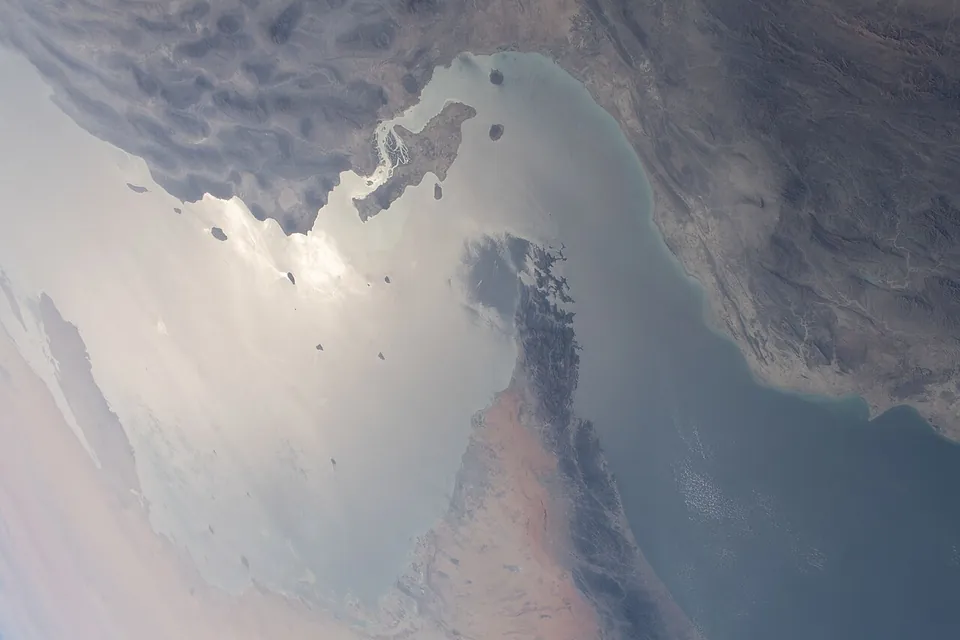
Odnako reported that Iranian authorities counted five tanker fires in the Strait during the previous 24 hours.3
One reported supertanker carried more than 2 million barrels of crude oil and sank after an explosion.2
Before the Iran war began, nearly one-fifth of global crude oil supplies passed through the Strait.4
Story
Tanker incidents and competing accounts around the Strait of HormuzIranian authorities were reported to have counted five oil-tanker fires in the Strait of Hormuz during a 24-hour period, the largest total in the reports provided.3 That figure is not a single agreed count: Al Jazeera reported two tankers on fire, while separate Iranian accounts described three and then five.13 The reports therefore describe differing totals and time frames, rather than a fully reconciled account of how many vessels were affected.13 Iranian forces attributed some of the fires to naval mines and said the vessels had entered restricted areas or attempted to cross without authorization.123 UKMTO separately reported two incidents near Oman’s Khasab, involving an unidentified projectile and damage to a tanker’s engine room.4
The first Iranian account summarized by Al Jazeera said two oil tankers caught fire in the Strait, without specifying in that report how the fires began.1 Iran’s navy said those tankers had entered a restricted area east of the Strait, presenting their location as a breach of a controlled zone.1 A separate report from Iranian forces placed two explosions north of Ghanam Island and east of Hormuz, and attributed them to vessels striking naval mines.2 The Revolutionary Guards said the two ships had disabled their propulsion systems before trying to transit without permission, linking the reported crossing to the subsequent explosions.2 These are Iranian explanations of the incidents; the available accounts do not independently establish the cause of every reported fire or explosion.2
One vessel was described in the APA report as a supertanker carrying more than 2 million barrels of crude oil, and the report said it sank after an explosion.2 The volume applies to that reported vessel, not to all the tankers in the different incident accounts, which do not provide a combined cargo total.23 Neither the APA account nor the Odnako report identified the vessels by name, and Odnako also did not give their origins.23 The APA report said it had no information about the ships’ flags or the condition of their crews, leaving those details unresolved in that account.2 Odnako likewise reported that names and origins were missing, while noting that the Revolutionary Guards had identified one vessel as a supertanker.3
Odnako reported that Iran’s navy and the Revolutionary Guards attributed three tanker fires to mine strikes in a restricted area.3 In another statement, the Revolutionary Guards described two tankers whose radar and positioning equipment had been switched off before they hit a mine during an unauthorized crossing.3 The navy separately said a tanker had struck a mine in an unsafe restricted zone east of the Strait and had to stop, with its tracking and identification equipment off.3 Iran’s Army Naval Forces then reported another tanker fire after a mine strike in the eastern Strait, bringing its stated total for the prior 24 hours to five.3 The separate descriptions may overlap in the underlying events, but the reports do not set out enough vessel details to match every account to a unique ship.23
UKMTO said an outbound tanker sustained a strike to its stern from an unknown projectile roughly 11 nautical miles north of Khasab, on Oman’s Musandam Peninsula.4 The agency described another incident 17 nautical miles east of Khasab, where a vessel was struck in its engine room.4 UKMTO said neither of those two incidents had reported casualties, while the environmental consequences remained unknown.4 It was not immediately clear whether its two reports referred to separate ships or to the same vessel.4 Iran’s navy also reported a mine-related tanker fire east of the Strait, but Reuters could not verify that claim independently or connect it to either UKMTO report.4
The British maritime security agency said a tanker near Khasab had caught fire after an attack on Friday, adding another reported fire in the same general area.4 That description does not identify the vessel or establish whether it was one of the ships in UKMTO’s two reports.4 The competing accounts leave a central uncertainty: reports of Iranian-claimed mine strikes and UKMTO’s projectile incidents have not been shown to concern the same ships.24 The supported reading of the available reporting is therefore that the number of incidents and their causes remain unsettled across the accounts.12 The reported count of fires varies by source and period, from two tankers in one account to five Iranian-reported fires over 24 hours.13
Iranian authorities have framed the incidents around restrictions on passage, saying ships must use authorized routes and keep navigation systems operating.23 A notice attributed to Iran’s navy said the eastern Strait was under its control and warned vessels against disabling navigation radar or entering unauthorized areas.3 The Revolutionary Guards’ account described two ships with radar and positioning systems off, while the navy separately cited a tanker whose tracking and identification equipment was not operating.3 In the supported account of the confrontation, Iran’s rules on routes and operating equipment sit alongside its reports of fires and mine strikes involving ships it says violated those rules.2 These statements explain the Iranian authorities’ position, but the reporting supplied here does not independently verify the claimed violations or establish every incident’s cause.124
The IRGC’s deputy commander, Major-General Mostafa Izadi, said Iran’s opponents were seeking to generate instability by raising economic pressure and eroding public confidence.1 That statement places the maritime reports within a broader Iranian claim about pressure on the country, rather than providing evidence about the identity or condition of the tankers.12 Reuters reported that Tehran had limited transit through the Strait and attacked ships it said had breached those limits, while seeking control of the waterway and leverage over Washington.4 The reported restrictions and the warning about navigation equipment indicate how Iran has described the rules it expects vessels to follow in the eastern Strait.234 The available reporting does not provide a complete account of how many ships were involved, nor does it resolve whether the separate incident reports overlap.1234
The waterway matters to energy transport because nearly one-fifth of global crude oil supplies passed through the Strait before the Iran war began.4 That pre-war share gives the reports potential significance beyond the individual ships, although the supplied facts do not quantify any change in oil flows after the war began.14 The incidents were reported at a chokepoint that handled that substantial share of crude supplies, making uncertainty about access and safety relevant to energy transport.14 The supported context is the combination of the Strait’s prior role in global crude movement and the reported confrontation over authorized passage.14 For now, the evidence describes fires, damage, Iranian mine claims, and UKMTO projectile reports, but it does not establish a single verified tally or a complete vessel-by-vessel account.1234
Structure
Who is connected to whom- 1Strait of Hormuz
- ← supply constraintFact
- ← geographic exposureFact
- ← depends onFact
- ← operates inFact
- ← requiresFact
Disagreements
Where the sources do not matchReported number of tanker fires
Al Jazeera1
Odnako3
Possibly: The likely explanation is that the reports describe different accounts and time frames: the supplied reporting also records an account of three fires, and explicitly notes that reported totals vary by report and period.
History
How it came to this- 2026-11-21Iran reports five tanker firesAn earlier signal reported five oil tankers on fire after mine strikes; Odnako likewise reported a five-fire total for the previous 24 hours.
- 2026-11-22Two tanker explosions reportedAn earlier signal described two tankers exploding after mine strikes; the APA account also reported two explosions attributed to mines.
- Nowfive Iranian-reported tanker fires in the Strait during 24 hours
Impact
Spreading outward, level by level- Level 1Reported incidents and vessel safety
Iranian forces attributed fires to mines and said some vessels entered restricted areas or attempted unauthorized passage. Separately, UKMTO reported two tanker incidents near Khasab and said neither had reported casualties; their environmental impact was unknown.124
Fact - Level 2Access rules and maritime tensions
Iranian authorities warned vessels against entering unauthorized areas or turning off navigation radar. The reports describe restrictions on passage alongside Iranian claims of fires and mine strikes, but do not independently establish every claimed violation or cause.23
Fact - Level 3Energy transport
Because the Strait carried nearly one-fifth of global crude oil supplies before the war, uncertainty about access and safety could matter beyond the individual incidents. The supplied facts do not quantify any change in oil flows.
Analysis
Sources
What each source supportsWritten by AI from the sources listed below: every fact was checked word for word against its source, and inference is marked apart. How we write