

EU backs global pledge to cut SF6 emissions, mandates 2032 phase‑out for new switchgear
The European Union has endorsed an international commitment to lower sulfur hexafluoride releases from power equipment. It also set a deadline that all new switchgear in the 27 member states must be SF6‑free by 2032.
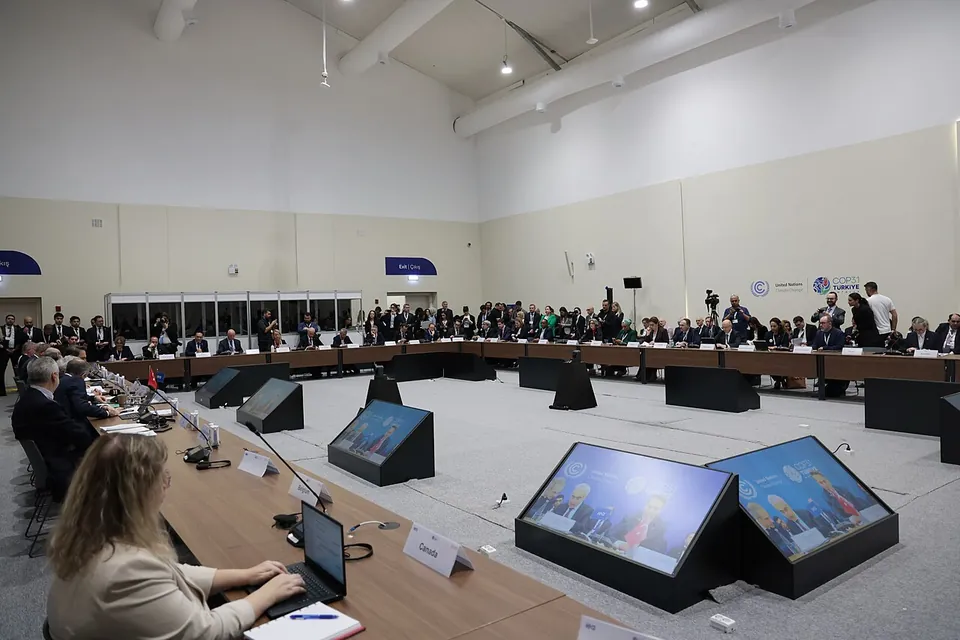
The EU’s phase-out deadline applies to new switchgear.1
The new-switchgear phase-out applies across all EU member states.1
Commissioner Hoekstra said long-term grid investment decisions can shape emissions trajectories for decades.1
Story
EU backs global pledge to cut SF6 emissions, mandates 2032 phase‑out for new switchgearThe European Union announced its support for a worldwide pledge aimed at reducing SF6 emissions in the power sector.1 At the same time, the bloc established a rule that any new switchgear installed after 2032 must not contain SF6 across all 27 member states.1 These two actions together define the scale of the change and its target date.1 The pledge sets the wider international context, while the deadline specifies what must change for new switchgear within the EU.1 The policy therefore addresses both support for reducing power-sector emissions globally and a concrete equipment standard across every EU member state.1
The EU already enforces strict regulations on fluorinated‑gas emissions for existing equipment throughout its operational life and when it becomes waste.1 Those existing requirements address equipment while it is in service as well as after it enters the waste stream, extending emission-prevention rules beyond the moment of installation.1 Consequently, the new phase‑out deadline builds on an existing regulatory framework rather than introducing an isolated requirement.1 The approach reflects a continuity of policy from existing emission controls to future equipment standards.1 The distinction matters for equipment owners and those handling discarded equipment: the new deadline concerns new switchgear, while the existing rules apply to equipment over its lifetime and at disposal.1 Together, the two measures cover different stages of equipment use without making the new-equipment deadline a substitute for controls on existing installations.1
For the most demanding categories of switchgear, manufacturers have already completed the shift to SF6‑free technologies.1 This shows that SF6‑free solutions are available for the toughest switchgear types, although the cited fact does not establish that every category has completed the transition.1 The completion of these solutions reduces the risk of supply shortages as the deadline approaches.1 It also provides a benchmark for less complex equipment to follow.1 Compared with the new-switchgear deadline, the completed transition for the toughest types is already achieved rather than a future requirement.1 That difference makes the experience with those types relevant to manufacturers and others preparing for the broader phase-out, while the deadline itself still applies to new switchgear across all 27 member states.1
Countries participating in the pledge may count their SF6 reduction actions toward their Nationally Determined Contributions under the Paris Agreement.1 This mechanism links the EU’s technical standards with internationally recognised climate reporting.1 By allowing crediting, the EU creates an incentive for nations to adopt SF6‑free solutions more rapidly.1 The crediting process is administered through each country’s NDC submission.1 For participating countries, the provision means that SF6-reduction activities can contribute to their NDCs, connecting action on this gas to their national climate commitments.1 This is a reporting opportunity, not a stated change to the EU deadline: the deadline applies to new switchgear across the EU, while crediting concerns countries’ reduction activities under their NDCs.1
The European Commission has expressed readiness to assist countries in accelerating the transition to resilient, modern, SF6‑free power systems.1 The stated offer is support for countries as they accelerate the transition; no particular form of assistance is specified in the cited fact.1 Such assistance aligns with the broader EU objective of strengthening grid infrastructure while curbing greenhouse‑gas emissions.1 It also reinforces the EU’s role as a facilitator in the global emission‑reduction effort.1 The offer is relevant to countries pursuing the transition, while the EU’s own rule sets a separate requirement for new switchgear in its 27 member states.1 Read alongside the NDC crediting provision, the readiness to support countries adds a stated form of cooperation to the option of counting reductions toward national commitments.1
Commissioner Hoekstra highlighted that decisions on long‑term grid investments constitute a narrow window of opportunity to set emissions trajectories for decades.1 He argued that aligning new infrastructure projects with the 2032 phase‑out can lock in lower emissions pathways.1 The statement underscores the strategic timing of policy implementation relative to capital‑intensive planning cycles.1 It also signals to industry that upcoming procurement will favour SF6‑free technologies.1 The point is that choices made during long-term grid investment can shape emissions trajectories for decades, so the timing of those decisions matters alongside the phase-out deadline.1 Grid planners and others making infrastructure investment decisions are therefore among those affected by the opportunity Hoekstra described.1
The EU’s endorsement of the global pledge situates its domestic measures within an international context.1 By aligning national rules with a worldwide commitment, the bloc contributes to a coordinated reduction of SF6, a potent greenhouse gas.1 This coordination helps avoid fragmented standards that could impede cross‑border electricity trade.1 It also demonstrates the EU’s willingness to lead on niche but high‑impact climate issues.1 The pledge and the EU deadline operate at different scales: one is a global commitment the EU supports, and the other is a requirement for new switchgear across the 27 member states.1 For countries and power-sector decision-makers beyond the EU, the pledge provides an international point of reference, while the stated 2032 rule is specifically an EU-wide measure.1
Overall, the combination of a firm phase‑out deadline, existing emission controls, completed SF6‑free solutions for the toughest equipment, and the ability to credit reductions creates a comprehensive framework for lowering SF6 emissions.1 The framework targets manufacturers, utilities, and national policymakers alike, each playing a role in meeting the 2032 target.1 Monitoring will rely on the EU’s established F‑gas reporting system and on NDC submissions from participating countries.1 If fully implemented, the measures are expected to substantially reduce the climate impact of the power sector’s most potent greenhouse gas.1 The measures address separate parts of the transition: the phase-out sets a standard for new equipment, lifetime and waste rules cover existing equipment, and NDC crediting applies to countries’ reduction activities.1 The already completed move for the toughest switchgear types provides a contrast with the future deadline for new switchgear more broadly.1 Countries may use the crediting option, and the Commission says it is ready to support countries, while the EU’s rules apply to equipment in its member states.1 Taken together, the facts describe a mix of equipment rules, international cooperation and national accounting rather than a single measure aimed at only one group.1
Structure
Who is connected to whom- 1European Union
- ← regulated byFact
- sanctions →Fact
- restricts exports to →Fact
- restricts imports from →Fact
- ← regulatory exposureFact
Impact
Spreading outward, level by level- Level 1New switchgear in the EU
The phase-out deadline applies to new switchgear across all EU member states.1
Fact - Level 2Existing equipment and disposal
EU rules address F-gas emissions and emission prevention for existing equipment over its lifetime and when it enters the waste stream.1
Fact - Level 3Countries pursuing the transition
Countries can credit SF6 emission-reduction activities under their Nationally Determined Contributions, and the EU says it is ready to support countries accelerating the transition.1
Fact - Level 4Long-term grid investment
Investment decisions may be an important opportunity to influence future emissions trajectories, as Commissioner Hoekstra highlighted.
Analysis
Sources
What each source supportsWritten by AI from the sources listed below: every fact was checked word for word against its source, and inference is marked apart. How we write