

Huang schedules House testimony for 1 December as export-control inquiry widens
Jensen Huang is due to appear before three House committees, with Nvidia general counsel Tim Teter set for a separate interview. Senate proceedings and continuing congressional inquiries will extend scrutiny beyond the House sessions.
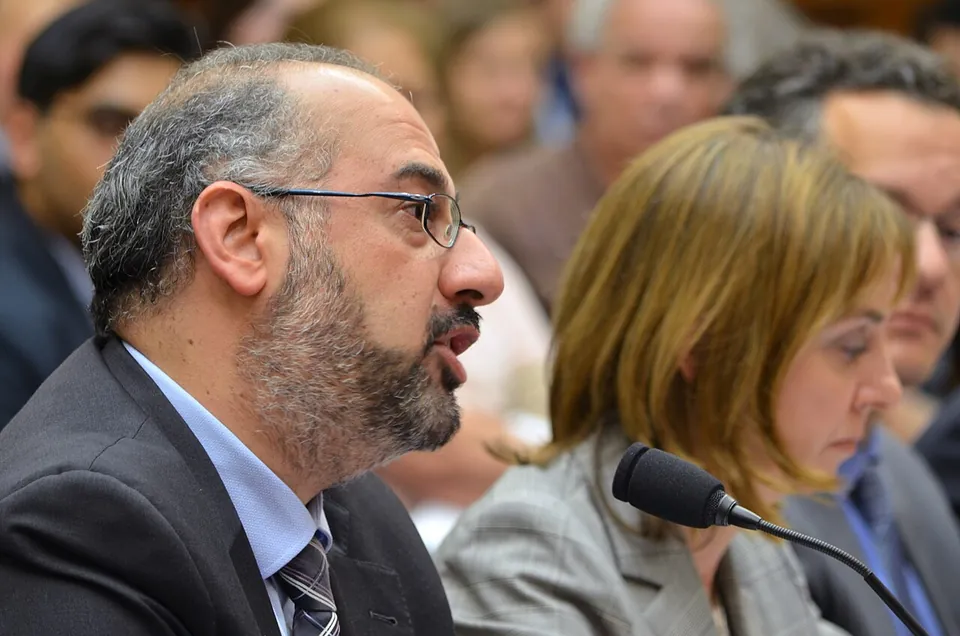
Huang is scheduled to testify before three House committees.1
Nvidia general counsel Tim Teter is scheduled for a separate closed-door transcribed interview.1
The committee chairs warned Huang he could be subpoenaed if he refused a closed-door interview.1
Story
A scheduled appearance turns a threat of compulsion into a wider inquiryFormer Nvidia chief executive Jensen Huang is scheduled to appear before three House committees on 1 December, placing his account at the center of an inquiry into chip exports and national security.13 The plan follows an earlier warning that lawmakers could compel his participation if he would not take part in a private interview.1 Nvidia general counsel Tim Teter is scheduled to take part in a separate transcribed interview on 2 December, also behind closed doors.1 The arrangements mark a shift from a possible subpoena to scheduled appearances, although the House sessions are expected to be private rather than public hearings.13
The House committees are led by Brian Mast, John Moolenaar and Rick Crawford, whose chairs said they want information about Nvidia chips reaching Chinese actors.1 They also want to examine a possible connection to a Chinese intelligence asset, joining questions about chip movements with scrutiny of alleged personal matters involving Huang.1 The House appearance is described as a transcribed interview, likely to take place behind closed doors, rather than an open hearing.3 Mast said he and Huang had strongly differing views on export controls, while also describing Nvidia as significant to the United States.4
The sequence began before the scheduled testimony: House Republicans asked Huang to appear in a letter sent on November 4.4 On 12 November, the committee chairs warned that Huang could face a subpoena if he refused to sit for a closed-door interview.1 Mast later said his staff had discussed with Nvidia when and where Huang might testify, indicating that arrangements were being worked through with the company.1 Mast expected the private session to be recorded on video and transcribed, while the committees’ stated aim is to obtain answers on chip access and the possible role of an intelligence asset.14
The inquiry concerns Nvidia chips in the context of a US policy that bars sales of advanced artificial intelligence chips to China.1 The United States has sought for years to limit China’s access to Nvidia chips because of concern that they could be used for military purposes.1 Lawmakers said their examination would address possible effects on US standing in artificial intelligence and on national security.3 The committee chairs’ questions about Chinese actors and a possible intelligence asset add a specific potential route of concern to the broader export-control debate.1
The allegations that preceded Huang’s departure concerned suspected Chinese spy Alice Huang and two Nvidia employees.1 Alice Huang, who is also known as Huang Le, had been an executive director at Megaspeed International, a cloud-computing company based in Singapore.1 Megaspeed bought nearly $5bn in artificial-intelligence chips and advanced hardware, and facilitated about $12bn in chip sales that violated US export controls.1 Those amounts describe different activity: one is the company’s purchases, while the other concerns sales it facilitated, so they should not be treated as interchangeable totals.1
Malaysia said it was investigating whether Megaspeed diverted advanced artificial-intelligence chips to other countries.1 The Department of Commerce began investigating the company in 2024, and the Department of Justice assumed the investigation in 2025.1 The reported inquiry into possible diversion gives context to congressional interest in how chips reached actors and whether export controls were followed.1 The facts describe a Malaysian investigation and US agency activity, but do not establish that the suspected diversion occurred or specify its outcome.1
Huang stepped down as Nvidia chief executive after the allegations emerged, and a separate report says he resigned last week following reports of an alleged affair with a woman suspected by US intelligence of being a Chinese spy.13 Huang said he regretted the problems he had caused the board and accepted responsibility for personal mistakes.5 The board is investigating his conduct, including an alleged affair with an Nvidia executive, and BBC reporting said the board was not seeking to reinstate him.5 Huang said he would be willing to return as chief executive, while Elon Musk and 165,000 signatories supported his reinstatement.1
Congressional scrutiny also has a Senate track: Tim Scott, chair of the Senate Banking Committee, summoned Huang to a public hearing on Dec. 3.3 Scott said he would consider a subpoena if Huang did not attend voluntarily, while Commerce Secretary Howard Lutnick agreed to appear voluntarily before the committee.1 Lutnick was called to testify on Dec. 10, adding a government official’s appearance after Huang’s scheduled Senate date.13 The Senate Democratic leader said Huang, Nvidia and the Trump administration should answer questions about possible risks to national security and what officials knew.1
House Democratic leader Hakeem Jeffries sought a classified briefing for all members of Congress about Nvidia, while House Speaker Mike Johnson said lawmakers were building agreement on limits to chip exports to China.1 Johnson said he supported restricting China’s access to advanced technology, and Democrats have said they will continue examining Nvidia and its cooperation with export controls after taking over both chambers in January.13 Separately, Huang and his wife transferred about 5,896 萬 shares into a family trust in March 2026, according to a filing with the U.S. Securities and Exchange Commission; the shares were worth more than 105 億美元 at the time.6 Two of four grantor retained annuity trusts established by the Huangs in March 2016 lasted 10 years and expired on 2026 年 3 月 18 日; the shares then passed to the Huang Irrevocable Remainder Trust, with Huang as trustee and the couple’s two children believed to be beneficiaries.6 The report compares a 22,161% rise in Nvidia’s share price over the decade with a 288% increase for the S&P 500; it also says that after Huang resigned on 2026 年 11 月 12 日, interim chief executive Colette Kress took over and Nvidia shares fell more than 30% from their October record high.6 The same report says Huang retained about 3.5% of Nvidia and remained its largest individual shareholder, while OpenAI chief executive Sam Altman said he lacked enough information to judge whether Huang should return.67
Structure
Who is connected to whom- 1Jensen Huang
- located in →Fact
- partners with →Fact
- ← depends onFact
- invests in →Fact
- uses →Fact
History
How it came to this- November 4House Republicans request Huang’s appearanceRepublicans sent Huang a letter requesting that he appear.
- 12 NovemberChairs warn of a possible subpoenaThe committee chairs said Huang could be subpoenaed if he refused a closed-door interview.
- Before the scheduled testimonyStaff discuss arrangements with NvidiaBrian Mast said his staff had spoken with Nvidia about a date and location for Huang’s testimony.
- 1 DecemberHuang’s House testimony is scheduledHuang is scheduled to appear before three House committees.
- Now1 December Jensen Huang’s scheduled House committee testimony
- 1 DecemberHuang is scheduled to testify before three House committees; the appearances are expected to be transcribed and likely behind closed doors.
Impact
Spreading outward, level by level- Level 1House inquiry
The committees want answers about Nvidia chips reaching Chinese actors and the possible role of a Chinese intelligence asset.1
Fact - Level 2Export controls
The inquiry takes place amid a US prohibition on sales of advanced AI chips to China and longstanding efforts to restrict China’s access to Nvidia chips over military-use concerns.1
Fact - Level 3National security and AI leadership
Lawmakers said their inquiries would examine possible damage to US leadership in artificial intelligence and national security.3
Fact - Level 4Further congressional scrutiny
The scheduled House testimony sits within a wider congressional inquiry that also includes Senate appearances and a stated intention by Democrats to continue investigating Nvidia and its cooperation with export controls.13
Fact
Ahead
Checked automatically when due; the result goes to the track recordHuang is scheduled to testify before three House committees; the appearances are expected to be transcribed and likely behind closed doors.
Nvidia general counsel Tim Teter is scheduled for a closed-door transcribed interview.
Senate Banking Committee Chair Tim Scott summoned Huang for a public hearing and said he would consider a subpoena if Huang did not appear voluntarily.
Commerce Secretary Howard Lutnick was called to testify before the Senate Banking Committee and agreed to appear voluntarily.
Sources
What each source supportsWritten by AI from the sources listed below: every fact was checked word for word against its source, and inference is marked apart. How we write