

Japan will skip the first review conference of the nuclear weapons ban treaty
Foreign Minister Toshimitsu Motegi said Japan would not attend as an observer, citing its deterrence policy and security concerns. The decision has drawn criticism from Hiroshima’s mayor and survivors of the atomic bombings.
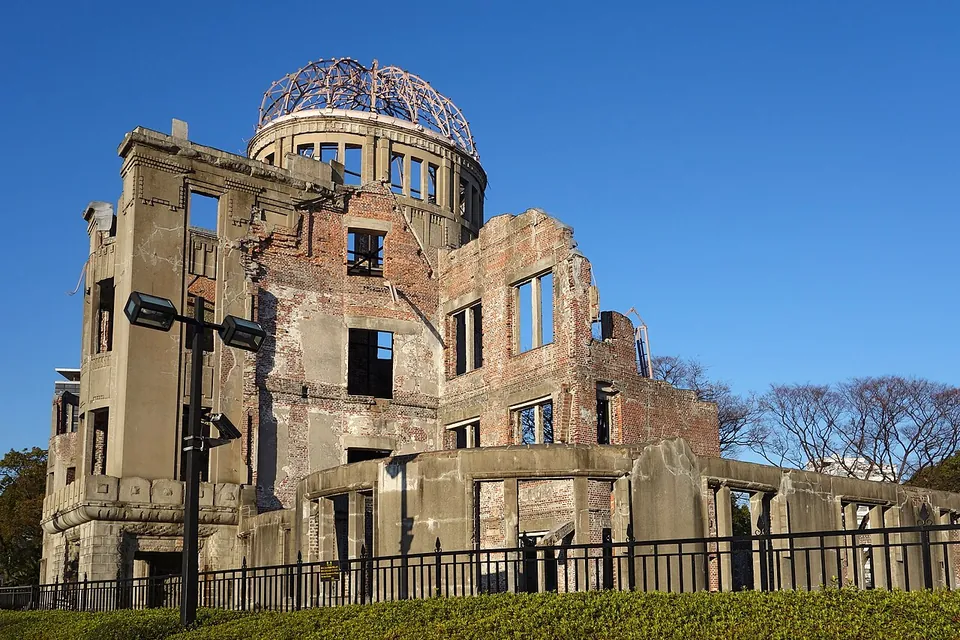
The treaty was adopted and opened for signature in 2017.1
The treaty entered into force in 2021.1
The treaty’s first review conference is scheduled to take place in New York from Nov 30 to Dec 4.1
Story
Japan’s choice to stay away from the treaty reviewJapan has decided not to take part, even as an observer, in the first review conference of the Treaty on the Prohibition of Nuclear Weapons.1 The decision means Japan will be absent from a meeting of the treaty’s member states, scheduled in New York from Nov 30 to Dec 4.1 It is not a decision to leave the treaty: Japan is not a member and has chosen not to join.1 The central disagreement is whether Japan should engage with the treaty while relying on U.S. extended deterrence, or stay away because of that reliance.12 That distinction matters because observer attendance would allow Japan to be present at the review without changing its status as a country outside the treaty.1 The conference is therefore a point of contact between treaty members and a government that has declined both membership and attendance at this meeting.1
Foreign Minister Toshimitsu Motegi announced the decision at a news conference.2 He argued that the treaty does not fit Japan’s policy of deterring threats through nuclear capability, and that observer attendance could convey an inappropriate signal.2 Motegi also warned that participation might weaken Japan’s peace and security.1 He described extended nuclear deterrence as necessary in a security environment he characterized as increasingly severe.2 Together, those explanations present nonattendance as connected to the government’s security policy, rather than as a statement that the conference has no relevance to Japan.12 The stated concern is that even observer participation could send the wrong message or undermine security, while Motegi describes deterrence as necessary.12
The term extended deterrence refers here to a U.S. commitment to protect Japan using both nuclear and conventional military capabilities.1 Motegi said that this U.S. commitment is indispensable to safeguarding the peace, property and lives of people in Japan.1 His position places the alliance’s deterrent role at the center of the case against attending the review as an observer.12 The competing position, expressed by Hiroshima’s mayor and atomic-bomb survivors, is that Japan should participate in the meeting.12 The two positions focus on different consequences: the government emphasizes protection through U.S. capabilities, while critics emphasize Japan’s participation in a forum opposing nuclear weapons.12 People in Japan are directly named in Motegi’s account of whom deterrence is meant to protect, while survivors are among those urging the government to join the treaty.1
The treaty was adopted and opened for signature in 2017, then took effect in 2021.1 It bars members from developing, testing, possessing or stationing nuclear weapons.1 Its prohibitions also cover production, acquisition, stockpiling and use, in addition to development, testing and possession.2 Those restrictions apply to countries that belong to the treaty; Japan is outside it.12 The treaty’s rules thus set out a broad set of limits for its members, extending from the creation and testing of weapons to their possession and use.12 Because Japan has not joined, the meeting’s review of those obligations concerns treaty members rather than obligations Japan has accepted as a party.12
Japan has also stayed away from earlier meetings of treaty signatories, with reliance on the U.S. nuclear umbrella among its stated reasons.1 That background helps explain why the present dispute concerns both Japan’s attendance and its broader relationship with the treaty.12 The facts establish the earlier absences and the current decision, but do not specify how many past meetings Japan missed.1 Nor do they quantify the effect that attendance or nonattendance would have on Japan’s security.12 Japan’s earlier absences and its reliance on the U.S. nuclear umbrella are both documented.1 At the same time, Japan’s nonmembership and its decision to skip this conference are separate aspects of its relationship with the treaty.1
Hiroshima Mayor Kazumi Matsui said Japan’s approach conflicts with what atomic-bomb survivors want.2 He urged the government to attend as an observer and pointed to Japan’s experience as the only country to have endured atomic bombings.2 Survivors of the Hiroshima and Nagasaki attacks, along with the International Campaign to Abolish Nuclear Weapons, have also pressed the government to join the treaty.1 Calls to join address treaty membership, while the immediate decision concerns whether Japan will attend this review conference as an observer.1 Matsui’s appeal and the survivors’ campaign both seek a more active Japanese role, although one specifically asks for observer attendance and the other urges treaty membership.12 The criticism gives the dispute a domestic and historical dimension: the people speaking out include survivors of the bombings and the mayor of Hiroshima.12
The meeting is expected to consider an international trust fund for people affected by nuclear use and testing.1 The proposed discussion includes environmental restoration in states harmed by nuclear events.1 The stated agenda therefore reaches beyond treaty rules on weapons to questions about victims and damage to affected environments.12 The available information describes this as an expected topic, not a fund already established or a measure already agreed.1 That agenda would bring people harmed by nuclear use or testing, as well as affected states, into discussions about possible support and remediation.1 The subject adds a practical concern to the conference’s legal focus: its members are expected to discuss both restrictions on weapons and responses to their effects.12
The wider diplomatic setting includes major nuclear powers that are not members of the treaty.12 Britain, China, France, Russia and the United States are outside it, and each holds veto power on the U.N. Security Council.1 The United States and China are also identified among nuclear powers that have not signed the treaty.2 These descriptions distinguish being outside the treaty from the narrower statement that a country has not signed it.12 The list of five countries shows that the treaty’s membership excludes several major powers, including the United States, whose extended deterrence Japan relies on.1 That context places Japan’s choice alongside a wider divide between treaty members and nuclear powers that remain outside it.12
The historical weight of the debate is tied to the attacks on Hiroshima and Nagasaki in 1945.2 Hiroshima was destroyed by a U.S. atomic bombing on Aug. 6, 1945, during World War II.2 Nagasaki was struck by an atomic bomb three days afterward.2 The conflict over participation thus joins the government’s stated security rationale to demands from the mayor and survivors that Japan take part in the treaty’s review.12 The two attacks are part of the reason Matsui invokes Japan’s experience when calling for observer attendance.2 The opposing appeals consequently draw on different parts of the same debate: the government stresses deterrence for present security, while survivors and the mayor call attention to the country’s history of atomic bombing.12
History
How it came to this- Aug. 6, 1945Hiroshima is hit by an atomic bombingHiroshima was destroyed by a U.S. atomic bombing during World War II.
- Three days after HiroshimaNagasaki is hit by an atomic bombingNagasaki suffered an atomic bombing three days after the attack on Hiroshima.
- 2017Treaty adopted and opened for signatureThe Treaty on the Prohibition of Nuclear Weapons was adopted and opened for signature.
- 2021Treaty enters into forceThe treaty entered into force; Japan is not a party and has opted not to join.
- Previous treaty meetingsJapan stays awayJapan skipped earlier meetings of treaty signatories, citing reliance on the U.S. nuclear umbrella among its reasons.
- Current decisionJapan declines observer attendanceForeign Minister Toshimitsu Motegi announced that Japan would not attend the first review conference as an observer.
- NowNot attending Japan’s decision on observer attendance at the treaty review conference
- Nov 30–Dec 4The treaty’s member states are scheduled to meet in New York for the first review conference. Its agenda is expected to include discussion of a trust fund for victims of nuclear use and testing and environmental remediation.
Impact
Spreading outward, level by level- Level 1Japan’s participation
Japan will be absent from the first review conference as an observer, while remaining outside the treaty as a non-party.1
Fact - Level 2Government’s stated security rationale
Motegi said the treaty conflicts with Japan’s nuclear deterrence policy, that observer attendance could send the wrong message, and that extended deterrence is necessary to protect Japan’s peace.12
Fact - Level 3Calls for a different Japanese role
Hiroshima’s mayor urged observer attendance, and survivors and the International Campaign to Abolish Nuclear Weapons have urged Japan to join the treaty.12
Fact - Level 4Conference discussions
The meeting is expected to consider an international trust fund for people affected by nuclear use and testing, including environmental remediation for affected states.1
Fact - Level 5The dispute’s broader meaning
The disagreement brings the government’s stated reliance on U.S. extended deterrence into tension with calls from Hiroshima’s mayor and atomic-bomb survivors for Japan to participate.
Analysis
Ahead
Checked automatically when due; the result goes to the track recordThe treaty’s member states are scheduled to meet in New York for the first review conference. Its agenda is expected to include discussion of a trust fund for victims of nuclear use and testing and environmental remediation.
Sources
What each source supportsWritten by AI from the sources listed below: every fact was checked word for word against its source, and inference is marked apart. How we write