

China-Türkiye MoU sets up $15bn investment and 7GW of planned renewables
The initial agreement covers wind and solar development in Türkiye, alongside storage, transmission and manufacturing cooperation. Its 7GW generation plan is distinct from the 4GW transmission figure and sits within a much larger national capacity target.
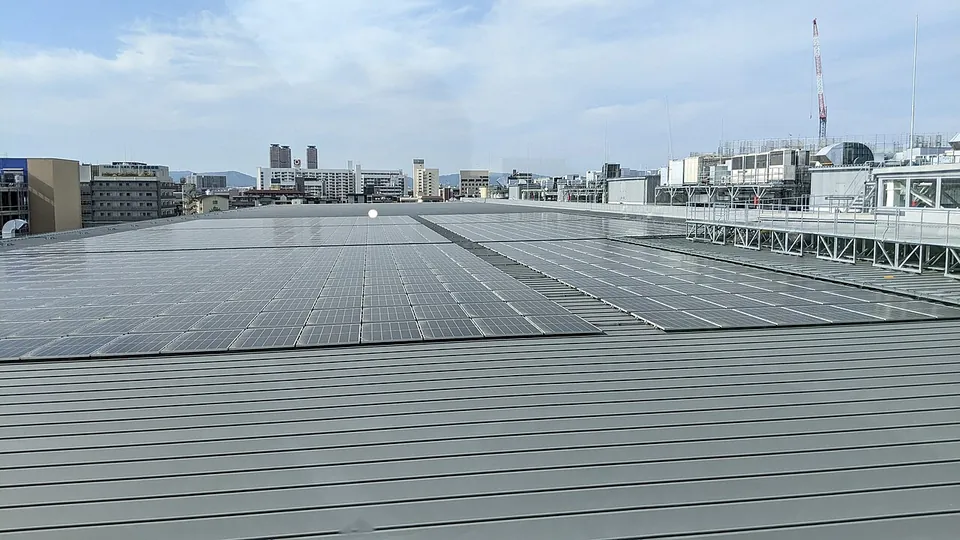
The plan envisages a combined 7GW of new wind and solar capacity in Türkiye.1
The MoU separately includes 4GW of electricity transmission capacity.1
Türkiye’s Renewable Energy 2035 strategy sets a 120GW target for installed wind and solar capacity.1
Story
What the China-Türkiye renewable energy memorandum sets outChina and Türkiye have reached an initial agreement under which Beijing could invest as much as $15bn in wind and solar power plants in Türkiye.1 The package envisages 7GW of new solar and wind generation capacity in the country.1 The generation plan is accompanied by a separate 4GW figure for electricity transmission capacity, as well as provisions covering energy storage.1 These figures describe different parts of the reported package: 7GW is planned generation, while 4GW refers to transmission, not an additional measure of the same kind of capacity.1 The investment amount is an upper limit in an initial agreement, rather than a statement that the full sum has already been invested.1
The memorandum of understanding was signed by the national energy administrations of China and Türkiye.1 Turkish Energy and Natural Resources Minister Alparslan Bayraktar announced that the signing had taken place.1 The document was formalised alongside the COP31 climate summit in Antalya, Türkiye.1 The reported sequence is therefore an initial investment agreement, an MoU signed by the two countries’ national energy administrations, and an announcement by Türkiye’s energy minister.1 The available details describe planned development and cooperation, rather than reporting that the proposed plants or related infrastructure have already been completed.1
The proposed new generation is intended to come from both solar and wind projects in Türkiye.1 The plan’s 7GW is a combined capacity figure for those new projects, not a separate 7GW allocation to each technology.1 The memorandum also covers energy storage systems, according to Bayraktar’s description of its scope.1 Storage is presented alongside the generation plans, while the reported 4GW figure concerns electricity transmission capacity.1 A supported reading of the package treats generation and transmission as separate measures, so adding their stated capacities would not yield a single measure of new power generation.1
Bayraktar said the cooperation would make technology transfer possible and help establish production of wind turbine equipment in Türkiye.1 That manufacturing element places local equipment production within the scope of the announced cooperation, alongside wind and solar projects, storage and transmission.1 The reported package therefore covers more than the construction of renewable generation: it also describes grid-related capacity and energy storage, and identifies technology transfer and domestic turbine-equipment production as areas of cooperation.1 The stated production element concerns wind turbine equipment; the reported facts do not assign a separate capacity or investment figure to manufacturing.1
Bayraktar linked the cooperation to stronger energy security and a faster green transition in Türkiye.1 He said that the transition was to be pursued in line with Türkiye’s National Energy 2040 Vision.1 The article also describes the Chinese-backed package as complementing efforts to reduce dependence on imported fossil fuels, reinforce energy security and expand clean-energy manufacturing within Türkiye.1 Those points set out the stated policy rationale for the agreement; the available facts do not quantify how much the package would change fossil-fuel imports or energy security.1
The 7GW planned under the MoU can be compared with Türkiye’s Renewable Energy 2035 strategy, which sets a target of 120GW of installed wind and solar capacity by 2035.1 The package’s proposed generation capacity is smaller than that national target, and the two figures describe different things: new capacity in the agreement and a strategy target for installed capacity.1 A supported comparison describes the planned 7GW as below the 120GW target, without implying that the MoU alone would deliver the national goal.1 The strategy’s target year is 2035, while Bayraktar connected the agreement to the separate National Energy 2040 Vision.1
Transmission investment is part of the wider setting for renewable development in Türkiye: international lenders are backing upgrades intended to integrate larger volumes of variable renewable power.1 The supported account places the Chinese-backed agreement within a broader effort to develop renewable generation while also investing in grid and storage support.1 That context helps distinguish the agreement’s several components: the proposed wind and solar plants add generation, storage systems are also included, and transmission capacity is reported separately.1 The facts identify international lenders as supporting transmission upgrades, but do not specify which lenders are involved or give the amount of that backing.1
Another renewable-energy financing effort was announced earlier in the same week: the European Bank for Reconstruction and Development planned to invest $6bn in REACT projects over the next five years.1 The EBRD announced the plan when it joined REACT as one of the initiative’s initial signatories at an event held at COP31 in Antalya.1 REACT was established with the involvement of Türkiye’s Ministry of Energy and Natural Resources and brings together international stakeholders.1 Its stated ambition is to mobilise up to $300bn across Türkiye’s renewable energy sector by 2040.1 The $6bn EBRD plan, REACT’s mobilisation ambition and the China-Türkiye MoU’s possible investment of up to $15bn are distinct figures attached to different initiatives and time frames.1
The MoU is one part of a wider effort described as combining renewable generation with support for transmission and storage in Türkiye.1 The reported terms set out a potential investment ceiling, a combined generation plan, transmission capacity and storage coverage, together with cooperation on technology and wind equipment production.1 Türkiye’s national strategy target provides a larger reference point for the proposed 7GW, while REACT’s ambition and the EBRD announcement show other financing activity described in the same renewable-energy context.1 The stated aims include energy security, reduced reliance on imported fossil fuels and local clean-energy manufacturing, but the facts do not give measured outcomes for those aims.1
History
How it came to this- Earlier that weekEBRD announces a separate renewable-energy investment planThe EBRD announced plans to invest $6bn in REACT projects over the next five years.
- At COP31 in AntalyaChina and Türkiye formalise the MoUThe countries’ national energy administrations signed the memorandum on the sidelines of the summit.
- After the signingTürkiye’s energy minister announces the agreementAlparslan Bayraktar announced the signing and described provisions for storage and transmission.
- Nowup to $15bn Potential Chinese investment in Türkiye wind and solar projects
Impact
Spreading outward, level by level- Level 1Proposed renewable generation
The agreement plans for a combined 7GW of new solar and wind capacity in Türkiye.1
Fact - Level 2Grid and storage support
The MoU also covers energy storage and 4GW of electricity transmission capacity; the transmission figure is separate from the planned generation capacity.1
Fact - Level 3Technology and domestic production
Bayraktar said the cooperation would enable technology transfer and support production of wind turbine equipment in Türkiye.1
Fact - Level 4Energy security and transition
The stated aims include strengthening energy security, accelerating Türkiye’s green transition and complementing efforts to reduce dependence on imported fossil fuels.1
Fact - Level 5National strategy context
The proposed 7GW is smaller than the strategy’s 120GW installed-capacity target; it is one contribution within a wider effort, not a claim that the MoU alone meets that target.
Analysis
Sources
What each source supportsWritten by AI from the sources listed below: every fact was checked word for word against its source, and inference is marked apart. How we write