

European Commission Allocates More Than €390 Million to 135 Climate and Environmental Actions
Fresh allocations from the LIFE programme will help channel €579 million into green ventures across Europe. The funding covers conservation, circular manufacturing, resilience, and energy shifts alongside wider policy developments.
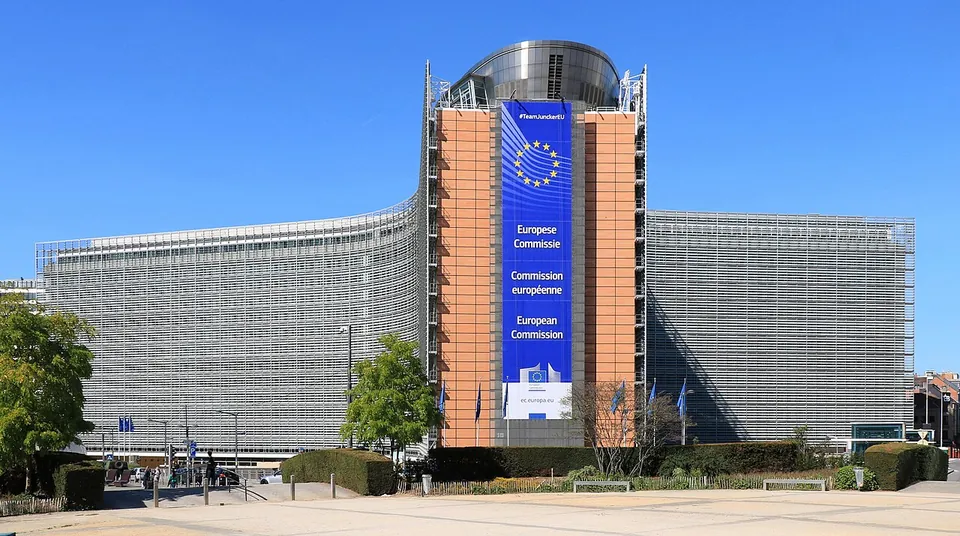
The 135 selected projects require €579 million in overall financing, and the EU contribution is over half of that funding need.1
The 135 funded projects were selected from a record 1,095 proposals submitted under the 2025 LIFE calls.1
LIFE programme financing grew by 9% compared with the previous year.1
Story
European Union Expands Green Investments with €390 Million AllocationThe European Commission decided to grant more than €390 million through the LIFE programme to support 135 new environment and climate projects.1 These chosen green undertakings demand overall financing reaching €579 million across their scheduled work packages.1 Because the European Union is supplying more than €390 million, European public funds represent over half of the needed funds for the 135 projects.1 The awarded subsidies from the European Commission ensure that the total capital requirement of €579 million can be assembled through matching resources.1
The 135 funded projects secured their places following evaluation against a record 1,095 proposals submitted under the 2025 LIFE calls.1 This application cycle saw applicant interest culminate in a record 1,095 proposals contesting the available support.1 Compared with the previous year, LIFE programme financing grew by 9%.1 The expansion reflects a 9% uplift in resources made available relative to the prior annual budgetary distribution.1
A total of 29 nature and biodiversity initiatives will mobilize more than €223 million to protect natural ecosystems.1 For these 29 ecological efforts, over €151 million is funded by the European Union directly.1 The remaining capital needed to attain more than €223 million comes through co-financing arrangements across participating territories.1 Geographically, the 29 selected nature and biodiversity projects originate from 16 EU Member States.1 Organizations located across these 16 EU Member States will steer the conservation activities supported by the over €151 million contribution.1
In the domain of sustainable manufacturing and living conditions, nearly €163 million will be mobilized across 36 circular economy and quality-of-life projects.1 The European Union is providing nearly €91 million toward the aggregate cost of these 36 projects.1 Thirteen Member States are represented among the 36 projects focused on a circular economy and living standards.1 Targeted measures under these 36 projects combine nearly €91 million from community resources with domestic matching to achieve nearly €163 million in spending.1 Entities spread across the thirteen Member States will carry out the practical assignments funded through this specific envelope.1
Actions centered on adapting to changing environments involve 26 projects focused on climate resilience.1 Over €102 million is directed to these 26 projects focused on climate resilience, with the European Union contributing more than €61 million.1 Simultaneously, the European Union is providing nearly €87 million of the more than €91 million mobilized across 44 clean energy transition initiatives.1 These 44 clean energy transition projects encompass both EU Member States and countries associated with the LIFE programme.1 Because the European Union supplies nearly €87 million, community backing covers most of the more than €91 million gathered across these 44 clean energy transition initiatives.1
Over a period exceeding 34 years, the LIFE programme has supported more than 6,700 climate and environmental projects.1 Running from 2021 to 2027, the current edition of the LIFE programme is backed by €5.43 billion.1 The European Climate, Infrastructure and Environment Executive Agency oversees the administration of LIFE programme grants.1 Supervisory duties carried out by the European Climate, Infrastructure and Environment Executive Agency ensure adherence to rules governing the multi-year allocation of €5.43 billion running from 2021 to 2027.1 The recent awards build upon the historical foundation established across more than 34 years and more than 6,700 operations.1
Alongside environmental funding, community bodies handle operational friction across external frontiers under the Entry/Exit System.2 Travelers from outside the European Union visiting most European destinations have been required to submit fingerprints and facial scans under EES since April.2 National governments lost their temporary authority to bypass biometric processing on September 7.2 ACI Europe and Airlines for Europe stated that airport border queues regularly surpass two hours and can reach up to five hours during peak periods.2 These border bottlenecks documented by ACI Europe and Airlines for Europe reflect delays encountered since fingerprinting and facial scans became compulsory in April.2
Addressing these operational complications, Maja Bakran Marcich indicated that additional flexibility would probably be introduced for the EU's Entry/Exit System checks.2 Such administrative adjustments follow concerns raised after national governments lost their temporary authority to bypass biometric processing on September 7.2 Broader travel reforms are also scheduled, as the Commission's tourism strategy will propose measures to simplify cross-border vehicle rentals on November 4.2 The package scheduled for release on November 4 seeks to ease operational barriers encountered by visitors traveling between European territories.2
The European Commission is evaluating a universal tax on companies operating in Europe with annual revenue exceeding one hundred million euros.3 This levy on entities with annual revenue exceeding one hundred million euros is being considered to replace the stalled digital services tax.3 Advancing tax legislation at the European Union level requires unanimous consent from all 27 member states.3 Because every member state holds veto power, any universal tax replacing the digital services tax will depend on unanimous agreement from all 27 member states.3
Structure
Who is connected to whom- 1European Commission
- ← regulated byFact
- finances →Fact
- requires →Fact
- ← regulated byFact
- ← regulated byFact
History
How it came to this- 2021–2027Current LIFE programme editionThe current edition of LIFE is backed by €5.43 billion.
- 2025 LIFE callsRecord proposal poolA record 1,095 proposals competed for support; 135 projects were selected.
- Compared with the previous yearFinancing increasedLIFE programme financing grew by 9%.
- Award announcementFunding awarded to 135 projectsThe European Commission awarded more than €390 million under LIFE for new environment and climate projects.
- Nowmore than €390 million EU funding awarded for new LIFE climate and environment projects
Impact
Spreading outward, level by level- Level 1Selected projects
The 135 projects require €579 million overall, with the EU contribution accounting for over half of the needed funds.1
Fact - Level 2Project areas
Funding supports nature and biodiversity, circular economy and quality-of-life, climate resilience, and clean energy transition initiatives.1
Fact - Level 3Participating countries
Nature and biodiversity projects originate from 16 EU Member States; circular economy and living-standards projects represent 13 Member States, while clean energy transition projects include EU Member States and countries associated with LIFE.1
Fact - Level 4Programme legacy
These awards add to a programme that has supported more than 6,700 climate and environmental projects over a period exceeding 34 years.1
Fact
Sources
What each source supportsWritten by AI from the sources listed below: every fact was checked word for word against its source, and inference is marked apart. How we write