

Regulators Request Contempt Ruling Against Martin Shkreli Over Trading in at Least 60 Drug Companies
Federal and state antitrust enforcers accuse the former pharmaceutical executive of flouting a lifetime ban by trading industry equities online. The enforcement action follows a 2022 judicial order that penalized his anti-competitive monopolization of Daraprim.
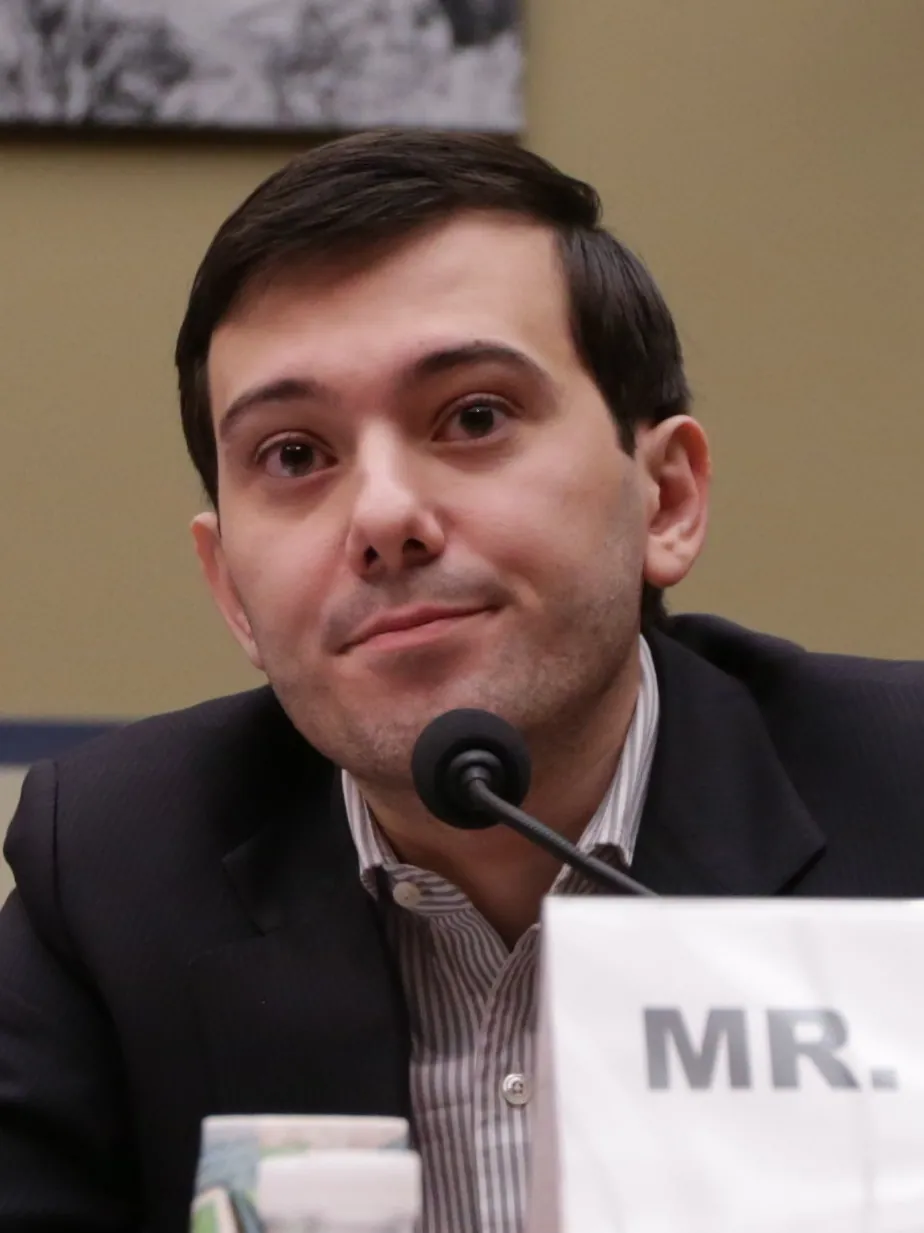
Martin Shkreli's lifetime ban originated from an anticompetitive scheme that raised the price of Daraprim from $17.50 to $750 per tablet.12
A federal court fined Shkreli in 2022 after finding his monopolistic actions deliberate, dangerous, and unlawful.14
The FTC authorized the civil contempt motion with a single affirmative vote after Chairman Andrew N. Ferguson recused himself.4
Story
Federal Regulators Move to Hold Martin Shkreli in Contempt of CourtThe Federal Trade Commission alongside attorneys general from seven separate states have submitted a formal court motion requesting that a federal magistrate hold Martin Shkreli in civil contempt.1 Enforcement officials argue that the 43-year-old former drug executive repeatedly defied a court-mandated lifetime exclusion barring him from participating in the pharmaceutical business sector.1 Investigators discovered that Shkreli bought and sold equity stakes across at least 60 distinct pharmaceutical enterprises following his release from federal custody in May 2022.1 In addition to executing transactions, authorities determined that he routinely aired assessments regarding the daily operations of those enterprises in public settings.1 Enforcement documents show that these stock purchases and sales allegedly transgressed the detailed restrictions imposed by the federal judiciary during 2022.1
Regulators established that Shkreli used modern internet platforms, broadcasting his market activity openly across YouTube, Reddit, and X.1 During one specific video broadcast, he informed his audience that his streams served as educational guides on how to buy, sell, and invest within biotechnology.1 Federal attorneys contend that he used these live video sessions to mount organized public offensives against selected drug developers.1 Through these presentations, he reportedly sought to profit from falling prices by shorting specific pharmaceutical equities while broadcasting predictions that their experimental clinical evaluations would fail.1 During one broadcast presentation, Shkreli insisted that his specific portfolio selections were of little concern because he possessed an unfailing ability to identify biotechnology equities to target.4
The binding prohibition central to the current dispute originated from a comprehensive 2022 court ruling regarding an anticompetitive arrangement engineered by Shkreli.1 That earlier finding proved that he orchestrated an artificial price surge exceeding 5,000% on the medication Daraprim, forcing the per-tablet cost upward from $17.50 to $750.1 When assessing the case, the presiding judge ordered Shkreli to forfeit $64.6 million in financial penalties.1 The judicial decision excoriated his commercial misconduct, formally classifying his behavior as deliberate, dangerous, repetitive, egregious, unlawful, and exceptionally long-running.1 Before his formal release date in 2022, the court permanently prohibited him from ever working within the pharmaceutical marketplace to prevent additional efforts to stifle generic drug rivals.2
The initial government intervention began in January 2020 when the FTC commissioners approved an enforcement lawsuit against Shkreli, another corporate leader, Phoenixus AG, and Vyera Pharmaceuticals LLC by a unanimous tally.4 Resolving those claims in 2022, the U.S. District Court for the Southern District of New York found Shkreli liable for fabricating an unlawful monopoly surrounding Daraprim.4 That medicine serves as a critical therapeutic intervention deployed by medical providers against toxoplasmosis.4 Daniel Guarnera, who leads the Bureau of Competition at the FTC, underlined that Shkreli's monopolistic maneuvering artificially elevated prescription prices for vulnerable patients while preventing low-cost alternative generics from reaching buyers.3 To stop future abuse, the resulting permanent injunction explicitly barred Shkreli from directly or indirectly engaging in the pharmaceutical field, expressly forbidding equity ownership or management meddling.4
The civil contempt petition submitted to the court demands extensive remedial measures to strip Shkreli of his recent pharmaceutical activities.14 Enforcement attorneys specifically demand an order compelling him to divest every single pharmaceutical company share he currently retains in his accounts.4 Furthermore, government lawyers want the court to mandate a disgorgement penalty equal to the aggregate trading gains he generated across drug stocks, alongside accrued prejudgment interest.4 The plaintiffs specifically insist that this monetary assessment must be calculated without granting Shkreli any credit for trades that produced offsetting investment losses.4 The motion also petitions the presiding judge to create an escalating structure of sanctions for upcoming infractions, encompassing expanding fines and possible confinement.4
Top legal officers involved in the enforcement filing have voiced strong condemnation of Shkreli's repeated defiance of established court prohibitions.1 New York Attorney General Letitia James declared that broadcast trading executed by Shkreli breached judicial mandates and the law.1 James emphasized that his persistent pattern of market manipulation combined with monopolistic strategies imperils public welfare as well as everyday market participants.1 Weighing in on the enforcement step, FTC Commissioner Mark Meador asserted that lifetime prohibitions preserve regulatory deterrence solely when breaches bring punishments commensurate with judicial authority.3 Agency records reveal that the commission greenlit this current contempt maneuver with a 1-0 roll call following the recusal of FTC Chairman Andrew N. Ferguson.4
The ongoing regulatory dispute stands separate from the federal criminal proceedings that had previously sent Shkreli to prison.13 A jury originally found him guilty in 2017 on two substantive charges of securities fraud along with one count of conspiracy to commit securities fraud.13 Those underlying criminal convictions stemmed from his past stewardship of financial hedge funds as well as an entirely different pharmaceutical corporation.3 Federal authorities subsequently sentenced Shkreli to serve a seven-year term of incarceration during 2018.1 He exited the federal prison system in May 2022 after authorities applied credit for detention served prior to sentencing alongside other statutory adjustments.13
Available evidence indicates that Shkreli now confronts the realistic threat of a return to prison custody under civil contempt rules.14 This exposure to new incarceration arrives after he already completed a lengthy federal custodial sentence related to his historical securities offenses.1 Regulators maintain that holding equity positions and offering online commentary regarding at least 60 drug companies direct-market operations violated his lifetime exclusion.14 The government's filing asks the district court to ensure that court-ordered decrees function as genuine limits rather than voluntary suggestions.134
The broad intervention initiated by the FTC and seven state partners highlights an aggressive attempt to police compliance with judicial competition decrees.13 Enforcers argue that Shkreli's history of anti-competitive practices surrounding Daraprim justified the total ban and warrants zero tolerance toward subsequent market involvement.134 By requesting complete divestment, total forfeiture of trading gains, and escalating contempt penalties, the coalition seeks to strip Shkreli of any capacity to touch drug equities.4 The court must now determine whether his post-release online broadcasts and equity shorting warrant imposing severe financial and personal penalties.14
Structure
Who is connected to whom- 1Martin Shkreli
- regulated by →Fact
- regulated by →Fact
- regulated by →Fact
- regulated by →Fact
History
How it came to this- 2017Securities fraud convictionMartin Shkreli was convicted of securities fraud involving hedge funds and another pharmaceutical company in a separate criminal case.
- 2018Prison sentencingA federal court sentenced Shkreli to seven years in prison following convictions for two counts of securities fraud and one conspiracy count.
- January 2020FTC antitrust action approvedThe FTC voted unanimously to pursue legal action against Shkreli, another executive, Vyera Pharmaceuticals LLC, and Phoenixus AG.
- 2022Lifetime pharmaceutical ban imposedThe U.S. District Court for the Southern District of New York barred Shkreli from the pharmaceutical industry for life and ordered a $64.6 million fine.
- May 2022Release from federal custodyShkreli was released from federal prison with credit for time served prior to sentencing alongside other adjustments.
- Nowat least 60 Pharmaceutical firms whose shares Martin Shkreli allegedly traded in violation of his lifetime ban
Impact
Spreading outward, level by level- Level 1Mandated divestment and disgorgement of trading profits
The contempt motion demands that Shkreli divest all pharmaceutical company stock holdings and pay a fine matching his trading profits plus interest without credit for losses.4
Fact - Level 2Risk of renewed incarceration under escalating contempt sanctions
Regulators petitioned the court to establish escalating penalties for future infractions, potentially exposing Shkreli to renewed imprisonment.
Analysis - Level 3Enforcement of judicial antitrust remedies
Enforcers argue that judicial lifetime bans lose their regulatory deterrence unless courts levy penalties commensurate with the gravity of decree violations.
Analysis
Sources
What each source supportsWritten by AI from the sources listed below: every fact was checked word for word against its source, and inference is marked apart. How we write