

ESSM Block 2 reaches its 1,000th delivery for the NATO consortium
The milestone followed the program’s 500th delivery in June 2025. It marks a production and delivery count, not a disclosed tally of missiles in service or assigned to individual countries.
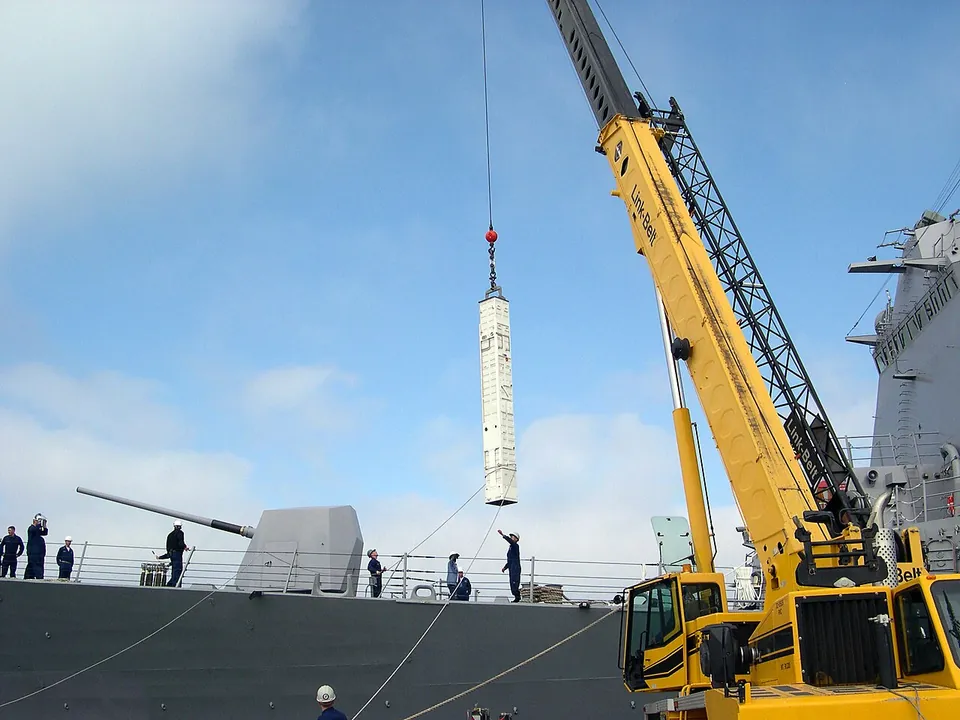
The Navy’s NATO SEASPARROW Program marked delivery of its 1,000th Block 2 missile.1
The program had reached its 500th missile delivery in June 2025.1
The delivered missile was produced for the 12-nation NATO SEASPARROW Consortium.2
Story
What the 1,000th ESSM Block 2 delivery showsThe U.S. Navy’s NATO SEASPARROW Program has delivered its 1,000th Evolved SeaSparrow Missile Block 2, marking a new production milestone for the system.1 The Navy’s NATO SEASPARROW Program Office, known as PMX-312, announced the milestone on November 2.2 The delivered missile was made for the NATO SEASPARROW Consortium, which brings together 12 participating nations.12 The program had reached delivery of its 500th missile in June 2025, so the new mark is twice that earlier delivery total.1 The account of the milestones says deliveries doubled between the 500th-missile point in 2025 and the 1,000th-missile point announced in 2026.2
The ceremony and the announcement were separate events: the NATO SeaSparrow team celebrated the delivery in Camden, Arkansas, on October 28.12 The Navy program office later made the milestone public on November 2, according to the report of the announcement.2 The 1,000 figure counts missiles delivered, while the available information does not give a matching number for missiles deployed or held by each partner.12 Raytheon, which operates as an RTX business, is the prime contractor responsible for ESSM Block 2 production.1 The record therefore describes an output milestone involving the program, its contractor and the consortium, rather than a disclosed inventory breakdown.12
ESSM Block 2 is launched from ships and is intended to protect a vessel itself as well as an area around it.1 The system is designed to intercept aircraft, anti-ship cruise missiles and other threats in the air.2 Those roles make the delivery milestone relevant to naval defenses, but the count alone does not establish where the missiles have been assigned.12 The 1,000th missile was produced for the consortium as a whole, rather than identified in the available account as a national allocation.2 The Navy has not released either the distribution among participating countries or the number that has entered operational service.2
Block 2 differs from earlier versions through an upgraded guidance arrangement that combines active and semi-active radar seeking.2 Earlier ESSM versions rely on the launching ship to illuminate a target with radar as the missile approaches the end of its flight.2 With Block 2, an active seeker can find and follow targets independently during the final phase of an engagement.2 That capability lessens the need for the ship to keep radar focused on a target throughout that phase.2 The source says this also gives a ship’s combat system greater flexibility when addressing more than one threat.2
A U.S. Navy Mk 41 Vertical Launching System can carry ESSM in groups of four within one launcher cell, when a warship is compatible.2 That arrangement allows a compatible ship to place four of these missiles in a cell, rather than treating each cell as holding only one ESSM.2 The detail describes a possible way to use the launcher, not the number of ESSMs carried by any particular ship.2 It also does not say how many of the 1,000 delivered missiles are currently at sea or assigned to individual fleets.12 The announced delivery total and the shipboard capacity detail therefore measure different things: program output and a loading option, respectively.12
The production milestone comes amid operations in which U.S. and allied warships have defended commercial shipping and naval vessels from Houthi attacks.2 Those operations have taken place in the Red Sea and the Gulf of Aden, according to the account of the maritime-defense activity.2 A January 2025 report by The War Zone relayed Vice Adm. Brendan McLane’s statement that the Navy fired nearly 400 munitions over about 15 months of Red Sea operations.2 The reported breakdown listed 120 SM-2 missiles and 80 SM-6 missiles, plus 20 interceptors counted together as ESSM and SM-3.2 The 20 figure combines two interceptor types and does not provide separate totals for ESSM and SM-3.2
The operational figures cannot be read as a count of Block 2 use, because they do not separate ESSM Block 1 from ESSM Block 2.2 They also cover reported munitions fired during Red Sea operations, whereas the 1,000 milestone counts Block 2 deliveries under the program.12 These measures describe different stages and categories, so the reported firing totals do not establish how many delivered Block 2 missiles were used.12 Warships have limited missile magazines, and reloading vertical launch systems while at sea is more difficult than replenishing ordinary ammunition.2 That constraint is relevant context for shipboard missile use, but the available figures do not quantify any effect on ESSM Block 2 stocks.2
The NATO SEASPARROW Project began in 1968 and is described as one of NATO’s longest-running cooperative weapons efforts.1 Its consortium consists of Australia, Belgium, Canada, Denmark, Germany, Greece, the Netherlands, Norway, Portugal, Spain, Türkiye and the United States.1 Capt. John Bowman said the delivery mattered to the consortium, PMX-312, industry partners and the Sailors who depend on the missiles.1 Bowman also presented the milestone as evidence of the contribution of international cooperation and a resilient industrial base to meeting member nations’ maritime-defense needs at scale.1 His comments frame the delivery as a joint program achievement, while the public information still leaves national allocations and operational totals undisclosed.12
The central change is the rise from the program’s 500th delivery in June 2025 to its 1,000th delivered Block 2 missile.1 The reported doubling connects those two delivery milestones, but does not by itself reveal how quickly individual partner nations received missiles.12 Nor does the total disclose how many deliveries became operational weapons, a distinction the Navy has not resolved in the reported information.12 The available material establishes a manufacturing and delivery achievement for a long-running multinational program, alongside a missile designed for ship and local-area defense.1 Supported: the sources document the delivery milestone but do not show operational numbers or country-by-country allocations.1
History
How it came to this- 1968NATO SEASPARROW Project establishedThe cooperative weapons program was established.
- June 2025500th missile deliveryThe program reached delivery of its 500th missile.
- October 28Delivery celebrated in ArkansasThe NATO SeaSparrow team celebrated the delivery in Camden, Arkansas.
- November 21,000th delivery announcedThe Navy’s NATO SEASPARROW Program Office announced the milestone.
- Now1,000th Evolved SeaSparrow Missile Block 2 deliveries
Impact
Spreading outward, level by level- Level 1Program output
The milestone records delivery of a Block 2 missile, and the reported account says deliveries doubled between the 500th-missile milestone in 2025 and the 1,000th-missile milestone announced in 2026.12
Fact - Level 2Consortium
The missile was produced for the NATO SEASPARROW Consortium; the Navy has not disclosed how deliveries are divided among participating countries.2
Fact - Level 3Ship defense
ESSM Block 2 provides ship self-defense and local-area defense, and is designed to intercept aircraft, anti-ship cruise missiles and other airborne threats.12
Fact - Level 4Operational picture
The delivery total alone does not establish how many missiles have entered operational service or how many Block 2 missiles were used in Red Sea operations.
Analysis
Sources
What each source supportsWritten by AI from the sources listed below: every fact was checked word for word against its source, and inference is marked apart. How we write