

Meta and Fourier build Max, a 1.5-meter humanoid prototype for household-robotics research
Reports describe a prototype made in about three months with Fourier in China, but its interaction specifications are targets rather than demonstrated abilities. Meta says the collaboration is for internal research, while its longer-term consumer ambitions remain distinct from any current plan to sell Max.
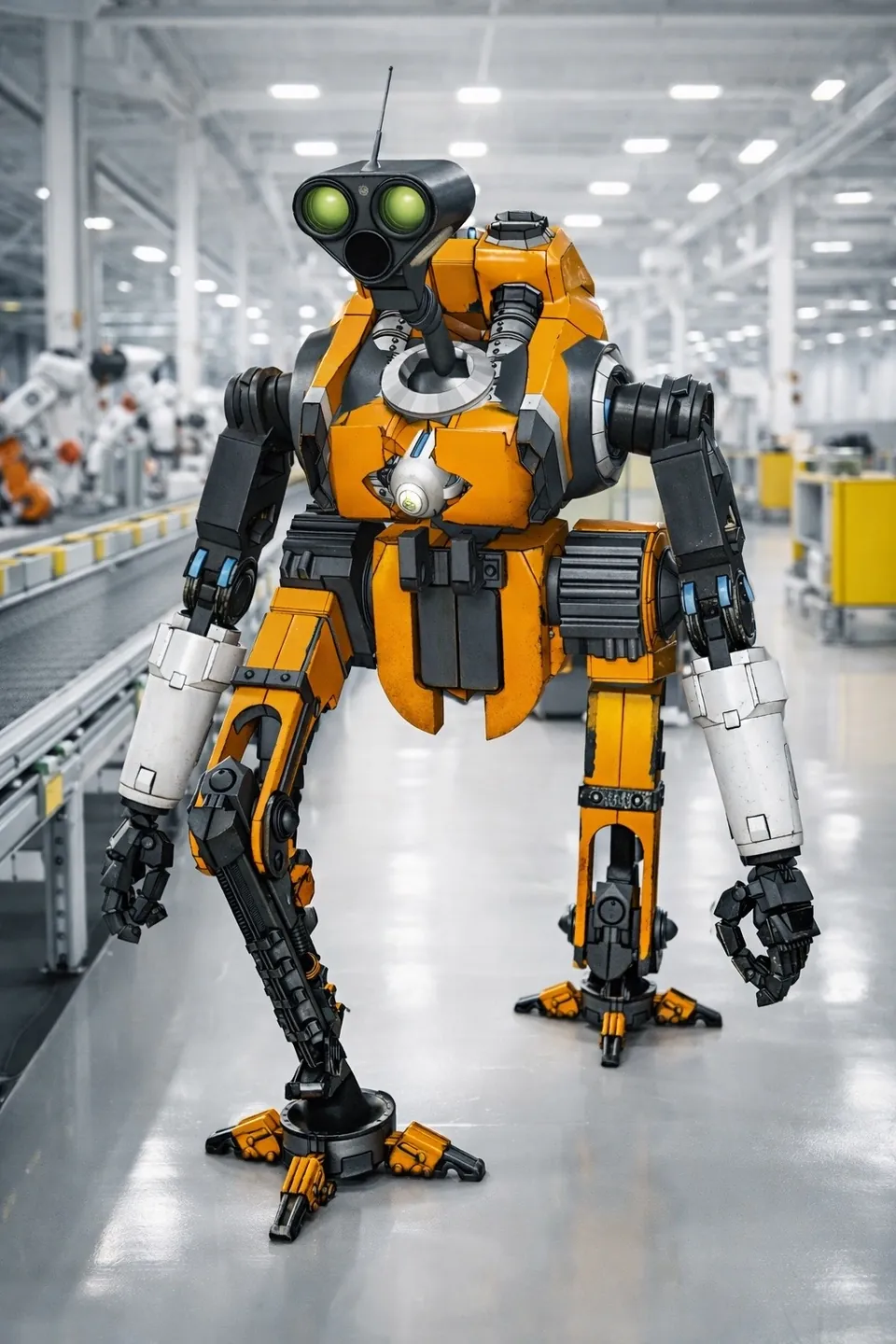
Meta and Fourier reportedly built the Max prototype in about three months.1
Story
What Meta's Max prototype shows—and what remains unprovenMeta Platforms and Chinese robotics company Fourier have developed a humanoid prototype called Max as part of research into household robotics.1 A report says the teams made the prototype in roughly three months, while published descriptions place it at about 1.5 meters tall and give its weight as either 105 pounds (48 kilograms) or roughly 106 lbs.14 The size and weight figures describe a physical research machine, not evidence that it can carry out chores in a home.14 The reports differ slightly on weight, and the available accounts do not settle which estimate is more precise.1 The reported build time gives a sense of how quickly the companies produced this prototype, while its dimensions and weight describe its scale; none of these details establishes household-task performance.14
The prototype emerged from work by Meta's robotics team with Fourier at the startup's factory in Shanghai.6 Meta product vice president Li-Chen Miller was based there for roughly two months, according to a report describing the collaboration.6 The same account says Max was presented to some Meta employees during an internal robotics summit in late August.6 Those details locate the project in a specific company and factory setting, but they do not establish that the prototype was released publicly or offered for sale.36 The factory work and internal presentation show the project involved company personnel in development and review; the reports describe no public launch in those details.36
Reports describe Max as using NVIDIA's Jetson Thor computing platform or chips, with a display on its face and speakers in its chest.4 Its hands have five fingers and are intended to handle small objects, a design feature relevant to the kind of close interaction that household tasks could require.34 Meta's stated design requirements include responding to spoken commands from approximately five meters away and recognizing gestures at around three meters.1 The requirements also call for eye contact and visible indications of whether the machine is listening, processing, speaking, or uncertain.1 Together, the computing hardware, expressive display, speakers and hands describe elements of the prototype's design, while the distance requirements describe goals for interaction rather than confirmed results.14
These interaction details are specifications for development, not verified demonstrations of what Max can currently do.1 That distinction matters because the design describes intended behavior, while the reporting does not establish that Max reliably recognizes commands or gestures at those distances.1 Nor do the accounts establish that the prototype can complete household chores; they connect the work to that research area without demonstrating such performance.1 The reported comparison between Max's dimensions and the later design plans therefore concerns engineering direction, rather than measured task success.14 For people assessing the project, the key limit is that planned interaction and task uses cannot be treated as abilities already shown by the prototype.1
Meta began work on a second prototype, Max 2, in September.4 Plans call for a redesigned torso, more capable hands, a projector, and additional sensors intended to assist with stair navigation.1 Those planned changes address areas tied to movement and handling objects, but they remain intended features rather than confirmed results.14 The available reports thus describe an evolving prototype program: Max provides the earlier design, while Max 2 is associated with proposed revisions.14 The planned navigation sensors and revised hands point to movement and object handling as areas the next design is intended to address, not as improvements already demonstrated.14
Meta says its work with Fourier is for internal research and experimentation, and that it has no current plan to sell the units.3 Separately, the company's longer-range goal is to develop a robot that could perform household tasks and might eventually be sold to consumers.3 The distinction is between the stated purpose of the present collaboration and a possible later consumer product, not a claim that Max is already a domestic appliance.13 People directly involved in the work include Meta's robotics team and Fourier; the reports also describe Max being shown to some Meta employees internally.6 For potential consumers, the distinction is important: the current units are described as research equipment, whereas consumer sales are only part of a longer-term aim.3
Meta acquired Assured Robot Intelligence in May, a startup working on AI models for general-purpose humanoid robots.3 A report says Meta sees humanoid machines as one possible physical form for its Muse AI agent.1 The company's robotics hiring in Shanghai and Shenzhen has included engineers for prototype development and possible preparation for manufacturing at larger scale.1 Together, these reports connect the prototype to AI development and consumer ambitions, but do not show that the acquired company's models or Muse are already operating Max.13 The acquisition, reported Muse connection and recruiting indicate related areas of interest at Meta, but the available facts do not establish that those AI efforts are integrated into the prototype.13
Meta's current humanoid work follows an earlier effort to build robot hardware for household chores, which was reported as starting as early as last year.4 The reported design process also draws on Fourier's existing robot platforms and experience gained across three generations of its machines.1 One of those platforms, Fourier's GR-3, is designed for interaction at close range and includes hearing, vision, and touch capabilities.1 That background helps explain what existing work the Max project can draw on, but it does not establish that Max shares every capability attributed to GR-3.1 The earlier household-hardware effort and Fourier's platform experience provide context for the prototype's development, while the GR-3 features cannot automatically be attributed to Max.14
The collaboration is taking place as restrictions on companies doing business with Chinese firms are increasing, according to a report on Meta's work with Fourier.3 The reporting identifies that policy environment alongside the partnership, without specifying how particular restrictions have changed the Max project.36 Meta's Muse assistant is also cited as one alternative in a changing online landscape, providing context for the reported connection between AI agents and possible robot embodiments.18 The central change is therefore a research prototype built with Fourier, alongside continued design work; the sources describe future possibilities but do not establish a working household robot or a product launch.134 The reporting places the partnership amid increasing restrictions and mentions Muse as one alternative in a changing online landscape, but it does not specify a direct effect of those conditions on Max.1368
Structure
Who is connected to whom- 1Meta Platforms
- produces →Fact
- uses →Fact
- competes with →Fact
- partners with →Fact
- invests in →Fact
Disagreements
Where the sources do not matchHistory
How it came to this- As early as last yearEarlier household-robot hardware effortMeta's humanoid work follows an earlier effort to build robot hardware for household chores.
- MayMeta acquires Assured Robot IntelligenceThe startup was developing AI models for general-purpose humanoid robots.
- Roughly two monthsWork with Fourier at its Shanghai factoryMeta's robotics team worked with Fourier there, with product vice president Li-Chen Miller stationed at the factory for roughly two months.
- Late AugustMax shown internallyMax was shown to some Meta employees at an internal robotics summit.
- About three monthsMax prototype developedMeta and Fourier reportedly built the household-robotics research prototype in about three months.
- SeptemberWork begins on Max 2The planned second prototype includes a redesigned torso, improved hands, a projector and additional sensors intended to help it navigate stairs.
- Nowabout three months Reported time to build Meta and Fourier's Max humanoid prototype
Impact
Spreading outward, level by level- Level 1Current project purpose
Meta describes the Fourier collaboration as internal research and experimentation and says it has no plans to sell the units.3
Fact - Level 2Prototype design and interaction goals
Max is reported to have a face display, chest speakers and five-fingered hands designed to pick up small objects. Meta's spoken-command and gesture distances, eye-contact expectations and status signals are development targets, not verified abilities demonstrated by Max.14
Fact - Level 3Next prototype
Max 2's planned torso, hands, projector and navigation sensors target areas involving movement and object handling; the planned changes are not evidence that improvements have been demonstrated.14
Fact - Level 4Longer-term consumer ambition
Meta's longer-term aim is a robot that could perform household tasks and potentially be sold to consumers. The available facts do not establish that Max can complete household chores.13
Fact - Level 5Connection to AI and robotics work
The reported Muse connection, the acquisition of a humanoid-robot AI startup and robotics recruiting point to related areas of interest, but do not establish that those AI efforts are integrated into Max.
Analysis
Sources
What each source supportsWritten by AI from the sources listed below: every fact was checked word for word against its source, and inference is marked apart. How we write