

NASA names Troy Asher director of Armstrong Flight Research Center
Asher, who has led the center in an acting capacity since March, is now its director. He takes responsibility for Armstrong’s workforce and operations, including work on flight research and aviation technologies.
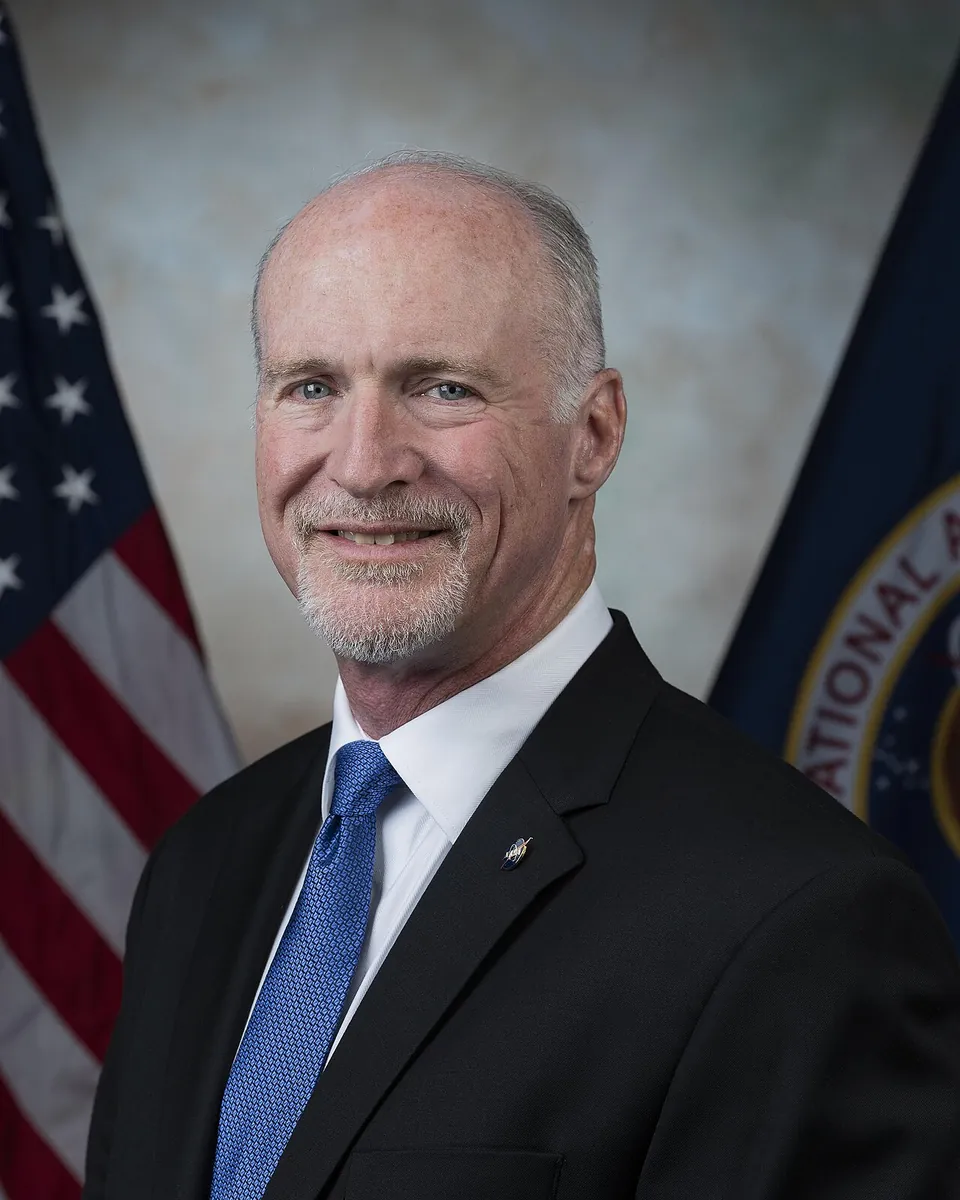
Before joining NASA, Asher served in the U.S. Air Force for 24 years and retired as a lieutenant colonel.1
Asher set 25 world speed records while flying the B-1B bomber in 2003.1
Armstrong Flight Research Center was established in 1946.1
Story
A test pilot takes the helm at ArmstrongNASA Administrator Jared Isaacman has appointed Troy Asher to lead the Armstrong Flight Research Center, making permanent the leadership role Asher has held on an acting basis since March.1 The change follows Bradley Flick’s retirement in March, after a NASA career that lasted nearly 40 years.1 Asher’s appointment places him in charge of Armstrong’s workforce and operations, with responsibilities that include advancing flight research and emerging aviation technologies.1 The announcement identifies him as the director, while describing the work ahead through the center’s research and operational responsibilities rather than a stated change in its mission.1 For Armstrong’s employees, the appointment means that the person who has led the center on an acting basis since March now holds the director role; NASA identifies workforce and operations as part of that role.1
Asher had already moved into the center’s top job in an interim capacity in March, before NASA made the appointment permanent.1 Before that step, he directed Flight Operations at Armstrong, a post that put him over pilots, engineers, maintenance staff and the aircraft fleet.1 That earlier role connected leadership of the people and aircraft used in flight work with the broader oversight he now assumes as center director.1 The sequence is clear in the announcement: Flight Operations director, acting center director from March, and then the permanent directorship.1 The move from Flight Operations to center director broadens the stated remit from leading the pilots, engineers, maintainers and aircraft fleet to overseeing the center’s workforce and operations.1
As center director, Asher’s remit extends across Armstrong’s workforce and operations, rather than only the flight crews or aircraft that featured in his prior Flight Operations position.1 The center’s work includes flight research and the development of aviation technologies, and it also supports airborne science missions and flight research across NASA.1 These descriptions show both a center-level responsibility for its workforce and operations and a service role in research missions beyond the center itself.1 NASA’s announcement does not provide a workforce total, a budget figure or a numerical measure of Armstrong’s research output.1 The affected work therefore includes both Armstrong’s own operations and research support for missions across NASA, although the announcement does not quantify the scale of either responsibility.1
Asher joined NASA in 2008 as both an aerospace engineer and a research test pilot.1 His flight research included work aboard the F-15, F/A-18, Gulfstream III and X-56A unmanned aircraft system.1 He also piloted NASA’s DC-8 on scientific missions that supported airborne science campaigns around the world.1 Together, these assignments span research aircraft and scientific missions, illustrating the mix of flight work in his NASA experience without indicating how many flights he completed.1 The aircraft list includes four named platforms for flight research, while the DC-8 experience is described in terms of scientific missions and worldwide campaigns; the facts do not state a total number of missions or flights.1
Before his NASA career, Asher spent 24 years in the U.S. Air Force and left the service at the rank of lieutenant colonel.1 His Air Force work included instructing at the U.S. Air Force Test Pilot School, commanding the 419th Flight Test Squadron and directing the Bomber Combined Test Force.1 In 2003, while flying the B-1B bomber, he established 25 world speed records.1 Those records are a specific achievement from his military service, separate from his NASA flight research and management roles.1 The 24-year Air Force career and the 25 records describe different dimensions of his background: time in service and a particular flying achievement in 2003.1
Asher earned a master’s in mechanical engineering at California State University, Fresno.1 His training and career therefore combine engineering study, test-pilot work, flight research and command assignments.1 That range is relevant to the duties NASA lists for the director, which include managing center operations while advancing research and aviation technology.1 The announcement provides these background details but does not quantify how they will change the center’s future work.1 His engineering degree sits alongside experience gained as a NASA research test pilot, an Air Force test-pilot instructor and a commander, linking technical education with flight and leadership roles.1
Isaacman commended Asher’s record of advancing flight and his skill in converting ambitious concepts into successful test flights.1 Amit Kshatriya pointed to Asher’s Air Force test-pilot service and NASA flight-research leadership as evidence of qualities suited to flight testing.1 The two comments emphasize different parts of the record: Isaacman stressed the path from ideas to flight tests, while Kshatriya cited military and NASA experience.1 These are officials’ assessments of Asher’s qualifications, not numerical measures of the center’s work or the effects of the appointment.1 Taken together, the officials’ remarks connect Asher’s ability to carry ambitious ideas into flight tests with his service in military testing and NASA research leadership.1
Armstrong was established in 1946 and has spent eight decades at the leading edge of American flight research.1 Its long-running research role supplies the institutional setting for Asher’s appointment, while NASA describes the center as supporting airborne science and flight research throughout the agency.1 The center’s history and its present support functions are distinct measures: one locates Armstrong in time, and the other describes the work it contributes to NASA.1 NASA’s announcement presents Asher’s selection as a change in leadership at an established research center, but gives no figure for the appointment’s effect on staffing, projects or output.1 The eight-decade history places the appointment at a center with a long-running role in American flight research; its current support for airborne science and NASA flight research describes work that reaches beyond the center itself.1
Structure
Who is connected to whom- 1Troy Asher
- uses →Fact
- uses →Fact
- uses →Fact
- uses →Fact
History
How it came to this- 1946Armstrong establishedThe center was established to pursue flight research.
- 2003Asher sets speed recordsHe set world speed records flying the B-1B bomber.
- 2008Asher joins NASAHe joined as a research test pilot and aerospace engineer.
- MarchLeadership transition at ArmstrongBradley Flick retired, and Asher began serving as acting director.
- AppointmentAsher named directorNASA Administrator Jared Isaacman named Asher director of Armstrong.
- NowDirector Troy Asher appointed Armstrong Flight Research Center director
Impact
Spreading outward, level by level- Level 1Armstrong leadership
Asher moves from acting director to director, taking responsibility for the center’s workforce and operations.1
Fact - Level 2Flight research and aviation technology
His remit includes advancing flight research and new aviation technologies.1
Fact - Level 3NASA-wide research support
Armstrong supports airborne science missions and flight research across NASA, placing the center’s work in a broader agency context.1
Fact - Level 4Potential future flight programs
His test-pilot background and flight-operations leadership may position him to lead rebuilding NASA’s X-plane portfolio; this is a stated hypothesis, not a confirmed outcome.
Analysis
Sources
What each source supportsWritten by AI from the sources listed below: every fact was checked word for word against its source, and inference is marked apart. How we write