

EU Arctic strategy puts security first, with 260 million euros for Arctic technology
The European Union’s 2026 strategy is its first full policy update since 2021 and makes security and resilience its leading priority. Its measures include surveillance, communications and Greenland investment, while the updated text drops an earlier aim of pursuing an international ban on Arctic oil and gas development.
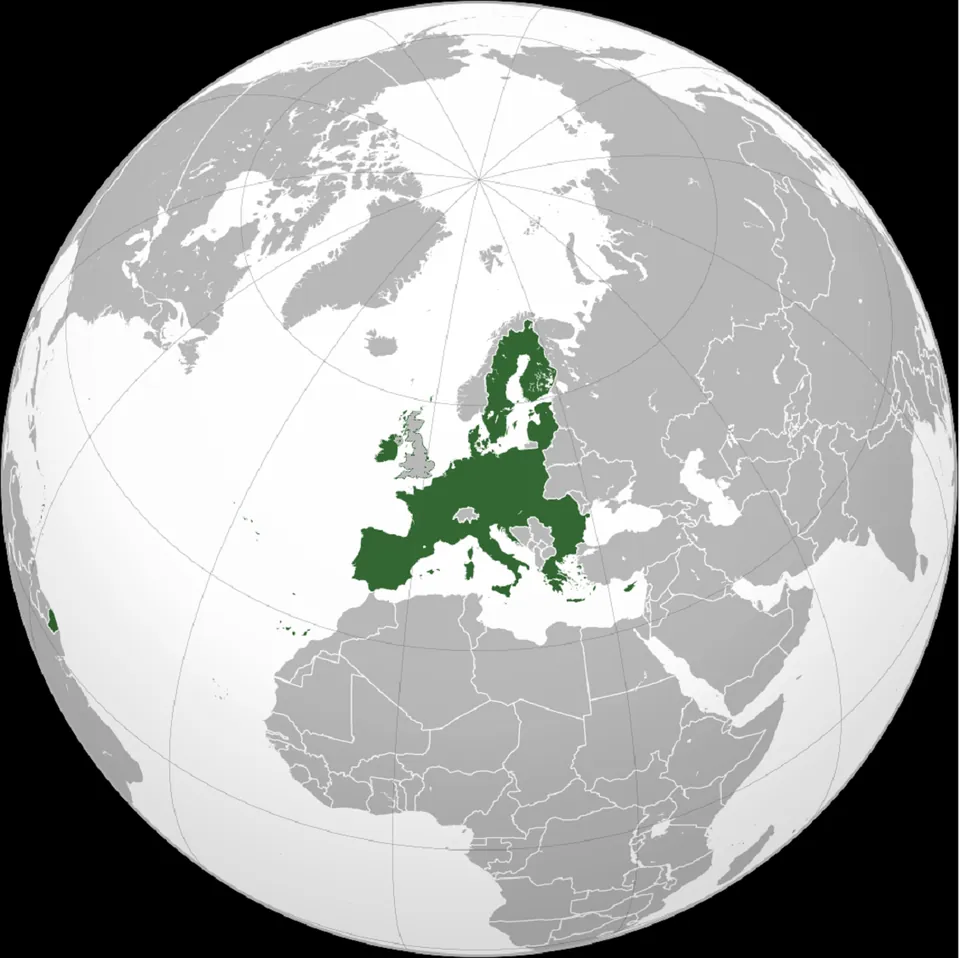
The European Defence Fund is directing 260 million euros toward Arctic technologies such as severe-environment aircraft and over-the-horizon sensors.3
The EU is investing 200 million euros in Greenland for infrastructure, connectivity, housing, raw materials, and renewable energy.3
More than 500,000 EU citizens live in the Arctic across Denmark, Finland, and Sweden.3
Story
A security-first turn in the European Union’s Arctic policyThe European Commission’s new Arctic strategy places security and resilience ahead of its other three principal areas of work, making it the policy’s leading focus.1 The European Union describes the document as its 2026 strategy and its first comprehensive revision of the policy framework since 2021.2 The change is therefore a change in emphasis within a renewed framework, rather than the first EU Arctic policy: the previous comprehensive update was in 2021.12 The strategy pairs that security priority with planned surveillance, technology development and investment in Greenland, extending its reach beyond a statement of priorities.23 The supported assessment is that European leaders regard Russian military activity and subsea operations as serious regional concerns, alongside Europe’s icebreaker shortfall.3
One planned security measure is a specialized satellite-surveillance pilot that the European Union intends to start in 2027.2 The stated purpose is to improve maritime domain awareness, or the ability to monitor activity at sea; the fact does not specify the pilot’s coverage or equipment.2 The European Defence Fund is directing 260 million euros toward Arctic technology, including aircraft designed for severe conditions and sensors that observe beyond the horizon.3 That sum is assigned to technology development, whereas the strategy’s Greenland funding is a separate 200 million euros for several kinds of investment.3 The two allocations show distinct strands of the approach: developing equipment for Arctic conditions and supporting infrastructure and other needs in Greenland.3
The Commission also announced support for a strategic telecommunications cable across the Arctic, connecting Greenland directly with Europe.1 The proposed link is part of a wider network that would also reach Canada, Japan and South Korea, so it is presented as more than a Greenland-only connection.1 The European Union’s 200 million euros for Greenland covers infrastructure, connectivity, housing, raw materials and renewable energy.3 The cable support and the broader Greenland investment are related to connectivity, but the available facts do not assign a separate amount to the cable itself.13 The supported account describes these measures as dedicated financial and infrastructure efforts to connect Greenland with European communications networks.1
More than 500,000 citizens of the European Union live in the Arctic, and Denmark, Finland and Sweden are the bloc’s three member countries in the region.3 That population figure counts EU citizens living in the Arctic; it is not given as the total population of the region.3 The three named countries establish which EU member nations are present there, while the strategy’s Greenland funding identifies a separate investment destination.3 The investment’s stated coverage ranges from housing and infrastructure to raw materials and renewable energy, rather than being limited to security projects.3 The facts do not divide the 200 million euros among those categories or give separate totals for the three member nations.3
The maritime security context includes Russia’s reopening of military bases dating from the Soviet era and its testing of new weapons in the Arctic.3 European countries have roughly 10 icebreakers, with most based in Finland, while Russia operates a fleet of 40.4 The comparison places Russia’s operational fleet at four times the approximate European-country total, although the European figure is described as rough and the fleets are counted differently in the wording.4 Last month, NATO carried out an operation responding to Russian deep-sea exercises that were directed at threatening subsea cables between mainland Norway and Svalbard.4 The supported assessment links these military and subsea concerns with Europe’s comparatively small icebreaker presence in the Arctic maritime setting.3
The policy’s treatment of fossil fuels also changed: the updated strategy still opposes damaging hydrocarbon exploitation but no longer includes the earlier objective of seeking an international legal prohibition on Arctic oil and gas development.2 The EU Energy Commissioner, Dan Jørgensen, restated the bloc’s position that oil, gas and coal should remain underground.4 The supported account characterizes the removal of the legal-ban objective as a softening of the EU’s formal international ambitions, while noting acute energy-cost pressures.2 That distinction matters: opposition to fossil-fuel extraction remains, but the earlier stated route of pursuing an international legal ban is absent from the updated strategy.24 The supplied facts do not say that the strategy permits extraction, nor do they set out a replacement legal measure.24
The policy arrives amid reported pressure on the EU’s energy finances: Ursula von der Leyen said the conflict in Iran had added 106 billion euros to fossil-fuel import bills since late February.5 She reported that this added cost had not brought the European Union any additional energy units.5 On October 3, EU gas storage stood at 72.4 percent capacity, the lowest level recorded for that calendar date since tracking began in 2011.5 The storage comparison is specific to October 3 across the tracking record; it does not identify the lowest level across all dates.5 From April 29, member states were authorized under METSAF to cover up to 70 percent of additional crisis-related fuel and fertilizer costs for transport, agriculture and fisheries operators.5
The EU’s trade and market disputes form another part of the economic setting, though the facts do not establish them as causes of the Arctic strategy.6 In early October, Emmanuel Macron and Friedrich Merz proposed a mechanism to limit access to the European single market when market distortions persist.6 During 2025, European sales to China stood at 199.6 billion euros while incoming shipments reached 559.4 billion euros, producing a merchandise trade deficit of 359.8 billion euros.6 Those figures describe the balance between goods imported and exported, not the value of trade in services or a measure of Arctic investment.6 EU governments also approved possible counter-tariffs affecting 93 billion euros of US exports after Donald Trump threatened 30 percent tariffs on European products.6
Climate change provides a further reason the Arctic has consequences beyond the region: Ursula von der Leyen said it is warming at nearly four times the global average rate.3 She linked that faster warming to weather across Europe becoming more persistent and more extreme.3 Taken together, the strategy’s leading security priority, planned surveillance pilot, technology funding and communications investment describe several different responses to Arctic conditions.123 The scale of the icebreaker comparison and the reported Russian military and subsea activity help explain the security setting, while the facts do not specify a new EU icebreaker procurement plan.34 The update thus combines security measures and regional investment with continuing opposition to fossil-fuel extraction, while dropping the previous objective of an international legal ban.123
Structure
Who is connected to whom- 1European Union
- finances →Fact
- ← exports toFact
- partners with →Fact
- uses →Fact
- imports from →Fact
History
How it came to this- 2021Previous Arctic policy frameworkThe EU established its last comprehensive Arctic policy framework prior to the 2026 update.
- 2026-10-03Gas storage hits calendar record lowEuropean Union gas storage facilities stood at 72.4 percent capacity, the lowest recorded level for that calendar date since tracking began in 2011.
- 2026-10-20New Arctic strategy presentedThe European Commission unveiled its 2026 Arctic strategy, establishing security and resilience as the top priority.
- Nowroughly 10 Operational icebreakers in European countries compared to Russia
- 2027The EU intends to initiate a specialized Arctic satellite surveillance pilot program to improve maritime domain awareness.
Impact
Spreading outward, level by level- Level 1Defense technology and regional development funding
The EU is committing 260 million euros for Arctic defense technology development and 200 million euros for Greenland infrastructure, housing, raw materials, and renewable energy.3
Fact - Level 2Surveillance and communications networks
The EU is supporting a pan-Arctic telecommunications cable linking Greenland to Europe and intends to initiate a satellite surveillance pilot in 2027 to boost maritime domain awareness.12
Fact - Level 3Strategic posture in the Arctic theater
European policymakers are elevating security to address Soviet-era base reopenings and subsea threats by Russia while confronting a substantial regional icebreaker shortfall.
Analysis
Ahead
Checked automatically when due; the result goes to the track recordThe EU intends to initiate a specialized Arctic satellite surveillance pilot program to improve maritime domain awareness.
Sources
What each source supportsWritten by AI from the sources listed below: every fact was checked word for word against its source, and inference is marked apart. How we write