

Hungarian veto lifted, opening EU accession talks for Ukraine and Moldova
EU Commissioner Károly Kos announced the removal of Hungary’s block on enlargement at a Transparency International Switzerland event. The change clears the path for formal negotiations on membership with both countries.
An IMF study estimates that EU membership could raise per-capita GDP in the Western Balkans by 47% within 15 years.1
The IMF estimate places the potential Western Balkans per-capita GDP increase over a 15-year period.1
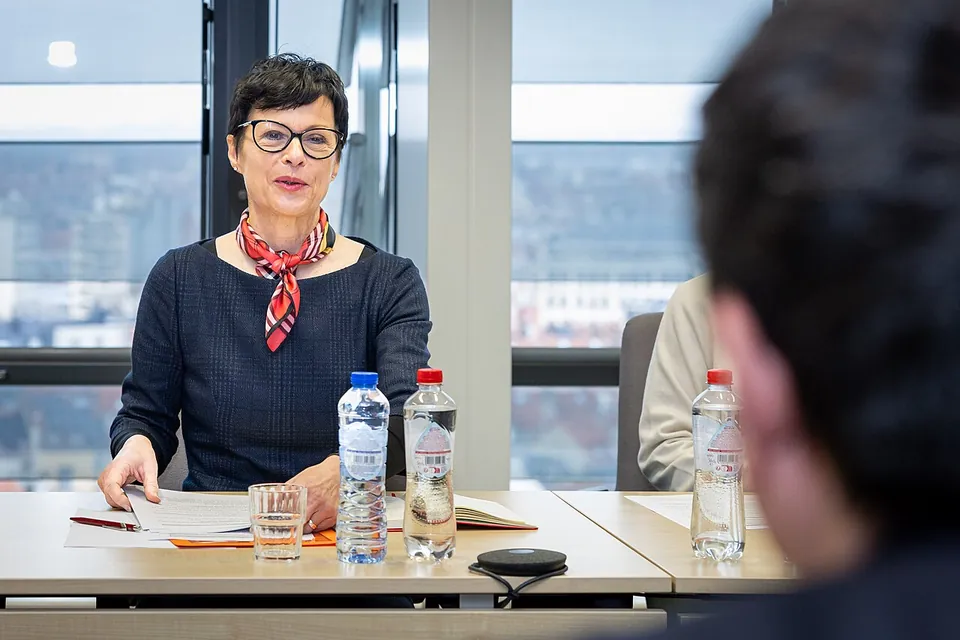
Commissioner Kos delivered a speech opening an event marking 30 years of Transparency International Switzerland.1
Story
EU enlargement gains momentum as Hungary drops vetoHungary’s new prime minister had withdrawn the veto that had halted accession talks for Ukraine and Moldova, the European Commission’s competition chief announced.1 The removal of the block instantly cleared the procedural hurdle for opening formal negotiations with the two Eastern European states.1 That change concerns the opening of negotiations: the stated result is that the way is clear for talks with Ukraine and Moldova.1 The announcement matters for both countries because the same lifted veto clears the way for their EU accession negotiations.1
Earlier in June Commissioner Kos travelled with his team to both Moldova and Ukraine as part of a preparatory outreach.1 Just before departing for the trip he received the notification that Hungary’s leader Péter Magyar had lifted the veto.1 The timing meant the delegation could proceed to the region with the knowledge that the political barrier had been removed.1 Kos’s journey involved both countries affected by the change, and the news arrived shortly before his departure.1 A senior Moldovan official was also returning from official travel to Brussels and was seated behind Kos, placing him on the same flight when the news came through.1
“It feels good when the good guys win.”Senior Moldovan official, Speech at Transparency International Switzerland event
At the opening ceremony of Transparency International Switzerland’s anniversary, a senior Moldovan official sat directly behind the commissioner.1 He expressed personal satisfaction with the news, saying it felt good when the good guys win.1 His reaction connected the change in the EU process to people working on reform and accountability in Moldova.1 The official was returning from a work trip to Brussels, and his presence behind Kos meant he heard the news while travelling with the commissioner.1
The official highlighted recent investigative journalists who uncovered networks buying votes ahead of Moldovan elections.1 He also cited prosecutors and judges who successfully brought oligarch Vladimir Plahotniuc to trial, resulting in his imprisonment.1 These examples describe different parts of the effort he praised: journalists exposed vote buying, while prosecutors and judges pursued an oligarch through the courts.1 The people mentioned include investigative journalists, prosecutors and judges, whose work addresses criminal networks and the prosecution of Plahotniuc.1 The official’s examples make his phrase about the “good guys” concrete by pointing to those who investigate wrongdoing and bring cases to court.1
Commissioner Kos stressed that the prospect of EU membership would accelerate reforms in Moldova.1 He argued that the promise of joining the Union creates a powerful incentive for political and institutional change.1 The prospect of membership is therefore presented as a force behind Moldova’s transformation, rather than simply a future status for the country.1 That prospect sits alongside negotiation chapters covering justice, public procurement and protections against corruption and organised crime.1 The reforms also have economic relevance because legal certainty can encourage investment, linking institutional change to prosperity.1
The first negotiation chapters with both Ukraine and Moldova will focus on establishing an independent judiciary, transparent public procurement and stronger safeguards against corruption and organised crime.1 These priorities apply to both countries and put courts, the use of public funds, and protections against criminal activity at the centre of the initial negotiations.1 The agenda therefore reaches beyond formal accession procedures: it addresses the independence of judges and the transparency of decisions about public contracts.1 Stronger safeguards against corruption and organised crime are another stated part of those early chapters, alongside justice and procurement reforms.1 Those issues are connected to the broader effort to change who has influence over political networks and privileged access to public contracts.1
According to the commission, the enlargement process will reshape power relations by weakening entrenched political networks, economic elites and privileged access to state contracts.1 Reforms are expected to empower investigative journalists, independent judges, prosecutors, small‑business owners and reform‑oriented politicians – the so‑called “good guys”.1 The stated shift has two sides: established networks and elites are weakened, while groups including journalists, judges and small‑business owners are strengthened.1 This means the changes described are not limited to government institutions; they also affect people who investigate, adjudicate, run businesses or pursue reform.1 The contrast between privileged access to public contracts and the empowerment of small‑business owners highlights how procurement reform could alter who benefits from public decisions.1
The commission linked these reforms to broader economic benefits, noting that legal certainty attracts investment.1 An IMF study estimates that EU membership could raise per‑capita GDP in the Western Balkans by 47 % within fifteen years.1 The estimate is a projected increase in per-person GDP across the Western Balkans, rather than a reported outcome already achieved.1 Its fifteen-year horizon describes a longer-term possibility, while the reforms discussed in the negotiations concern institutions such as courts and public procurement.1 The commission’s link between legal certainty and investment offers a reason these institutional reforms may matter economically, while the IMF figure supplies a regional estimate of potential gains from EU membership.1 The projected increase refers to the Western Balkans, whereas the negotiation chapters described earlier concern Ukraine and Moldova; the facts do not give a separate GDP estimate for those two countries.1
Kos concluded by expressing hope that Serbia would soon be mentioned in the context of the EU’s enlargement agenda.1 His hope places Serbia in a wider enlargement discussion, while the lifted veto specifically cleared the way for negotiations with Ukraine and Moldova.1 The two points concern different stages of the discussion: talks are cleared for Ukraine and Moldova, and Kos expressed a hope that Serbia would also soon be mentioned.1
History
How it came to this- JuneKos travels to Moldova and UkraineKos and his team travelled to both countries; shortly before departure, he received news that Hungary’s prime minister had lifted the veto.
- 13 November 2026Kos speaks at Transparency International Switzerland eventAt the event opening, Kos recounted the news that Hungary’s veto had been lifted, clearing the way for accession talks with Ukraine and Moldova.
- NowVeto lifted Hungary lifts veto, clearing the way for Ukraine and Moldova accession talks
Impact
Spreading outward, level by level- Level 1Accession negotiations
The lifted veto clears the way for EU accession negotiations with Ukraine and Moldova.1
Fact - Level 2Early negotiation priorities
The opening chapters concern an independent judiciary, transparent public procurement, and stronger protection against corruption and organised crime in both countries.1
Fact - Level 3Power and reform
The commission says the accession process weakens political networks, economic elites and privileged access to public contracts, while strengthening investigative journalists, independent judges, prosecutors, small-business owners and reform-oriented politicians.1
Fact - Level 4Investment and regional economic prospects
The commission links legal certainty with investment, and an IMF study estimates that EU membership could raise Western Balkans per-capita GDP by 47% within 15 years. That regional estimate is not a separate GDP forecast for Ukraine or Moldova.1
Fact
Sources
What each source supportsWritten by AI from the sources listed below: every fact was checked word for word against its source, and inference is marked apart. How we write